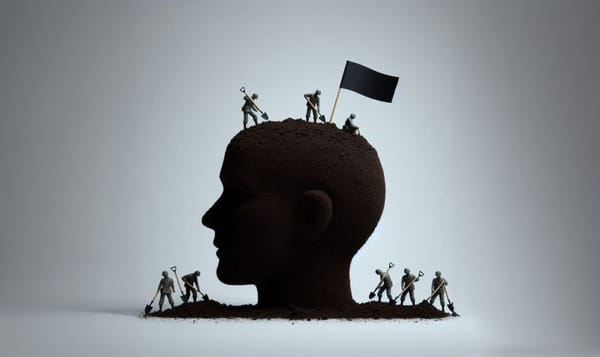
Beyond the Bubble: Steps to Truth and Togetherness
Social Media’s Divided Reality
Social media platforms like X, TikTok, and Instagram dazzle with instant fun and connection. Yet they weave a digital tug-of-war. They split users into rival camps: left versus right, liberal versus conservative, religious versus secular. This fuels profits while unraveling our shared world. Neutral takes on education or social media’s effects often spark angry pushback. These perspectives, rooted in psychology, sociology, and cultural studies, shouldn’t threaten anyone. This article doesn’t blame. It’s a friendly guide to help everyone spot these traps, pierce personal illusions (maya), and find truth and unity.
As one human family on one Earth, we can overcome social media’s algorithms, emotional triggers, medications, and divisive tactics.¹ By understanding our shared emotional bonds, we can break free from online bubbles and build a connected future together.
Echo Chambers Defined: The Science of Divided Minds
Echo chambers are online traps where users hear only ideas that match their own. This drowns out diverse views. Algorithms curate content to lock in beliefs, driving division.² Heavy use dulls focus and critical thinking. Surveys link overuse to weaker student analysis, like struggling to spot fake news.³ Confirmation bias makes people cling to familiar facts, ignoring others.⁴ Tribalism puts loyalty over evidence, as seen in heated online cliques.⁵
Culturally, custom feeds fracture our shared reality. This makes society feel like warring camps.⁶ For example, 38% of teachers say kids can’t check online sources, spreading lies.⁷ Neutral ideas, like fair education views, feel like attacks. This sparks defensiveness instead of open talk.
Mechanisms of Entrapment: The Hooks That Bind
Social media’s design snares users with clever traps. Endless scrolls and notifications spark dopamine hits, like slot machines. This keeps people hooked.⁸ It clouds focus and locks in biases, as users scroll mindlessly.⁹ Many escape to social media to dodge stress or worry. But this quick fix boosts loneliness and fear of missing out (FOMO), especially for teens skipping peer drama.¹⁰
Anger fuels group fights. Fear spreads lies. These emotions trap users in defensive bubbles.¹¹ Certain tactics, like mocking or targeting people, turn chats toxic. This shifts activism to chaos.¹² Anxious folks seek safe posts. Introverts hide in easy chats. Agreeable types stick to group ideas.¹³ TikTok’s colorful videos stir feelings. X’s sharp words ignite debates.¹⁴
The Veil of Maya: Your Personal Lens of Illusion
Maya, Sanskrit for “illusion,” is a veil hiding true reality. It’s shaped by your life’s experiences: family, culture, or feelings.¹⁵ In Advaita Vedanta, maya is ignorance (avidya). It crafts a personal world apart from universal truth.¹⁶ In the mind, this mirrors selective attention. Your past filters what you see, building private echo chambers.¹⁷
Picture a protest. One person sees justice. Another sees chaos. This difference comes from their maya, their unique lens.¹⁸ Online tribes reinforce this. So do tailored feeds that craft custom illusions.¹⁹ Your brain builds a “guided hallucination,” shaped by memories, not raw truth.²⁰ Self-inquiry (svadhyaya) clears maya. Reflecting via meditation or journaling works like therapy fixing skewed thoughts.²¹
The Global Consciousness Connection: Our Shared Emotional Web
Beyond these traps, our emotions tie us together. The Global Consciousness Project (GCP) tracks random number generators during major events. These include global tragedies or meditations, when millions share feelings like grief or hope. Data shows tiny shifts. This suggests collective emotions might influence systems, with odds against chance over a trillion.²²
Patterns held over 17 years. Skeptics note possible bias.²³ This hints at a shared emotional web, countering social media’s tug-of-war. When the world mourns a disaster or unites in celebration, our focus transcends maya. It suggests a deeper human bond. This connection can inspire users to seek common ground. It weakens echo chambers and builds a sense of togetherness that fuels collective clarity.
Impacts on Mind and Society: The Heavy Price of Division
Echo chambers take a toll. You might snap at posts challenging your views. You might feel trapped in repetitive feeds or stumble over logical arguments. This “opaque window” clouds truth, sparking anxiety and loneliness.²⁴ Society splits into rival camps, eroding trust and talk.²⁵ One-sided stories make fairness feel like betrayal. Neutral education posts get attacked.²⁶ It’s not about smarts. It’s a system exploiting maya.
Medications like SSRIs and marijuana, used by millions, shape this. SSRIs, for depression, may calm outrage but dull sharp thinking. This traps users in bubbles.²⁷ Marijuana, legal in many places, can spike anxiety or twist perception. It boosts maya and echo effects.²⁸ These deepen division, stalling society’s progress.²⁹
Path to Truth and Togetherness: Steps to Break Free
You don’t need to quit social media. Just use it wisely. These steps are easy for short attention spans:
Try New Views: Follow one different account weekly to challenge biases.³⁰
Check Facts: Use fact-checking tools before sharing.³¹
Pause and Think: Check anger. Ask, “What if I’m wrong?” to sharpen thinking.³²
Cut Triggers: Turn off alerts. A two-week break eases FOMO.³³
Talk in Person: Face-to-face chats build debate skills.³⁴
Spot Tricks: Notice biases and mockery.³⁵
FOMO or feeling cut off makes leaving hard.³⁶ Start small: trim one app, grow real friendships. Media literacy classes sharpen clarity.³⁷ If on SSRIs or marijuana, talk to a doctor about online habits.³⁸
Conclusion: Rebuilding Our Shared World
As one human family, we share one Earth. We’re bound by emotions that transcend borders, as the GCP suggests.³⁹ Social media’s tug-of-war threatens this unity. It’s fueled by algorithms, emotions, maya, medications, and divisive tactics. This risks fractured communities and eroded trust.⁴⁰
Yet we can pierce maya’s veil through self-inquiry. We can ask tough questions about our beliefs to see truth clearly.⁴¹ Neutral voices, though battered, shine a light. Every step knits our world back together. Pause before a heated reply. Follow a new perspective. Share coffee with a neighbor.
These acts, small but mighty, echo the shared pulse of humanity. They rebuild a collective clarity that defies division. By choosing truth over bubbles and togetherness over conflict, we ensure our shared world thrives. Not as rival camps, but as a united family standing strong.
Notes
- Saul Alinsky, Rules for Radicals: A Pragmatic Primer for Realistic Radicals (New York: Random House, 1971).
- M. Cinelli et al., “The Echo Chamber Effect on Social Media,” Proceedings of the National Academy of Sciences 118, no. 9 (2021): e2023301118.
- H. Galindo-Domínguez, D. Losada-Iglesias, and M. C. Pegalajar, “Scale for Measuring Critical Thinking in University Students,” Education and Information Technologies 28, no. 8 (2023): 9823-9842.
- Daniel Kahneman, Thinking, Fast and Slow (New York: Farrar, Straus and Giroux, 2011).
- J. Haidt and J. M. Twenge, “Social Media and the Age of Tribalism,” The Atlantic 24, no. 3 (2021): 45-56.
- Shoshana Zuboff, The Age of Surveillance Capitalism (New York: PublicAffairs, 2019).
- ProfileTree, “Social Media and Education: Surprising 2024 Stats, Pros, Cons,” accessed September 2025, profiletree.com.
- Nir Eyal, Hooked: How to Build Habit-Forming Products (New York: Portfolio, 2014).
- V. Chotpitayasunondh and K. M. Douglas, “How ‘Phubbing’ Becomes the Norm: The Antecedents and Consequences of Snubbing via Smartphone,” Computers in Human Behavior 63 (2016): 9-18.
- E. C. Abed, A. S. Alshammari, and S. A. Alshammari, “Social Media Addiction, Escapism and Coping Strategies Are Interrelated,” BMC Psychology 12, no. 1 (2024): 65; M. Gupta et al., “Escapism and Excessive Online Behaviors: A Three-Wave Longitudinal Study in Finland During the COVID-19 Pandemic,” Computers in Human Behavior 144 (2023): 107747; X. Cao et al., “Social Media-Induced Fear of Missing Out (FOMO) and Social Media Narcissism: The Role of Time Cost and Anxiety,” Journal of Business Research 159 (2024): 113738.
- D. Wollebæk et al., “Anger, Fear, and Echo Chambers: The Emotional Basis for Online Behavior,” Social Media + Society 5, no. 2 (2019): 1-11.
- Alinsky, Rules for Radicals; S. Stevens, “The Tactical Playbook Behind Today’s Campus Activism,” Inside Higher Ed 15, no. 6 (2024): 22-25.
- W. Li et al., “Personality Traits and Their Influence on Echo Chamber Formation in Social Media: A Comparative Study of Twitter and Weibo,” Heliyon 10, no. 3 (2024): e25481; S. Jia, Y. Li, and S. Lu, “The Impact of Health Information Echo Chambers on Older Adults’ Avoidance Behavior: A Cross-Sectional Study,” Frontiers in Psychology 15 (2024): 1412515.
- S. Zhong, “The Impact of TikTok’s Engagement Algorithm on Political Polarization,” accessed September 2025, www.shiruizhong.com/TheIndependentProject.pdf; Cinelli et al., “The Echo Chamber Effect.”
- J. A. Grimes, A Concise Dictionary of Indian Philosophy: Sanskrit Terms Defined in English (Albany: State University of New York Press, 1996).
- Shankaracharya, Brahma Sutra Bhasya, trans. G. Thibaut (Delhi: Motilal Banarsidass, 1975). Original work 8th century CE.
- Kahneman, Thinking, Fast and Slow.
- P. K. Sinha, “Exploring Maya: The Intricate Illusion of Sensory Perception,” Medium, 2023.
- Haidt and Twenge, “Social Media and the Age of Tribalism”; Zuboff, The Age of Surveillance Capitalism.
- David Eagleman, The Brain: The Story of You (New York: Pantheon Books, 2015).
- A. T. Beck, Cognitive Therapy and the Emotional Disorders (New York: Meridian, 1979); S. Sivananda, The Yoga Vedanta Dictionary (Tehri-Garhwal: Divine Life Society, 1995).
- R. Nelson and P. Bancel, “Effects of Mass Consciousness: Changes in Random Data During Global Events,” Explore 7, no. 6 (2011): 373-383.
- P. A. Bancel, “Searching for Global Consciousness: A 17-Year Exploration,” Explore 13, no. 2 (2017): 94-101.
- M. G. Hunt et al., “No More FOMO: Limiting Social Media Decreases Loneliness and Depression,” Journal of Social and Clinical Psychology 37, no. 10 (2018): 751-768.
- C. Rathnayake and J. S. Winter, “The Impact of Social Media on Political Polarization: A Review,” International Journal of Communication 11 (2017): 2816-2835.
- E. Dubois and G. Blank, “The Echo Chamber is Overstated: The Moderating Effect of Political Interest and Diverse Media,” Information, Communication & Society 21, no. 5 (2018): 729-745.
- I. Kirsch, The Emperor’s New Drugs: Exploding the Antidepressant Myth (New York: Basic Books, 2014).
- N. D. Volkow et al., “Adverse Health Effects of Marijuana Use,” New England Journal of Medicine 370, no. 23 (2014): 2219-2227.
- Wollebæk et al., “Anger, Fear, and Echo Chambers.”
- Y. Marzouki, F. S. Aldossari, and G. A. Veltri, “The Dynamics of User Engagement in News Consumption,” Scientific Reports 11, no. 1 (2021): 19660.
- Rathnayake and Winter, “The Impact of Social Media.”
- Kahneman, Thinking, Fast and Slow.
- Eyal, Hooked; J. Brailovskaia, J. Margraf, and T. Teismann, “Effects of a 14-Day Social Media Abstinence on Mental Health and Well-Being: Results from an Experimental Study,” BMC Psychology 12, no. 1 (2024): 141.
- J. Craig-Hare, M. Ault, and A. Rowland, “Social Media Helps Students Learn Scientific Argumentation Better,” Journal of Education in Science, Environment and Health 3, no. 2 (2017): 126-135.
- ProfileTree, “Social Media and Education”; Stevens, “The Tactical Playbook.”
- Cao et al., “Social Media-Induced Fear”; Hunt et al., “No More FOMO.”
- Craig-Hare, Ault, and Rowland, “Social Media Helps Students.”
- Kirsch, The Emperor’s New Drugs; Volkow et al., “Adverse Health Effects.”
- Nelson and Bancel, “Effects of Mass Consciousness.”
- Zuboff, The Age of Surveillance Capitalism; Alinsky, Rules for Radicals; Wollebæk et al., “Anger, Fear, and Echo Chambers.”
- Beck, Cognitive Therapy; Sivananda, The Yoga Vedanta Dictionary.
Bibliography
Abed, E. C., A. S. Alshammari, and S. A. Alshammari. “Social Media Addiction, Escapism and Coping Strategies Are Interrelated.” BMC Psychology 12, no. 1 (2024): 65.
Alinsky, Saul. Rules for Radicals: A Pragmatic Primer for Realistic Radicals. New York: Random House, 1971.
Bancel, P. A. “Searching for Global Consciousness: A 17-Year Exploration.” Explore 13, no. 2 (2017): 94-101.
Beck, A. T. Cognitive Therapy and the Emotional Disorders. New York: Meridian, 1979.
Brailovskaia, J., J. Margraf, and T. Teismann. “Effects of a 14-Day Social Media Abstinence on Mental Health and Well-Being: Results from an Experimental Study.” BMC Psychology 12, no. 1 (2024): 141.
Cao, X., A. N. Khan, G. H. K. Zaigham, and N. A. Khan. “Social Media-Induced Fear of Missing Out (FOMO) and Social Media Narcissism: The Role of Time Cost and Anxiety.” Journal of Business Research 159 (2024): 113738.
Chotpitayasunondh, V., and K. M. Douglas. “How ‘Phubbing’ Becomes the Norm: The Antecedents and Consequences of Snubbing via Smartphone.” Computers in Human Behavior 63 (2016): 9-18.
Cinelli, M., G. De Francisci Morales, A. Galeazzi, W. Quattrociocchi, and M. Starnini. “The Echo Chamber Effect on Social Media.” Proceedings of the National Academy of Sciences 118, no. 9 (2021): e2023301118.
Craig-Hare, J., M. Ault, and A. Rowland. “Social Media Helps Students Learn Scientific Argumentation Better.” Journal of Education in Science, Environment and Health 3, no. 2 (2017): 126-135.
Dubois, E., and G. Blank. “The Echo Chamber is Overstated: The Moderating Effect of Political Interest and Diverse Media.” Information, Communication & Society 21, no. 5 (2018): 729-745.
Eagleman, David. The Brain: The Story of You. New York: Pantheon Books, 2015.
Eyal, Nir. Hooked: How to Build Habit-Forming Products. New York: Portfolio, 2014.
Galindo-Domínguez, H., D. Losada-Iglesias, and M. C. Pegalajar. “Scale for Measuring Critical Thinking in University Students.” Education and Information Technologies 28, no. 8 (2023): 9823-9842.
Grimes, J. A. A Concise Dictionary of Indian Philosophy: Sanskrit Terms Defined in English. Albany: State University of New York Press, 1996.
Gupta, M., L. Mäkinen, N. Akimov, H. Ollila, P. D. Saukkonen, and M. Jokela. “Escapism and Excessive Online Behaviors: A Three-Wave Longitudinal Study in Finland During the COVID-19 Pandemic.” Computers in Human Behavior 144 (2023): 107747.
Haidt, J., and J. M. Twenge. “Social Media and the Age of Tribalism.” The Atlantic 24, no. 3 (2021): 45-56.
Hunt, M. G., R. Marx, C. Lipson, and J. Young. “No More FOMO: Limiting Social Media Decreases Loneliness and Depression.” Journal of Social and Clinical Psychology 37, no. 10 (2018): 751-768.
Jia, S., Y. Li, and S. Lu. “The Impact of Health Information Echo Chambers on Older Adults’ Avoidance Behavior: A Cross-Sectional Study.” Frontiers in Psychology 15 (2024): 1412515.
Kahneman, Daniel. Thinking, Fast and Slow. New York: Farrar, Straus and Giroux, 2011.
Kirsch, I. The Emperor’s New Drugs: Exploding the Antidepressant Myth. New York: Basic Books, 2014.
Li, W., W. Mao, Q. Wu, K. Liu, J. He, Q. Gao, and M. Li. “Personality Traits and Their Influence on Echo Chamber Formation in Social Media: A Comparative Study of Twitter and Weibo.” Heliyon 10, no. 3 (2024): e25481.
Marzouki, Y., F. S. Aldossari, and G. A. Veltri. “The Dynamics of User Engagement in News Consumption.” Scientific Reports 11, no. 1 (2021): 19660.
Nelson, R., and P. Bancel. “Effects of Mass Consciousness: Changes in Random Data During Global Events.” Explore 7, no. 6 (2011): 373-383.
ProfileTree. “Social Media and Education: Surprising 2024 Stats, Pros, Cons.” Accessed September 2025. profiletree.com.
Rathnayake, C., and J. S. Winter. “The Impact of Social Media on Political Polarization: A Review.” International Journal of Communication 11 (2017): 2816-2835.
Shankaracharya. Brahma Sutra Bhasya. Translated by G. Thibaut. Delhi: Motilal Banarsidass, 1975. Original work 8th century CE.
Sinha, P. K. “Exploring Maya: The Intricate Illusion of Sensory Perception.” Medium, 2023.
Sivananda, S. The Yoga Vedanta Dictionary. Tehri-Garhwal: Divine Life Society, 1995.
Stevens, S. “The Tactical Playbook Behind Today’s Campus Activism.” Inside Higher Ed 15, no. 6 (2024): 22-25.
Volkow, N. D., R. D. Baler, W. M. Compton, and S. R. B. Weiss. “Adverse Health Effects of Marijuana Use.” New England Journal of Medicine 370, no. 23 (2014): 2219-2227.
Wollebæk, D., K. Steen-Johnsen, B. Enjolras, and Ø. Ihlen. “Anger, Fear, and Echo Chambers: The Emotional Basis for Online Behavior.” Social Media + Society 5, no. 2 (2019): 1-11.
Zhong, S. “The Impact of TikTok’s Engagement Algorithm on Political Polarization.” Accessed September 2025. www.shiruizhong.com/TheIndependentProject.pdf.
Zuboff, Shoshana. The Age of Surveillance Capitalism. New York: PublicAffairs, 2019.