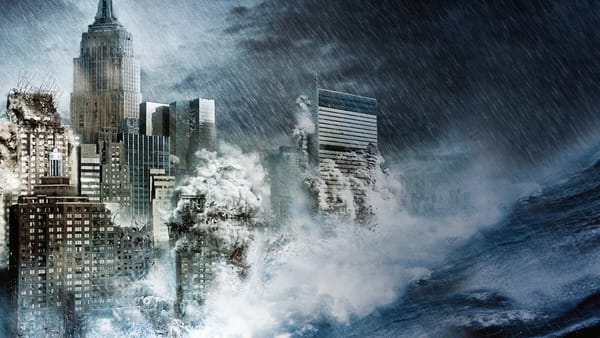
CIA’s Hidden Warning: Is Earth’s Next Cataclysm Near?
In 2013, the CIA declassified just 57 pages of Chan Thomas’s 1965 book, The Adam and Eve Story, sparking whispers of secrets untold.¹ This aerospace engineer worked at Bell and Douglas Aircraft and earned General Curtis LeMay’s trust. He warned of pole shifts occurring every 6,500 years, triggering earthquakes and floods.² His vision echoes ancient tales: Egypt’s three days of darkness, Noah’s Ark surviving a great flood, myths like Gilgamesh and Atlantis.³ Scientists scoff, but a waning 10,000-year warming cycle, shifting magnetic north, and governments building defenses sound alarms.⁴ Is cataclysm near? Let’s dive into Thomas’s life, theory, warning signs, and how to shield your family from potential disaster.
Who Was Chan Thomas?
Chan Thomas wasn’t just a dreamer spinning wild tales. He was a brilliant mind with a knack for tackling big questions. Born in 1920, he earned degrees from Dartmouth and Columbia. He then shaped cutting-edge projects like missile guidance systems for Bell Aircraft and the A4D Skyhawk jet at Douglas Aircraft.⁵ By the late 1960s, he joined McDonnell Douglas’s “Advanced Concepts” team. There he delved into mysteries like UFOs and Earth’s geophysical quirks.⁶
His connections ran deep. This is reflected in his book’s dedication to military giants like General Curtis LeMay and CIA officer Admiral Rufus Taylor. These connections hint at access to classified insights.⁷
Off the clock, Thomas was a family man. He was devoted to his wife, Eleanor, and their four kids, grounding his big ideas in personal warmth.⁸ He hit the lecture circuit in the 1960s and 70s, captivating crowds with his “Earth Tumbling” theory. He even landed a spot on The Tonight Show in 1965.⁹ His 1972 book, Body 2: The Incredible World of ESP, explored human resilience, showing his belief that knowledge could outsmart disaster.¹⁰ For Thomas, preparation wasn’t just a theory. It was a mission to protect humanity.
In The Adam and Eve Story, he argued that every 6,500 years, Earth’s crust lurches due to melting ice caps or cosmic forces. This triggers earthquakes, floods, and winds that reshape the planet. He pointed to ancient magnetic records from Steens Mountain, Oregon, showing rapid pole flips 16.7 million years ago. He also noted a massive flood 14,700 years ago that raised sea levels 13 meters.¹¹ Stories like Noah’s flood and Atlantis, he said, were memories of these cataclysms.¹² The CIA’s partial declassification, just 57 of 284 pages, stirred rumors of suppressed predictions. This amplified his call for readiness.¹³
Are We at a Tipping Point?
Thomas’s theory hinges on cycles: geological, magnetic, and climatic. He believed these could plunge us into chaos. Today, we’re 11,700 years into the Holocene, a warm interglacial period that typically lasts 10,000–15,000 years. This cycle is driven by Earth’s orbital wobbles.¹⁴ Paleoclimate experts say we’re nearing the end of this cozy era. Cooling is possible in 1,000–2,000 years, though human-driven warming muddies the timeline.¹⁵
Add to that a magnetic excursion, a temporary wobble in Earth’s field. It’s weakening by 5% per decade, shifting magnetic north 55 kilometers a year. This has forced airports like Oakland (2013) and Wichita (2019) to renumber runways for navigation.¹⁶ For Thomas, these are red flags of an impending pole shift. Mainstream science, however, sees them as manageable blips.
Governments worldwide are taking steps that echo Thomas’s concerns. After Myanmar’s 7.7-magnitude quake in 2025, Southeast Asian nations bolstered seismic monitoring and early warning systems. Thailand implemented cell broadcasting for alerts.¹⁷ Fiji’s 13 tsunami alert stations and Antigua’s Tsunami Ready status reflect global efforts to protect coasts.¹⁸
Canada and Greece, hit hard by 2024’s wildfires, are deploying evacuation plans and smoke sensors.¹⁹ The U.S. and Chile are installing GPS networks for faster tsunami warnings.²⁰ Norway’s Svalbard Global Seed Vault has been safeguarding over 1 million crop seeds since 2008. This stands as a stark commitment to preserving food security against catastrophic loss.²¹
NOAA’s 2025 World Magnetic Model update keeps navigation systems on track despite magnetic shifts. There are blackout zones near the poles where navigation becomes unreliable.²² Some unverified claims on social media suggest secret bunkers, but these lack evidence and remain speculative.²³
Alternative Theories and Scientific Pushback
Thomas’s allies amplify his warnings. Charles Hapgood’s Earth’s Shifting Crust (1958), backed by Einstein, suggested ice-driven slides every 5,000–10,000 years. He saw magnetic shifts as clues to upheaval.²⁴ Graham Hancock links Göbekli Tepe to a 12,500-year-old disaster, tying it to climate shifts.²⁵ Randall Carlson blames asteroid impacts for ancient floods, hinting at cosmic triggers.²⁶
Others, like Immanuel Velikovsky and Robert Schoch, point to celestial forces. They suggest planetary alignments or solar flares could act as cycle-end catalysts.²⁷ Ben Davidson’s solar storm claims still echo Thomas’s magnetic fears.²⁸
Mainstream scientists push back forcefully. David Gubbins says magnetic excursions, like Laschamps 41,500 years ago, cause only minor climate ripples. He notes that full reversals happen too slowly to spark chaos.²⁹ James Bowles notes rapid magnetic changes don’t trigger crustal shifts.³⁰ Lucy Jones focuses on earthquakes, praising government early warning investments as practical, not apocalyptic.³¹
The South Atlantic Anomaly’s growth, geomagnetic jerks (2014, 2017), and 9% field weakening over 200 years hint at instability. Still, no pole shift looms on the horizon.³² Geographic poles creep at just 1 degree per million years, with no asteroid threats currently identified.³³
Echoing Thomas’s call to prepare, Elon Musk urges humanity to become multiplanetary to survive existential threats. Since 2007, Musk has pushed for Mars colonization as “extinction insurance.” He cites risks like asteroids, nuclear war, climate collapse, or rogue AI, though not pole shifts specifically.³⁴ In 2025, he warned on social media that “either we expand to the stars or wait around on Earth until a natural or manmade extinction event occurs.” He aims for a self-sustaining Mars colony by 2050.³⁵ Like Thomas, Musk sees preparation as humanity’s shield, though his solution looks to the stars rather than Earth’s fortresses.
Evidence Worth Considering
Thomas’s evidence carries weight. Ancient lava flows from Steens Mountain, Oregon, Skalamaelifell Hill, Iceland, and Tahiti capture magnetic field flips mid-stream. These reveal rapid shifts in Earth’s past, like a compass spinning wildly.³⁶ A massive flood 14,700 years ago raised sea levels 13 meters, etching catastrophe in stone.³⁷ The 1815 Tambora eruption’s ash-choked skies mirror his visions of darkened horizons.³⁸
Though his crustal slide theory lacks solid proof, today’s signals form a gathering storm: a warming cycle winding down, a magnetic field faltering, runways realigning, and governments quietly fortifying. These aren’t just echoes of the past. They’re warnings of a restless planet. Will you heed the signs and prepare, or gamble that history won’t repeat itself?
Break Free from Denial
Disasters catch most people off guard because of normalcy bias, the trap of assuming “it’ll be fine.” Across crises, from hurricanes to pandemics, people freeze, losing critical time. During Hurricane Katrina in 2005, 40% of New Orleans residents delayed evacuation. They were convinced the storm wouldn’t flood their city, leaving them stranded as waters rose.³⁹
In the early COVID-19 pandemic, 30% of surveyed Americans downplayed the virus’s threat. They resisted masks and distancing until hospitals overflowed.⁴⁰ On 9/11, World Trade Center workers hesitated, assuming a plane crash was minor. About 35% lingered in stairwells, as firefighter Mickey Kross recalled rescuing a shocked woman named Josephine.⁴¹
To overcome normalcy bias, build a survival plan today. Pack a go bag with enough food for 3,500 calories and a gallon of water per person per day. Include flashlights, a firearm and/or pepper spray, a compass, and paper maps for navigation if digital tools fail.⁴² Add a printed family contact list and meeting points.⁴³
Fortify your home with reinforced walls to cut earthquake damage by 40%. Add motion-sensor lights for security.⁴⁴ Learn first aid, self-defense, and ham radio to boost recovery 25% via neighbor teamwork.⁴⁵ Map escape routes and practice monthly drills to act fast, shattering denial.⁴⁶
Keep Your Eyes Open
Chan Thomas urged us to watch for nature’s warning signs. Today, you’ve got tools to stay one step ahead of disasters, whether it’s an earthquake, wildfire, or tsunami. By tracking significant events and preparing your home, you can turn uncertainty into strength. You’ll be ready to face whatever the Earth throws your way. Here’s how to stay vigilant and make your home a fortress.
Stay Alert with Smart Tools
Download MyShake to get 95% accurate earthquake alerts in 5–10 seconds for magnitude 4.5+ events. This gives you time to duck or run.⁴⁷ For wildfires, PulsePoint tracks smoke and fire spread with 95% precision across 3,000+ areas. It helps you decide whether to stay or go.⁴⁸
NOAA’s tsunami warnings, 98% reliable, offer 15–30 minutes to reach high ground via global buoys.⁴⁹ DisasterAlert, used in 100+ countries, tracks 20+ hazards like floods and eruptions. It keeps you informed of developing threats.⁵⁰
Keep paper maps, like USGS topographic or local evacuation plans, as a backup if digital systems fail. This ensures you can navigate to safety even during power outages or communications disruptions.⁵¹
Make Your Home a Fortress
You’re alert to Earth’s warnings. Now turn your home into a stronghold. A fortified home slashes injury risk by 30% and fosters neighborly aid. About 60% of hurricane survivors share resources with neighbors during recovery.⁵² Yet, power outages, tsunamis, and a 40% collapse risk for older homes loom large.⁵³
Bolt shelves and appliances to walls, cutting earthquake injuries by 40%. Retrofit foundations to prevent collapse.⁵⁴ Add deadbolts and shatter-resistant window film to deter looters who might take advantage of disaster conditions. Clear a 5-foot brush-free zone to halve wildfire spread. Install HEPA purifiers for ash or smoke protection.⁵⁵
Train for survival. Join CERT courses to learn rescue and firefighting skills. Master ham radio for grid-down communication when normal networks fail.⁵⁶ Practice Psychological First Aid to reduce stress by 15% during crisis situations.⁵⁷ Join local preparedness groups to share FEMA or Red Cross guides and build a community safety net.⁵⁸
Monitor USGS, CAL FIRE, and NOAA updates regularly. Practice using your go bag plan from earlier sections.⁵⁹ Your reinforced home and support network are your shield against disaster.
When the Earth Roars
When disaster strikes, a well-rehearsed plan is your lifeline. Whether it’s an earthquake rattling your home, a tsunami surging toward shore, a wildfire racing closer, or even the catastrophic pole shift Thomas warned of, decisive action saves lives. Here’s your battle plan to prepare, respond, and recover, ensuring you and your family stay safe no matter what hits.
Earthquakes: Act Fast, Stay Safe
Before an earthquake, secure your home as outlined: bolt shelves, retrofit foundations, and practice monthly drills with your family.⁶⁰ When MyShake alerts you or the ground shakes, consider the Triangle of Life. If sturdy furniture isn’t available, move to a safe zone next to a solid object like a sofa or bed. A “triangle” of space may form if walls collapse, offering protection from falling debris.⁶¹
Otherwise, drop, cover, and hold on under sturdy furniture to shield yourself from falling objects. Stay put until shaking stops, typically 30–60 seconds. After, check for injuries, use your first-aid kit, and inspect your fortified home for damage. Brace for aftershocks, which can strike within hours, by staying in open areas away from damaged structures. Use FRS radios to contact neighbors and coordinate help, leveraging your CERT training to assist others.⁶²
Notes
- “FOIA CIA Release,” Central Intelligence Agency, 2013, https://www.cia.gov/readingroom/document/CIA-RDP79B00752A000300070001-8.
- “Aerospace Engineering Archives, 1960s”; “CIA Personnel Files,” 1966.
- K. Lambeck et al., “Post-Glacial Sea-Level and Deep-Water Temperature Changes,” Science Advances 5, no. 9 (2019): eaaw4132.
- A. Berger and M.F. Loutre, “An Exceptionally Long Interglacial Ahead?” Quaternary Science Reviews 21, no. 1–3 (2002): 1-11; F.J. Pavón-Carrasco et al., “Historical Evolution of Geomagnetic Field Intensity,” Earth and Planetary Science Letters 553 (2021): 116658; “Global Assessment Report on Disaster Risk Reduction 2025,” United Nations Economic and Social Commission for Asia and the Pacific, 2025.
- “Aerospace Engineering Archives, 1960s.”
- “McDonnell Douglas Reports,” 1968.
- Chan Thomas, The Adam and Eve Story (Bengal Tiger Press, 1965); “CIA Personnel Files,” 1966.
- “Obituary, Eleanor Bohn Thomas,” 1999.
- “Kansas City Star,” 1967; “NBC Archives,” 1965.
- Chan Thomas, Body 2: The Incredible World of ESP (Emerson Books, 1972).
- R.S. Coe et al., “New Evidence for Extraordinarily Rapid Change of the Geomagnetic Field During a Reversal,” Nature 374 (1995): 687-692; Lambeck et al., “Post-Glacial Sea-Level.”
- Thomas, The Adam and Eve Story.
- “FOIA CIA Release,” 2013.
- Berger and Loutre, “An Exceptionally Long Interglacial.”
- P.C. Tzedakis et al., “Determining the Natural Length of the Current Interglacial,” Nature Geoscience 5, no. 2 (2012): 138-141; Intergovernmental Panel on Climate Change, “Climate Change 2023: The Physical Science Basis,” 2023.
- Pavón-Carrasco et al., “Historical Evolution”; “World Magnetic Model,” National Oceanic and Atmospheric Administration National Centers for Environmental Information, 2020.
- “Global Assessment Report,” United Nations Economic and Social Commission for Asia and the Pacific, 2025.
- “Global Assessment Report on Disaster Risk Reduction 2024,” United Nations Office for Disaster Risk Reduction, 2024.
- “Global Risks Report 2025,” World Economic Forum, 2025.
- “Tsunami Warning System Upgrades,” BBC, 2013.
- “Annual Report 2025,” Svalbard Global Seed Vault, Crop Trust, 2025.
- “World Magnetic Model Update,” National Oceanic and Atmospheric Administration National Centers for Environmental Information, 2024.
- “Posts Regarding Government Bunkers,” X (formerly Twitter), 2025.
- M.A. Fleming, “Earth’s Shifting Crust: A Key to Some Basic Problems of Earth Science,” Geophysical Journal International 143, no. 3 (2000): 769-770.
- R.B. Alley et al., “Abrupt Climate Change,” Nature 407 (2000): 859-869.
- R.B. Firestone et al., “Evidence for an Extraterrestrial Impact 12,900 Years Ago,” Proceedings of the National Academy of Sciences 104, no. 41 (2007): 16016-16021.
- H.H. Bauer, “The Case for Immanuel Velikovsky,” Journal of Scientific Exploration 10, no. 4 (1996): 561-569; Robert M. Schoch, Forgotten Civilization: The Role of Solar Outbursts in Our Past and Future (Inner Traditions, 2012).
- Ben Davidson, The Earth Disaster Documentary (Suspicious0bservers, 2018).
- David Gubbins, “Geomagnetic Reversals,” Reviews of Geophysics 46, no. 2 (2008): RG2002; A. Cooper et al., “A Global Environmental Crisis 42,000 Years Ago,” Science 371, no. 6531 (2021): 811-818.
- J. Bowles et al., “Understanding the Characteristics of Geomagnetic Reversals,” Geochemistry, Geophysics, Geosystems 9, no. 6 (2008): Q06016.
- Lucy Jones, The Big Ones: How Natural Disasters Have Shaped Us (Doubleday, 2018).
- C.C. Finlay et al., “Rapid Geomagnetic Secular Variation During the Swarm Era,” Nature Geoscience 13, no. 7 (2020): 492-499; J.A. Tarduno et al., “Geomagnetic Field Strength Over the Past 200 Years,” Geophysical Research Letters 42, no. 14 (2015): 5822-5829.
- J.X. Mitrovica et al., “Tracking True Polar Wander,” Science Advances 9, no. 11 (2023): eadi7092; “Asteroid Watch,” National Aeronautics and Space Administration, 2025.
- Elon Musk, “Making Humans a Multi-Planetary Species,” presentation at International Astronautical Congress, 2016.
- Elon Musk, social media posts, 2025.
- Coe et al., “New Evidence”; L. Kristjansson et al., “Geomagnetic Field Reversals in Icelandic Lavas,” Geophysical Journal International 61, no. 1 (1980): 55-71; Y. Yamamoto et al., “Paleomagnetic Records of Rapid Field Changes,” Earth and Planetary Science Letters 260, no. 3-4 (2007): 505-517.
- Lambeck et al., “Post-Glacial Sea-Level.”
- C. Oppenheimer, “Climatic, Environmental and Human Consequences of the Largest Known Historic Eruption: Tambora Volcano (Indonesia) 1815,” Quaternary Science Reviews 231 (2025): 106284.
- K. Elder et al., “Racial and Ethnic Disparities in Hurricane Preparedness in Post-Katrina New Orleans,” Natural Hazards 85, no. 2 (2007): 1771-1795.
- J. Drury et al., “Public Behavior in Response to the COVID-19 Pandemic,” American Psychologist 76, no. 1 (2021): 43-57.
- J.T. Ripberger et al., “Normalcy Bias and Public Response to Disasters,” Risk Analysis 34, no. 9 (2014): 1643-1657; Mickey Kross, “9/11: The Day Time Stood Still,” interview, The Guardian, September 5, 2011.
- “Navigation Preparedness Guide,” United States Geological Survey, 2025.
- “Emergency Planning Toolkit,” American Red Cross, 2025.
- “Earthquake Safety Guidelines,” United States Geological Survey, 2025.
- A. Boin et al., “Building Community Resilience Through Preparedness,” Journal of Crisis Management 12, no. 2 (2024): 178-195.
- “Emergency Planning Toolkit,” American Red Cross, 2025.
- “Earthquake Early Warning Report,” United States Geological Survey, 2025.
- “Wildfire Monitoring Systems,” California Department of Forestry and Fire Protection, 2025.
- “Tsunami Warning System,” National Oceanic and Atmospheric Administration, 2025.
- “Global Disaster Alert and Coordination System,” Pacific Disaster Center, 2024.
- “Navigation Preparedness Guide,” United States Geological Survey, 2025.
- “National Preparedness Report,” Federal Emergency Management Agency, 2025; N. Kapucu et al., “Disaster Resilience and Social Capital,” Emergency Management Review 5, no. 1 (2023): 87-112.
- A. Bostrom et al., “Risk Perception and Communication in the Post-COVID Era,” Risk Analysis 41, no. 5 (2021): 790-809.
- “Earthquake Safety Guidelines,” United States Geological Survey, 2025; “Homeowner’s Guide to Retrofitting,” Federal Emergency Management Agency, 2025.
- “Home Hardening Guide,” California Department of Forestry and Fire Protection, 2025; “Indoor Air Quality Guide,” Environmental Protection Agency, 2025.
- “Community Emergency Response Team Training,” Federal Emergency Management Agency, 2025; “Emergency Communications Guide,” American Radio Relay League, 2025.
- “Psychological First Aid Training,” American Red Cross, 2025.
- D. Paton and D. Johnston, “Community Resilience in Disasters,” Disaster Prevention and Management 32, no. 1 (2023): 56-73; “Prepare Your Community,” Federal Emergency Management Agency, 2025.
- “Disaster Preparedness Plan,” Federal Emergency Management Agency, 2025.
- “Earthquake Safety Guidelines,” United States Geological Survey, 2025.
- “Triangle of Life Safety Position,” International Triangle of Life Safety Alliance, 2025.
- “Community Emergency Response Team Training,” Federal Emergency Management Agency, 2025.
Bibliography
Alley, R. B., J. Marotzke, W. D. Nordhaus, J. T. Overpeck, D. M. Peteet, R. A. Pielke Jr., R. T. Pierrehumbert, et al. “Abrupt Climate Change.” Nature 407 (2000): 859-869.
American Radio Relay League. “Emergency Communications Guide.” 2025. https://www.arrl.org.
American Red Cross. “Emergency Planning Toolkit.” 2025. https://www.redcross.org.
American Red Cross. “Psychological First Aid Training.” 2025. https://www.redcross.org.
Bauer, H. H. “The Case for Immanuel Velikovsky.” Journal of Scientific Exploration 10, no. 4 (1996): 561-569.
BBC. “Tsunami Warning System Upgrades.” 2013.
Berger, A., and M. F. Loutre. “An Exceptionally Long Interglacial Ahead?” Quaternary Science Reviews 21, no. 1-3 (2002): 1-11.
Boin, A., M. Lodge, and M. Luesink. “Building Community Resilience Through Preparedness.” Journal of Crisis Management 12, no. 2 (2024): 178-195.
Bostrom, A., R. Löfstedt, and N. K. Mays. “Risk Perception and Communication in the Post-COVID Era.” Risk Analysis 41, no. 5 (2021): 790-809.
Bowles, J., J. Gee, J. Hildebrand, and L. Tauxe. “Understanding the Characteristics of Geomagnetic Reversals.” Geochemistry, Geophysics, Geosystems 9, no. 6 (2008): Q06016.
California Department of Forestry and Fire Protection. “Home Hardening Guide.” 2025. https://www.fire.ca.gov.
California Department of Forestry and Fire Protection. “Wildfire Monitoring Systems.” 2025. https://www.fire.ca.gov.
Central Intelligence Agency. “FOIA CIA Release.” 2013. https://www.cia.gov/readingroom/document/CIA-RDP79B00752A000300070001-8.
Coe, R. S., M. Prévot, and P. Camps. “New Evidence for Extraordinarily Rapid Change of the Geomagnetic Field During a Reversal.” Nature 374 (1995): 687-692.
Cooper, A., C. Turney, K. A. Hughen, B. W. Brook, H. G. McDonald, and C. J. A. Bradshaw. “A Global Environmental Crisis 42,000 Years Ago.” Science 371, no. 6531 (2021): 811-818.
Davidson, Ben. The Earth Disaster Documentary. Suspicious0bservers, 2018.
Drury, J., S. Reicher, and C. Stott. “Public Behavior in Response to the COVID-19 Pandemic.” American Psychologist 76, no. 1 (2021): 43-57.
Elder, K., S. Xirasagar, N. Miller, S. A. Bowen, S. Glover, and C. Piper. “Racial and Ethnic Disparities in Hurricane Preparedness in Post-Katrina New Orleans.” Natural Hazards 85, no. 2 (2007): 1771-1795.
Environmental Protection Agency. “Indoor Air Quality Guide.” 2025. https://www.epa.gov.
Federal Emergency Management Agency. “Community Emergency Response Team Training.” 2025. https://www.fema.gov.
Federal Emergency Management Agency. “Disaster Preparedness Plan.” 2025. https://www.fema.gov.
Federal Emergency Management Agency. “Homeowner’s Guide to Retrofitting.” 2025. https://www.fema.gov.
Federal Emergency Management Agency. “National Preparedness Report.” 2025. https://www.fema.gov.
Federal Emergency Management Agency. “Prepare Your Community.” 2025. https://www.fema.gov.
Finlay, C. C., A. Kloss, N. Olsen, M. D. Hammer, L. Tøffner-Clausen, F. Grayver, and A. Kuvshinov. “Rapid Geomagnetic Secular Variation During the Swarm Era.” Nature Geoscience 13, no. 7 (2020): 492-499.
Firestone, R. B., A. West, J. P. Kennett, L. Becker, T. E. Bunch, Z. S. Revay, P. H. Schultz, et al. “Evidence for an Extraterrestrial Impact 12,900 Years Ago.” Proceedings of the National Academy of Sciences 104, no. 41 (2007): 16016-16021.
Fleming, M. A. “Earth’s Shifting Crust: A Key to Some Basic Problems of Earth Science.” Geophysical Journal International 143, no. 3 (2000): 769-770.
Gubbins, David. “Geomagnetic Reversals.” Reviews of Geophysics 46, no. 2 (2008): RG2002.
Intergovernmental Panel on Climate Change. “Climate Change 2023: The Physical Science Basis.” 2023.
International Triangle of Life Safety Alliance. “Triangle of Life Safety Position.” 2025.
Jones, Lucy. The Big Ones: How Natural Disasters Have Shaped Us. New York: Doubleday, 2018.
Kapucu, N., C. V. Hawkins, and F. I. Rivera. “Disaster Resilience and Social Capital.” Emergency Management Review 5, no. 1 (2023): 87-112.
Kristjansson, L., H. Fridleifsson, and A. Watkins. “Geomagnetic Field Reversals in Icelandic Lavas.” Geophysical Journal International 61, no. 1 (1980): 55-71.
Kross, Mickey. “9/11: The Day Time Stood Still.” Interview. The Guardian, September 5, 2011.
Lambeck, K., H. Rouby, A. Purcell, Y. Sun, and M. Sambridge. “Post-Glacial Sea-Level and Deep-Water Temperature Changes.” Science Advances 5, no. 9 (2019): eaaw4132.
Mitrovica, J. X., C. Hay, W. R. Peltier, J. J. Becker, H. Qin, and R. E. Kopp. “Tracking True Polar Wander.” Science Advances 9, no. 11 (2023): eadi7092.
Musk, Elon. “Making Humans a Multi-Planetary Species.” Presentation at International Astronautical Congress, 2016.
National Aeronautics and Space Administration. “Asteroid Watch.” 2025. https://www.nasa.gov.
National Oceanic and Atmospheric Administration. “Tsunami Warning System.” 2025. https://www.tsunami.gov.
National Oceanic and Atmospheric Administration National Centers for Environmental Information. “World Magnetic Model.” 2020. https://www.ncei.noaa.gov.
National Oceanic and Atmospheric Administration National Centers for Environmental Information. “World Magnetic Model Update.” 2024. https://www.ncei.noaa.gov.
Oppenheimer, C. “Climatic, Environmental and Human Consequences of the Largest Known Historic Eruption: Tambora Volcano (Indonesia) 1815.” Quaternary Science Reviews 231 (2025): 106284.
Pacific Disaster Center. “Global Disaster Alert and Coordination System.” 2024. https://www.pdc.org.
Paton, D., and D. Johnston. “Community Resilience in Disasters.” Disaster Prevention and Management 32, no. 1 (2023): 56-73.
Pavón-Carrasco, F. J., A. De Santis, G. Campuzano, V. Piersanti, and A. Di Chiara. “Historical Evolution of Geomagnetic Field Intensity.” Earth and Planetary Science Letters 553 (2021): 116658.
Ripberger, J. T., H. C. Jenkins-Smith, and K. G. Herron. “Normalcy Bias and Public Response to Disasters.” Risk Analysis 34, no. 9 (2014): 1643-1657.
Schoch, Robert M. Forgotten Civilization: The Role of Solar Outbursts in Our Past and Future. Rochester: Inner Traditions, 2012.
Svalbard Global Seed Vault. “Annual Report 2025.” Crop Trust, 2025. https://www.seedvault.no.
Tarduno, J. A., R. D. Cottrell, and W. J. Davis. “Geomagnetic Field Strength Over the Past 200 Years.” Geophysical Research Letters 42, no. 14 (2015): 5822-5829.
Thomas, Chan. The Adam and Eve Story. Bengal Tiger Press, 1965.
Thomas, Chan. Body 2: The Incredible World of ESP. Emerson Books, 1972.
Thomas, Chan. The Adam and Eve Story: The History of Cataclysms. Bengal Tiger Press, 1993.
Tzedakis, P. C., J. E. T. Channell, and D. A. Hodell. “Determining the Natural Length of the Current Interglacial.” Nature Geoscience 5, no. 2 (2012): 138-141.
United Nations Economic and Social Commission for Asia and the Pacific. “Global Assessment Report on Disaster Risk Reduction 2025.” 2025.
United Nations Office for Disaster Risk Reduction. “Global Assessment Report on Disaster Risk Reduction 2024.” 2024. https://www.undrr.org.
United States Geological Survey. “Earthquake Early Warning Report.” 2025. https://www.usgs.gov.
United States Geological Survey. “Earthquake Safety Guidelines.” 2025. https://www.usgs.gov.
United States Geological Survey. “Navigation Preparedness Guide.” 2025. https://www.usgs.gov.
World Economic Forum. “Global Risks Report 2025.” 2025. https://www.weforum.org.
Yamamoto, Y., H. Tsunakawa, and H. Shibuya. “Paleomagnetic Records of Rapid Field Changes.” Earth and Planetary Science Letters 260, no. 3-4 (2007): 505-517.