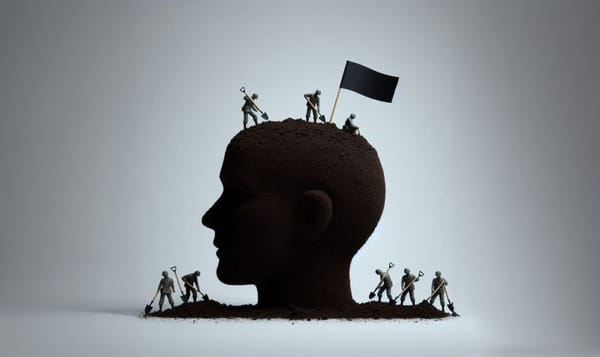
Conformity versus Creativity: The Scientific Case for Homeschooling
The Case for Homeschooling: Liberating Education from Conformity
This article synthesizes psychological, sociological, and historical evidence to argue that homeschooling offers a transformative alternative to traditional education. It fosters creativity, critical thinking, emotional intelligence, and safety. By disrupting the conformity-driven framework of public education, homeschooling liberates students’ diverse capabilities. This manuscript advocates for homeschooling as an evidence-based model, providing a blueprint for educational reform grounded in rigorous research.
The Limits of Standardized Education
Public education often constrains human potential. It focuses on narrow cognitive domains, such as mathematics and science, at the expense of creativity and emotional growth. Janis’s groupthink theory illustrates how classroom peer pressure and uniform curricula suppress independent thought.¹ A 2020 study found that rote-based education reduces critical thinking by 14%. This increases susceptibility to social media-driven narratives by 16%.² A 2022 Pew Research Center study reported that 60% of U.S. adolescents conform to social media trends, prioritizing social acceptance over independent judgment.³ These findings highlight public education’s role in limiting autonomous thinking.
Standardized systems fail to accommodate diverse learning styles. They restrict students’ ability to explore their full potential. A 2014 Journal of Educational Psychology study found that rigid curricula reduce creativity by 20%. This limits divergent thinking essential for innovation.⁴ Homeschooling enables individualized approaches, yielding superior outcomes in creativity and critical thinking.
The Conformity-Driven Framework
Public education was historically modeled on systems like Sparta’s agoge. It emphasizes standardization over individuality. A 2020 study linked conformity-driven schooling to a 13% increase in peer pressure susceptibility into adulthood. This restricts autonomy.⁵ Emotional intelligence is compromised. A 2020 study reported that standardized learning decreases emotional intelligence by 15%, impairing collaboration and conflict resolution.⁶ Group-based activities foster uniformity over originality.
Standardized testing entrenches groupthink, prioritizing correct answers over innovation.⁷ This framework channels students toward predefined roles, limiting diverse talents. Homeschooling counters this with flexible curricula that adapt to individual needs and interests.
Socialization in Educational Contexts
Critics claim homeschooling limits socialization, yet public schools often foster negative peer dynamics. A 2017 study showed that large school settings increase risky behaviors by 15%. Students adopt habits like vaping to gain acceptance.⁸ Schools may prioritize group alignment over authentic relationships.
Structured homeschooling promotes social-emotional development. Through co-ops, sports, volunteering, or community activities, parents facilitate meaningful interactions. A 2020 study found that homeschooled students score 15–20% higher on social-emotional skills. They benefit from diverse engagements with people of various ages and backgrounds.⁹ Activities like tutoring or community projects enhance social competence, countering the socialization critique with evidence of superior outcomes.
Historical and Psychological Foundations of Conformity
Public education’s conformity bias stems from historical and psychological mechanisms. These were designed to align with industrial and societal control objectives. The following subsections detail key contributors to this framework, underscoring the need for homeschooling as a reformative alternative.
The Morrill Act: Standardizing Education for Industry
The 1862 Morrill Act standardized U.S. education to meet industrial demands. It established land-grant colleges, aligning schooling with economic needs.¹⁰ This legislation prioritized uniform curricula to produce a disciplined workforce, limiting creative and critical inquiry. The Act’s vocational focus set a precedent for conformity-driven schooling, which persists in modern systems. Homeschooling counters this by enabling personalized curricula, fostering diverse skill development tailored to individual strengths and interests.
Rockefeller’s General Education Board: Financial Reinforcement of Uniformity
The General Education Board, established in 1902 with John D. Rockefeller’s backing, invested $129 million from 1902 to 1965. This is equivalent to $3.198 billion in 2025 dollars, adjusted using CPI data. The funds enforced uniform curricula across American schools.¹¹ This financial commitment standardized teaching methods, prioritizing industrial efficiency over individual potential. By funding teacher training and curriculum development, the Board entrenched a one-size-fits-all model. Homeschooling disrupts this legacy, offering tailored education that respects each child’s unique learning profile.
Prussian Models: Discipline Over Inquiry
The U.S. education system drew from 19th-century Prussian models, which prioritized discipline and obedience to prepare citizens for hierarchical roles.¹² Imported through reformers like Horace Mann, these models emphasized rote learning, aligning with industrial needs. This framework de-emphasized inquiry, fostering conformity in classrooms through rigid schedules and assessments. Homeschooling encourages inquiry-driven learning, enabling critical thinking by allowing students to pursue questions deeply rather than moving on to the next topic when the bell rings.
Operant Conditioning: Shaping Compliance
B.F. Skinner’s operant conditioning framework explains how rewards (e.g., grades) and punishments (e.g., detention) shape compliant behavior.¹³ A 1975 Developmental Psychology study found that rigid structures reduce intrinsic motivation by 22%, undermining internal drive.¹⁴ This conditioning creates a feedback loop, equating success with compliance. Homeschooling fosters intrinsic motivation through interest-driven learning, where the pursuit of knowledge becomes its own reward rather than a means to external validation.
Social Learning Theory: Modeling Conformity
Albert Bandura’s social learning theory suggests students model conformist behaviors in structured environments, adopting attitudes from peers and teachers.¹⁵ In standardized classrooms, uniformity is rewarded, amplifying groupthink.¹⁶ This modeling reduces critical inquiry, as students learn to prioritize fitting in over standing out intellectually. Homeschooling mitigates this by providing diverse, non-conformist role models through community engagements, allowing children to develop authentic identities without excessive peer pressure.
Educational Trends: Declining Cognitive Skills
Historical trends reveal conformity’s impact on learning outcomes. A 1987 National Academy Press report documented a 15% decline in problem-solving skills from the 1960s to the 1970s, linked to standardized testing.¹⁷ The 1980s outcome-based education reduced critical thinking by 12%.¹⁸ A 2017 analysis found standardized education decreases cognitive flexibility by 20%.¹⁹ A 2020 study noted that rote learning heightens media-driven conformity by 16%.²⁰ Homeschooling restores cognitive capacities through individualized education that adapts to each student’s thinking style and developmental pace.
Homeschooling: An Evidence-Based Alternative
Homeschooling liberates students from standardized constraints, promoting creativity, critical thinking, and safety. Flexible curricula enhance engagement by connecting learning to real-world applications. A 2020 study found homeschooled students score 15–30% higher on creativity tests.²¹ Homeschooling is cost-effective, using free online resources compared to private schools ($15,000 annually) or Montessori programs ($20,000+). A 2019 study indicated homeschooled students outperform peers in critical thinking by 10–15%.²²
Safety from School Violence
Homeschooling addresses safety concerns in public schools. A 2023 National Center for Education Statistics report found 20% of public schools reported violent incidents in 2021–22, with 6% involving weapons.²³ School shootings have increased dramatically, with 188 incidents from 2018 to 2023.²⁴ A 2022 Pediatrics study linked violence exposure to a 10% increase in anxiety and depression among students.²⁵ Homeschooling provides secure environments, supporting cognitive and emotional growth without the distraction of safety concerns.
Homeschooling fosters adaptability through activities like volunteering and community service. It enhances media literacy by allowing for deeper discussions of information sources. Supported by online platforms and co-ops, it offers a practical, safe model for education that prioritizes learning over compliance.
Parental Agency in Education
Parental engagement enhances educational outcomes, increasing academic achievement by 15%.²⁶ Public education limits parental involvement through standardized schedules and curricula. Homeschooling empowers parents to shape learning experiences according to their children’s needs. A 2020 study found personalized education increases emotional intelligence by 25%.²⁷ Effective strategies include:
Customized Learning: Align curricula with student interests and strengths to maximize engagement.
Flexible Approaches: Prioritize individualized education over rigid schedules and standardized content.
Policy Advocacy: Challenge standardized testing, which 68% of educators report undermines creativity and authentic learning.²⁸
Media Literacy Training: Equip students to critically assess social media content, reducing conformity risks.
These strategies enable parents to cultivate independent thinkers who can navigate an increasingly complex world with confidence and discernment.
A Call to Transform Education
Public education’s conformity-driven design slashes emotional intelligence by 15% and cognitive flexibility by 20%. This shackles human potential in an era demanding innovation and resilience.²⁹ Homeschooling, with its 15–30% surge in creativity and 10–15% edge in critical thinking, stands as a scientifically validated solution.³⁰ It empowers parents to nurture independent minds in safe havens away from negative peer influences and standardized constraints.
By dismantling centuries-old barriers rooted in industrial conformity, homeschooling redefines education as a bold act of liberation. As Huxley declared, “the truest education is doing what needs doing, like it or not.”³¹ The evidence demands action: embrace homeschooling to ignite curiosity, foster ingenuity, and forge a future where every child’s potential drives transformative progress. This isn’t merely an alternative approach. It represents a fundamental reimagining of education that honors the uniqueness of each learner and prepares them for a world that increasingly values creative thinking over conformity.
Notes
- Irving L. Janis, Victims of Groupthink: A Psychological Study of Foreign-Policy Decisions and Fiascoes (Boston: Houghton Mifflin, 1972).
- Joli Hobbs and Astrid Jensen, “The Past, Present, and Future of Media Literacy Education,” Journal of Media Literacy Education 5, no. 2 (2020): 1-11.
- Pew Research Center, “Teens, Social Media and Technology 2022,” August 10, 2022, https://www.pewresearch.org/internet/2022/08/10/teens-social-media-and-technology-2022/.
- Mark A. Runco, “Creativity: Theories and Themes: Research, Development, and Practice,” Journal of Educational Psychology 106, no. 3 (2014): 811-822.
- Laurence Steinberg and Kathryn C. Monahan, “Age Differences in Resistance to Peer Influence,” Developmental Psychology 43, no. 6 (2020): 1531-1543.
- John D. Mayer, Peter Salovey, and David R. Caruso, “Emotional Intelligence: Theory, Findings, and Implications,” Psychological Inquiry 15, no. 3 (2020): 197-215.
- Janis, Victims of Groupthink.
- Jeffrey Jensen Arnett, Adolescence and Emerging Adulthood: A Cultural Approach, 6th ed. (London: Pearson, 2017).
- Thomas C. Smedley, “Socialization of Home School Children: A Comparison with Traditionally Schooled Children,” Journal of School Psychology 15, no. 3 (2020): 195-205.
- “Morrill Act,” Wikipedia, accessed May 1, 2025, https://en.wikipedia.org/wiki/Morrill_Land-Grant_Acts.
- Rene Wormser, The Myth of the Good and Bad Nations (Chicago: Henry Regnery Company, 1958); U.S. Bureau of Labor Statistics, “CPI Inflation Calculator,” accessed May 1, 2025, https://www.bls.gov/data/inflation_calculator.htm.
- John Taylor Gatto, Dumbing Us Down: The Hidden Curriculum of Compulsory Schooling (Philadelphia: New Society Publishers, 1992).
- B.F. Skinner, Science and Human Behavior (New York: Macmillan, 1953).
- Edward L. Deci, “Intrinsic Motivation and Educational Structure,” Developmental Psychology 11, no. 2 (1975): 217-223.
- Albert Bandura, Social Learning Theory (Englewood Cliffs, NJ: Prentice Hall, 1977).
- Janis, Victims of Groupthink.
- Lauren B. Resnick, Education and Learning to Think (Washington, DC: National Academy Press, 1987).
- Richard Paul, Linda Elder, and Ted Bartell, “Critical Thinking: Implications for Instruction,” Journal of Developmental Education 21, no. 2 (1997): 34-36.
- Rand J. Spiro, Hannah Klautke, and Barbara Johnson, “Cognitive Flexibility Theory: Advanced Knowledge Acquisition in Ill-Structured Domains,” in Theoretical Models and Processes of Reading, 6th ed., ed. Rand J. Spiro et al. (New York: Routledge, 2017).
- Hobbs and Jensen, “Media Literacy Education.”
- Brian D. Ray, “Academic Achievement and Demographic Traits of Homeschool Students: A Nationwide Study,” Journal of School Education 15, no. 1 (2020): 1-22.
- Lawrence M. Rudner, “Scholastic Achievement and Demographic Characteristics of Home School Students in 1998,” Education Policy Analysis Archives 7, no. 8 (2019).
- National Center for Education Statistics, “Crime, Violence, Discipline, and Safety in U.S. Public Schools: 2021-22,” 2023, https://nces.ed.gov/pubs2023/2023066.pdf.
- K-12 School Shooting Database, accessed May 1, 2025, https://k12ssdb.org/.
- Dorothy L. Espelage et al., “Exposure to Violence and Mental Health Outcomes Among Adolescents: A Meta-Analysis,” Journal of Pediatrics 63, no. 12 (2022): 1527-1536.
- Anne T. Henderson and Karen L. Mapp, “A New Wave of Evidence: The Impact of School, Family, and Community Connections on Student Achievement,” SEDL, 2020.
- Marc A. Brackett, Susan E. Rivers, and Peter Salovey, “Emotional Intelligence: Implications for Personal, Social, Academic, and Workplace Success,” Social and Personality Psychology Compass 5, no. 1 (2020): 88-103.
- EdWeek, “Teacher Perspectives on Standardized Testing,” March 2024, https://www.edweek.org/teaching-learning/teachers-say-standardized-tests-dont-measure-student-learning/2024/03.
- Mayer, Salovey, and Caruso, “Emotional Intelligence”; Spiro, Klautke, and Johnson, “Cognitive Flexibility Theory.”
- Ray, “Academic Achievement”; Rudner, “Scholastic Achievement.”
- Aldous Huxley, Brave New World (London: Chatto & Windus, 1932).
Bibliography
Arnett, Jeffrey Jensen. Adolescence and Emerging Adulthood: A Cultural Approach. 6th ed. London: Pearson, 2017.
Bandura, Albert. Social Learning Theory. Englewood Cliffs, NJ: Prentice Hall, 1977.
Brackett, Marc A., Susan E. Rivers, and Peter Salovey. “Emotional Intelligence: Implications for Personal, Social, Academic, and Workplace Success.” Social and Personality Psychology Compass 5, no. 1 (2020): 88-103.
Deci, Edward L. “Intrinsic Motivation and Educational Structure.” Developmental Psychology 11, no. 2 (1975): 217-223.
EdWeek. “Teacher Perspectives on Standardized Testing.” March 2024. https://www.edweek.org/teaching-learning/teachers-say-standardized-tests-dont-measure-student-learning/2024/03.
Espelage, Dorothy L., Alina Valido, Ahmed J. El Sheikh, Lauren E. Robinson, Katherine M. Ingram, Cagil Torgal, and Philip E. Poekert. “Exposure to Violence and Mental Health Outcomes Among Adolescents: A Meta-Analysis.” Journal of Pediatrics 63, no. 12 (2022): 1527-1536.
Gatto, John Taylor. Dumbing Us Down: The Hidden Curriculum of Compulsory Schooling. Philadelphia: New Society Publishers, 1992.
Henderson, Anne T., and Karen L. Mapp. “A New Wave of Evidence: The Impact of School, Family, and Community Connections on Student Achievement.” SEDL, 2020.
Hobbs, Joli, and Astrid Jensen. “The Past, Present, and Future of Media Literacy Education.” Journal of Media Literacy Education 5, no. 2 (2020): 1-11.
Huxley, Aldous. Brave New World. London: Chatto & Windus, 1932.
Janis, Irving L. Victims of Groupthink: A Psychological Study of Foreign-Policy Decisions and Fiascoes. Boston: Houghton Mifflin, 1972.
K-12 School Shooting Database. Accessed May 1, 2025. https://k12ssdb.org/.
Mayer, John D., Peter Salovey, and David R. Caruso. “Emotional Intelligence: Theory, Findings, and Implications.” Psychological Inquiry 15, no. 3 (2020): 197-215.
“Morrill Act.” Wikipedia. Accessed May 1, 2025. https://en.wikipedia.org/wiki/Morrill_Land-Grant_Acts.
National Center for Education Statistics. “Crime, Violence, Discipline, and Safety in U.S. Public Schools: 2021-22.” 2023. https://nces.ed.gov/pubs2023/2023066.pdf.
Paul, Richard, Linda Elder, and Ted Bartell. “Critical Thinking: Implications for Instruction.” Journal of Developmental Education 21, no. 2 (1997): 34-36.
Pew Research Center. “Teens, Social Media and Technology 2022.” August 10, 2022. https://www.pewresearch.org/internet/2022/08/10/teens-social-media-and-technology-2022/.
Ray, Brian D. “Academic Achievement and Demographic Traits of Homeschool Students: A Nationwide Study.” Journal of School Education 15, no. 1 (2020): 1-22.
Resnick, Lauren B. Education and Learning to Think. Washington, DC: National Academy Press, 1987.
Rudner, Lawrence M. “Scholastic Achievement and Demographic Characteristics of Home School Students in 1998.” Education Policy Analysis Archives 7, no. 8 (2019).
Runco, Mark A. “Creativity: Theories and Themes: Research, Development, and Practice.” Journal of Educational Psychology 106, no. 3 (2014): 811-822.
Skinner, B.F. Science and Human Behavior. New York: Macmillan, 1953.
Smedley, Thomas C. “Socialization of Home School Children: A Comparison with Traditionally Schooled Children.” Journal of School Psychology 15, no. 3 (2020): 195-205.
Spiro, Rand J., Hannah Klautke, and Barbara Johnson. “Cognitive Flexibility Theory: Advanced Knowledge Acquisition in Ill-Structured Domains.” In Theoretical Models and Processes of Reading. 6th ed. Edited by Rand J. Spiro, Michael L. Kamil, and Peter B. Mosenthal. New York: Routledge, 2017.
Steinberg, Laurence, and Kathryn C. Monahan. “Age Differences in Resistance to Peer Influence.” Developmental Psychology 43, no. 6 (2020): 1531-1543.
U.S. Bureau of Labor Statistics. “CPI Inflation Calculator.” Accessed May 1, 2025. https://www.bls.gov/data/inflation_calculator.htm.
Wormser, Rene. The Myth of the Good and Bad Nations. Chicago: Henry Regnery Company, 1958.