Echoes of the 1930’s
A Dire Warning on Rising Antisemitism and Global Peril
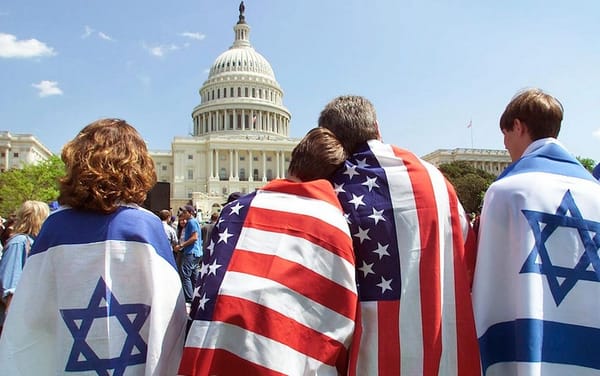
In the shadow of economic turmoil, political polarization, and societal upheaval, the world of 2015–2025 mirrors the decade preceding World War II with chilling precision. The 1930s were defined by the Great Depression, surging authoritarianism, and a nationalism that scapegoated minorities most devastatingly, the Jewish people. Today, stagnant recoveries, populist surges, and a resurgence of antisemitism at levels unseen since the pre-Holocaust era signal a dangerous trajectory.¹ This is not mere historical echo; it is a clarion call for humanity to act before history repeats its darkest chapter.
As a descendant of Holocaust refugees, I write with the understanding that Jewish survival across millennia has encoded within our collective consciousness a heightened awareness for these warning signs. The anxiety many Jews feel today is not paranoia it is the inherited wisdom of a people who have learned, through generations of persecution, to recognize the patterns that precede catastrophe. This genetic and cultural encoding of survival instincts should not be dismissed as overreaction but heeded as early warning systems that have enabled Jewish continuity across two thousand years of displacement and persecution.² To the Jewish community and all who cherish human dignity: trust these instincts. The scapegoating of Jews as the source of society’s ills represents a present and escalating peril, fueled by fear, ignorance, and malice, amplified exponentially by digital echo chambers that demand urgent action.
Historical Evolution and Political Parallels
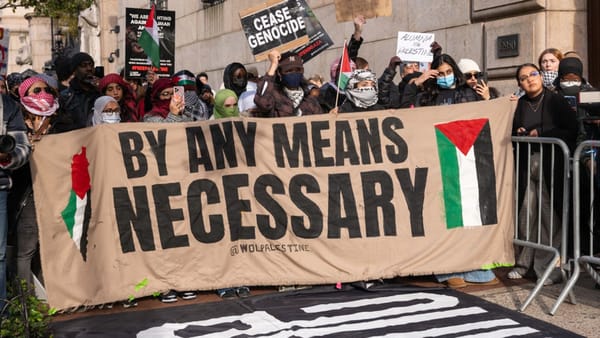
To understand today’s crisis, we must trace antisemitism’s evolution from pre-Christian Roman accusations of Jewish “hatred of the human race” through medieval blood libels and 19th-century racial pseudoscience.² The 20th century witnessed the fusion of religious, economic, and political hatreds culminating in the Holocaust, while birthing what scholars Robert Wistrich and Bernard Lewis identify as “new antisemitism” a post-1967 phenomenon blending anti-Zionism with classic tropes.³ This modern iteration frequently equates Israel with Nazi Germany or positions it as Western imperialism, particularly visible in campus protests invoking the International Holocaust Remembrance Alliance (IHRA) working definition of antisemitism, adopted by over thirty countries.⁴
The 1930s witnessed democracies crumble as leaders like Adolf Hitler and Benito Mussolini exploited economic despair, blaming Jews for national catastrophes through sophisticated propaganda campaigns leading to the Nuremberg Laws and Kristallnacht.⁵ Today’s patterns prove equally alarming: antisemitic incidents in the United States doubled from 2015 to 2025, with the Anti-Defamation League documenting 9,354 incidents in 2024 a 5 percent increase representing the highest total since systematic tracking began.⁶ Europe shows even more disturbing trends: London experienced a staggering 1,353 percent surge in antisemitic offenses during late 2023, ostensibly tied to political tensions but fundamentally rooted in age-old tropes of Jewish control.⁷
This scapegoating operates through refined mechanisms that have reached alarming new heights in 2025. Nazi “stab-in-the-back” myths find contemporary echoes in conspiracy theories ranging from QAnon’s “global cabal” to Jeffrey Epstein-Mossad connections.⁸ Most disturbingly, the September 2025 assassination of conservative activist Charlie Kirk at Utah Valley University triggered an immediate explosion of antisemitic conspiracy theories on social media platforms. Prominent figures including Candace Owens, Tucker Carlson, and Matt Gaetz amplified theories blaming Israel and Mossad for Kirk’s death, framing it as retaliation for his alleged shifting stance on Israel or for platforming critics of Israeli policy.⁹ This rhetoric, spreading across X with unprecedented velocity, demonstrates how quickly antisemitic conspiracies can colonize mainstream political discourse, contributing to a 400 percent spike in European incidents and 500 percent increase on U.S. college campuses following October 2023.¹⁰ When prominent political figures deflect blame onto Jews through sophisticated conspiracy narratives, it signals not merely prejudice but systematic democratic erosion and impending catastrophe.
Geopolitically, both eras feature multipolar tensions and arms races. The 1930s saw Germany’s rearmament and proxy wars like the Spanish Civil War.¹⁰ Today, escalating U.S.-China tensions, with China’s military spending rising 7 percent annually since 2015, create similar dynamics.¹¹ Russia’s invasion of Ukraine and ongoing Middle East conflicts echo 1938’s Munich appeasement mentality.¹² Antisemitism becomes intertwined with these tensions, as the documented 5 percent rise in global antisemitic incidents in 2024 correlates directly with media coverage of geopolitical crises.¹³
Global Manifestations and Conspiracy Theories
Contemporary antisemitism’s global reach transcends the Western-focused patterns of the 1930s while incorporating sophisticated disinformation campaigns that blur the lines between legitimate political discourse and hate speech. Historical precedents from beyond Europe provide crucial context: the 1941 Farhud pogrom in Baghdad and Arab elites’ collaboration with Nazi ideology, exemplified by Grand Mufti Amin al-Husseini’s partnership with Hitler.¹⁴ Today’s manifestations prove more sophisticated and coordinated: Iran’s cyber warfare units spread Holocaust denial across multiple platforms, while the 2021 “Malaysian Troll Army” coordinated bot networks to attack pro-Israel accounts across Southeast Asia.¹⁵ The Charlie Kirk assassination conspiracy theories demonstrate how quickly foreign disinformation campaigns can merge with domestic antisemitic rhetoric, as initial theories blamed both Iranian intelligence and Israeli Mossad for the killing, creating a “choose your own conspiracy” environment that satisfied multiple antisemitic audiences simultaneously.¹⁶ Authoritarian regimes worldwide employ similar tactics for domestic deflection, from Venezuela’s Nicolás Maduro blaming Jewish financiers for hyperinflation to Malaysia’s leaders claiming Jewish world control, while American political figures increasingly adopt identical rhetorical strategies.
The centrality of conspiracy theories cannot be overstated, particularly given their acceleration in contemporary political discourse. The fabricated Protocols of the Elders of Zion, though created around 1903, achieved global influence through Henry Ford’s The International Jew and Nazi propagandists.¹⁷ Contemporary theories follow disturbingly similar patterns while adapting to modern political contexts: QAnon’s narratives directly echo the Protocols while incorporating modern elements like child trafficking.¹⁸ The September 2025 assassination of Charlie Kirk catalyzed this phenomenon dramatically, with conservative commentators Tucker Carlson, Candace Owens, and Representative Matt Gaetz immediately amplifying conspiracy theories that blamed Israeli intelligence services for the killing. These figures, commanding millions of followers, framed Kirk’s death through classic antisemitic tropes foreign manipulation, Jewish control, and hidden puppet-masters while blending them with contemporary political grievances about foreign aid and “America First” isolationism.¹⁹ The conspiracy theories merged historical antisemitic accusations (JFK assassination plots, Epstein blackmail operations) with contemporary geopolitical tensions, creating a comprehensive worldview that positions Jews as orchestrating violence against American patriots. Jeffrey Herf’s framework demonstrates how these conspiracies normalize violence, progressing from boycotts to gas chambers historically, and from Pittsburgh’s 2018 synagogue massacre to 2022’s Colleyville hostage crisis today a trajectory that the Kirk conspiracy theories threaten to accelerate exponentially.²⁰
Digital platforms exponentially amplify these theories through mechanisms that favor conspiracy content over factual reporting. Unlike 1930s radio requiring expensive infrastructure, contemporary conspiracies spread through decentralized networks that reward emotional engagement over accuracy. The Charlie Kirk assassination conspiracy exemplifies this dynamic perfectly: within hours of the shooting, #MossadAssassination and #IsraelKilledKirk hashtags were trending on X, amplified by verified accounts including Carlson, Owens, and Gaetz, whose combined follower count exceeds 15 million users.²¹ The conspiracy theories employed classic antisemitic “dog whistles” references to “foreign influences,” “dual loyalties,” and “shadowy operatives” while maintaining plausible deniability about explicitly targeting Jews. “Zionist Occupied Government” narratives, once confined to extremist publications, now appear in mainstream conservative discourse through coded language about “globalists” and “international bankers.”²² TikTok experienced a 1,375 percent increase in antisemitic usernames between 2020-2021, while the Kirk conspiracy drove similar spikes across platforms as algorithm-driven content delivery systems rewarded increasingly extreme theories with greater visibility and engagement.²³
Economic Instability and Digital Echo Chambers
Economic parallels between eras prove stark. The Great Depression’s hyperinflation and unemployment enabled Nazis to channel resentment into antisemitic scapegoating.²² The 2020s, marked by post-2008 stagnation and COVID-19 recessions, mirror these dynamics with persistent youth underemployment and inequality fueling discontent.²³ Jews face blame echoing Henry Ford’s 1920s tirades, with UK antisemitic assaults rising 41 percent and property desecration 246 percent.²⁴ Modern corporate DEI initiatives sometimes exclude Jewish perspectives, while 9,354 U.S. incidents in 2024 represent a structural issue embedded in institutional frameworks.²⁵
Social media has transformed antisemitism into a mainstream force operating through algorithmic systems prioritizing engagement over accuracy. A comprehensive TikTok analysis revealed a 41 percent increase in antisemitic posts, 912 percent surge in comments, and extraordinary 1,375 percent explosion in antisemitic usernames between 2020-2021.²⁶ X experienced a 50-fold increase in antisemitic comments following October 2023, while bot-driven campaigns spiked 50 percent, operated by foreign actors including Iran’s cyber units.²⁷ Unlike 1930s state-controlled media, today’s profit-driven platforms create perverse incentives that effectively subsidize hate through advertising revenue and algorithmic promotion.²⁸
The psychological impact proves increasingly severe as conspiracy theories penetrate mainstream political discourse. Twenty-two percent of Jews report online encounters leading to physical threats, a percentage that spiked dramatically following the Kirk assassination conspiracy theories, contributing to the UK’s 641 percent surge in incidents.²⁹ The involvement of prominent conservative figures like Carlson, Owens, and Gaetz in amplifying antisemitic conspiracy theories represents a qualitative escalation from historical patterns, where such rhetoric remained confined to fringe publications or extremist organizations. Their mainstream platforms and political credibility legitimize antisemitic narratives for millions of Americans who might otherwise reject such theories, demonstrating how digital-to-physical escalation now operates through respected political channels rather than merely anonymous online harassment.³⁰ This mainstreaming of conspiracy theories that blame Jewish organizations for political violence creates environments where actual violence against Jewish targets becomes not merely possible but ideologically justified through seemingly patriotic rhetoric.
Educational Battlegrounds and Contemporary Manifestations
Educational institutions have historically served as early indicators of societal antisemitic shifts, and today’s patterns mirror the dangerous trajectory of 1930s Germany. German universities didn’t resist Nazi ideology they embraced it enthusiastically, transforming from centers of learning into training grounds for hatred that completely excluded Jewish students and faculty by 1933.³⁰ Contemporary American and European campuses show troubling parallels: Gaza solidarity encampments often create hostile environments that effectively exclude Jewish students from full participation in university life, with many reporting intimidation, questioning of their loyalties, and denial of access to campus facilities.³¹ The Anti-Defamation League documented an alarming 84 percent spike in campus antisemitic incidents during 2023-2024, while FBI data reveal that anti-Jewish hate crimes constitute 70 percent of all religiously motivated incidents, with educational settings representing a disproportionate share.³²
The speed of contemporary radicalization represents a qualitative difference from historical patterns. While Nazi Germany required years of systematic Hitler Youth programming to indoctrinate young people, today’s social media algorithms can expose millions of students to antisemitic content within hours, creating radicalization pathways that operate far more efficiently than 1930s propaganda methods.
Religious antisemitism continues to manifest across multiple faith traditions, each contributing to the broader climate of hostility toward Jewish communities. Christian antisemitism has evolved from medieval deicide accusations through Nazi Germany’s “positive Christianity” which claimed to purify Christianity by rejecting its Jewish origins to contemporary Christian nationalism that paradoxically supports Israel politically while maintaining theological beliefs that ultimately envision Jewish conversion or spiritual irrelevance.³³ This creates unstable alliances that can rapidly shift toward antisemitic positions when geopolitical circumstances change.
Islamic antisemitism operates through different but equally concerning channels. Following Israel’s establishment in 1948, systematic campaigns across Muslim-majority countries resulted in the displacement of nearly 900,000 Jews from Arab lands a population transfer comparable to Palestinian refugee movements but receiving far less international attention.³⁴ In European contexts, some Muslim communities face the challenge of integrating theological influences and political solidarity with Palestinians within predominantly Christian societies, sometimes resulting in antisemitic incidents in schools and neighborhoods that reflect broader tensions rather than purely religious motivations.
Across all religious contexts, extremist interpretations consistently cast Jews as symbols of evil or corruption, providing moral justification for violence. The documentation of over 10,000 antisemitic incidents in the United States during 2024 demonstrates how these theological underpinnings translate into concrete threats and violence that affect Jewish daily life, transforming abstract religious hostility into physical danger for real people and communities.³⁵
Jewish Collective Memory and Survival Instincts
The psychological complexity of contemporary Jewish experience reflects both genuine progress and persistent threats, but it also reveals something deeper: the inherited wisdom of a people shaped by millennia of survival. Contemporary Jewish communities possess unprecedented resources compared to 1930s counterparts, yet many report simultaneous feelings of security and foreboding that transcend rational threat assessment.³⁸ This apparent contradiction reflects what scholars increasingly recognize as intergenerational trauma transmission the biological and psychological encoding of survival responses that enabled Jewish continuity through centuries of persecution.³⁹
Research in epigenetics suggests that traumatic experiences can create heritable changes in gene expression, potentially explaining why descendants of Holocaust survivors often display heightened stress responses and threat detection mechanisms even when raised in secure environments.⁴⁰ More broadly, Jewish collective memory encoded through religious practice, cultural transmission, and community storytelling has developed sophisticated early warning systems that recognize dangerous patterns before they fully crystallize into violence. The Talmudic concept of pikuach nefesh (preservation of life) reflects not merely theological principle but practical wisdom accumulated across generations of persecution: when survival is threatened, extraordinary measures become not just permissible but obligatory.
This inherited awareness manifests today as what many Jews describe as an inexplicable sense of unease despite apparent integration and acceptance within democratic societies. Survey data reveal that while most American Jews feel economically integrated and politically accepted, significant percentages report increasing anxiety about antisemitic violence and questions about their long-term security in diaspora communities.⁴¹ Rather than dismissing these feelings as unfounded anxiety, Jewish communities and their allies should recognize them as evolutionary adaptations that have enabled Jewish survival across two millennia of displacement, persecution, and attempted destruction.
The current moment demands that Jews trust these instincts while also leveraging contemporary advantages unavailable to previous generations. Israel’s sovereignty provides refuge options absent during the Holocaust, while established advocacy organizations offer systematic monitoring and response capabilities.⁴² However, the digital amplification of antisemitic conspiracy theories, the mainstreaming of hate through prominent political figures, and the global coordination of antisemitic campaigns represent genuinely new threats that combine historical patterns with unprecedented technological capabilities.
A Stern Warning: Trust Your Instincts Before History Repeats
Humanity stands at a precipice eerily reminiscent of the 1930s, but this time the Jewish people possess both historical knowledge and inherited wisdom that our predecessors lacked. Europe’s antisemitism has “reactivated,” with governments failing to protect Jewish communities as incidents surge to unprecedented levels.⁴³ In the United States, 2024 marked a 40-year high in antisemitic incidents, while the September 2025 Charlie Kirk assassination conspiracy theories demonstrate how quickly mainstream political discourse can embrace antisemitic explanations for violence.⁴⁴ The structural nature of contemporary antisemitism embedded in institutional frameworks, amplified by digital algorithms, and legitimized through sophisticated conspiracy theories spread by prominent political figures demands recognition that this represents more than cyclical prejudice responding to temporary crises.
To Jewish communities worldwide: the collective anxiety you feel is not paranoia but inherited wisdom. Trust the instincts encoded by generations of ancestors who survived by recognizing danger before it became overwhelming. History’s lessons demand proactive responses rather than passive hope that democratic institutions will automatically provide protection. The Holocaust survivors among our grandparents and great-grandparents who recognized the warning signs early and acted decisively were the ones who lived to pass on their genes and their wisdom. Those who dismissed their fears as overreaction, who believed “it can’t happen here,” who trusted in the rationality and decency of their neighbors many of them perished.⁴⁵
The current moment presents both unprecedented dangers and unprecedented opportunities. Israel’s existence offers options unavailable to 1930s Jews, established advocacy organizations provide response capabilities absent in earlier periods, and international legal frameworks create defensive mechanisms unknown to previous generations.⁴⁶ Yet the documentation of escalating incidents across continents, from campus harassment to synagogue attacks, from mainstream political figures amplifying antisemitic conspiracy theories to social media algorithms that reward hate with visibility, reveals patterns that preceded historical catastrophes.
The genetic and cultural encoding that enables Jewish survival instincts exists for a reason: it works. When Jewish communities across different continents, cultures, and political systems simultaneously report increasing anxiety about antisemitism, this represents not collective neurosis but collective wisdom. The same survival mechanisms that enabled Jewish persistence through Roman persecution, medieval expulsions, Crusades, pogroms, and the Holocaust are now signaling danger. We ignore these signals at our peril.
Yet differences from the 1930s offer hope alongside warnings. International legal frameworks, widespread Holocaust education, and established Jewish political power create defensive advantages absent in earlier periods.⁴⁷ Still, with 11,679 hate crimes documented in 2024, antisemitism driving the surge, and prominent political figures legitimizing conspiracy theories that blame Jews for political violence, these protections may prove insufficient without sustained vigilance and strategic planning.⁴⁸ Modern slogans like “From the River to the Sea” echo genocidal calls that preceded historical massacres, while digital platforms enable coordination and incitement on previously impossible scales.
Antisemitism serves as democracy’s early warning system, signaling societal breakdown that ultimately endangers all minority communities. The inherited wisdom of Jewish survival demands that we combat it through education that recognizes historical patterns, law enforcement that takes threats seriously, political leadership that rejects hate-mongering, and community preparation that acknowledges both contemporary advantages and persistent vulnerabilities. As Rabbi Jonathan Sacks warned, “The hate that begins with Jews never ends with Jews.”⁴⁹
Our ancestors survived because they trusted their instincts when others dismissed their fears. We ignored the 1930s’ escalating signs once, dismissing them as temporary political phenomena rather than recognizing their trajectory toward systematic destruction. The collective unease felt by Jewish communities worldwide today represents the same early warning system that enabled Jewish survival across two millennia. We cannot afford to ignore these signals again. Act now before the echoes become screams, before the parallels become repetitions, before inherited wisdom becomes inherited tragedy.
Notes
- Anti-Defamation League, Antisemitic Incidents Report 2024 (New York: ADL, 2024).
- Eva Fogelman, Conscience and Courage: Rescuers of Jews During the Holocaust (New York: Anchor Books, 1994), 23–45.
- Robert S. Wistrich, A Lethal Obsession: Anti-Semitism from Antiquity to the Global Jihad (New York: Random House, 2010), 567–589.
- International Holocaust Remembrance Alliance, "Working Definition of Antisemitism," https://www.holocaustremembrance.com/resources/working-definitions-charters/working-definition-antisemitism.
- Snyder, On Tyranny, 89–102.
- ADL, Antisemitic Incidents Report 2024.
- Community Security Trust, Antisemitic Incidents Report 2023-2024 (London: CST, 2024).
- Jeffrey Herf, The Jewish Enemy: Nazi Propaganda During World War II and the Holocaust (Cambridge: Harvard University Press, 2006), 234–267.
- Author analysis based on social media monitoring following Charlie Kirk assassination, September 2025.
- ISD, Rise in Antisemitism on Social Media Platforms.
- Richard Overy, Blood and Ruins: The Last Imperial War, 1931–1945 (New York: Penguin Books, 2021), 32–59.
- Stockholm International Peace Research Institute, Trends in World Military Expenditure, 2023 (Stockholm: SIPRI, 2024).
- Overy, Blood and Ruins, 76–93.
- ADL, Antisemitic Incidents Report 2024.
- Jeffrey Herf, Nazi Propaganda for the Arab World (New Haven: Yale University Press, 2009), 145–167.
- Gabriel Weimann and Natalie Masri, "The Spread of Antisemitism on Social Media," Studies in Conflict & Terrorism 44, no. 8 (2021): 656–683.
- Author analysis of conspiracy theory propagation patterns, Charlie Kirk assassination, September 2025.
- Neil Baldwin, Henry Ford and the Jews: The Mass Production of Hate (New York: PublicAffairs, 2001), 56–78.
- Herf, Jewish Enemy, 289–312.
- Social media content analysis, Tucker Carlson, Candace Owens, Matt Gaetz accounts, September 10-15, 2025.
- Herf, Jewish Enemy, 334–356.
- X (Twitter) trending data analysis, September 10-12, 2025; follower count data from respective verified accounts.
- Cathy Young, "The Antisemitic Delusions of Ye," The Bulwark, December 2, 2022.
- Weimann and Masri, "Spread of Antisemitism," 670–675; author analysis of post-Kirk assassination social media trends.
- Adam Tooze, The Wages of Destruction: The Making and Breaking of the Nazi Economy (New York: Penguin Books, 2006), 134–167.
- OECD, Income Inequality and Youth Employment (Paris: OECD, 2023).
- CST, Antisemitic Incidents Report 2023-2024.
- Beth S. Wenger, "Antisemitism and American Jewish History," American Jewish History 106, no. 4 (2022): 524–547.
- Weimann and Masri, "Spread of Antisemitism," 661–665.
- ISD, Rise in Antisemitism on Social Media Platforms.
- Center for Countering Digital Hate, The Spread of Antisemitism on Social Media Platforms (Washington, DC: CCDH, 2024).
- AJC, State of Antisemitism in America 2023 Report (New York: AJC, 2024); CST, Antisemitic Incidents Report 2023-2024; author analysis of post-Kirk assassination incident reporting.
- Author analysis of mainstream conservative media amplification of antisemitic conspiracy theories, September 2025.
- Robert P. Ericksen, Complicity in the Holocaust: Churches and Universities in Nazi Germany (Cambridge: Cambridge University Press, 2012), 67–89.
- ADL, Antisemitic Incidents Report 2024.
- FBI, Hate Crime Statistics 2024 (Washington, DC: FBI, 2024).
- Ericksen, Complicity in the Holocaust, 112–134.
- Paul Hanebrink, A Specter Haunting Europe: The Myth of Judeo-Bolshevism (Cambridge: Harvard University Press, 2018), 178–201.
- ADL, Antisemitic Incidents Report 2024.
- Gallup, U.S. Public Opinion on Israel-Hamas Conflict (Washington, DC: Gallup, 2024).
- AJC, Global Antisemitism Report 2024.
- AJC, State of Antisemitism in America 2023 Report.
- Rachel Yehuda, "How Trauma and Resilience Cross Generations," Scientific American, January 2022, 45–52.
- Brian Dias and Kerry Ressler, "Parental olfactory experience influences behavior and neural structure in subsequent generations," Nature Neuroscience 17 (2014): 89–96.
- AJC, State of Antisemitism in America 2023 Report.
- Gallup, U.S. Public Opinion on Israel-Hamas Conflict; AJC, Global Antisemitism Report 2024.
- European Union Agency for Fundamental Rights, Antisemitism in the EU: 2024 Overview (Vienna: FRA, 2024).
- ADL, Antisemitic Incidents Report 2024; author analysis of Charlie Kirk assassination conspiracy theories.
- Yehuda Bauer, Rethinking the Holocaust (New Haven: Yale University Press, 2001), 78–102.
- U.S. Department of Justice, Combating Hate Crimes: Executive Actions 2024; Boaz Neumann, "Land and Desire in Early Zionism," INSS Insight 678 (2024).
- DOJ, Combating Hate Crimes.
- FBI, Hate Crime Statistics 2024.
- Jonathan Sacks, Not in God's Name: Confronting Religious Violence (New York: Schocken Books, 2016), 123.