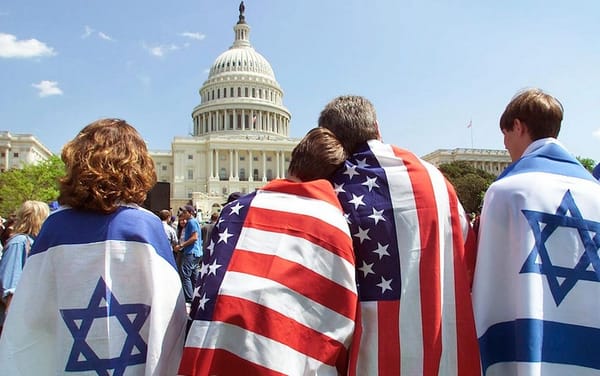
First the Saturday People, Then the Sunday People: The Islamification of the World
The systematic expansion of radical Islamist influence, fueled by oil wealth, demographic growth, and strategic deception, threatens to erode America’s Judeo-Christian values and democratic principles unless decisively countered through unified cultural, political, and spiritual resistance.
From Proverb to Prophecy
“First the Saturday people, then the Sunday people.” This ancient Arabic saying has transformed from a simple proverb into a chilling prophecy a blueprint for religious persecution that methodically targets Jews first, followed by Christians. The phrase emerged from the crossroads of Syria, Lebanon, and Iraq, evolving from innocent beginnings into a sinister declaration of intent.
By the 1947-1948 Arab-Israeli War, Benny Morris documents it had become a “popular mob chant,” explicitly threatening Jews (who worship on Saturday) followed by Christians (who worship on Sunday). Today, this phrase appears spray-painted across Gaza and the West Bank, chanted during attacks on Egypt’s Coptic churches, and proudly embraced by Hamas and Hezbollah revealing their true ambitions extend far beyond regional disputes to global domination.
This evolution from proverb to prophecy follows the pattern that historian Carroll Quigley identified cycles where ideologies spread, power consolidates, and empires rise through “instruments of expansion.” When applied to the Islamification of the world, we witness a deliberate strategy unfolding through demographic pressure, economic leverage, and political infiltration.
The Surge in Anti-Semitic Attacks: Historical Continuity and Modern Manifestation
The data on antisemitism reveals an explosive trend. The Anti-Defamation League’s reports document 8,873 incidents in the United States during 2023 a 140% increase from the previous year. By mid-2025, the number has already surpassed 10,000 cases.
Globally, the ADL’s J7 Task Force documented a 21.2% rise in incidents during 2024, with 18 documented acts of antisemitism daily by mid-2025. Germany recorded 8,627 antisemitic acts despite its post-Holocaust reckoning. France, home to Europe’s largest Jewish community, saw assaults that shocked even a nation accustomed to such violence.
Tel Aviv University’s 2023 report connects these dots clearly: the October 7, 2023 Hamas attacks triggered a 300-500% surge in antisemitic incidents across Western nations. This correlation reveals a crucial truth Middle Eastern conflicts become pretexts for ancient hatreds thousands of miles away.
This pattern isn’t new. It mirrors the economic and social disruptions that fostered extremism in interwar Europe. But it also draws from a deeper historical well centuries of pogroms in Muslim lands that Western academics systematically ignore.
The 1941 Farhud in Iraq offers a case in point. Over 180 Jews were murdered in riots inspired by Nazi propaganda but built upon local Islamic resentments. After 1948, nearly 900,000 Jews were expelled from Arab countries through violence and property seizures a comprehensive ethnic cleansing barely acknowledged in university history departments. Jews whose families had lived in Baghdad, Cairo, Damascus and Sana’a since biblical times became refugees overnight, their property stolen, their citizenship revoked.
The psychological impact runs deep. Campus surveys show 44% of Jewish students hide their identity, 28% internalize negative stereotypes about their own people, and 35% feel disconnected from their heritage a form of cultural suicide. Campus psychologists report unprecedented anxiety among Jewish students not just fear of violence but a profound identity crisis.
The Mechanisms of Islamification
Radicalization and Militancy: From Reform to Conquest
Islamic movements have systematically evolved from purification efforts into engines of militant conquest. Wahhabism, which began as a regional movement in the eighteenth century when Muhammad ibn Abd al-Wahhab allied with the House of Saud, might have remained obscure if not for the discovery of oil. This geological accident that vast petroleum reserves were found under Saudi sands rather than Swedish forests transformed a local movement into a global force.
Saudi officials openly describe their strategy as building “mosques where they built embassies.” Their petroleum wealth has enabled the worldwide export of Wahhabi ideology through construction of mosques, madrassas, and distribution of religious texts that present their extreme interpretation as authentic Islam itself.
The direct line from exported Wahhabism to terrorist organizations is undeniable. Osama bin Laden perfectly embodied this transformation from beneficiary of oil wealth to agent of its ideological deployment against the very Western societies that enriched his homeland.
The Muslim Brotherhood offers a parallel strand of radicalization. Where Wahhabism emerged from Arabia’s sparse deserts, the Brotherhood arose in Cairo’s cosmopolitan environment, responding to modernization and Western influence. Hassan al-Banna’s strategy blended political activism with religious revival, creating an organization that operated simultaneously as a political party, social service provider, and revolutionary vanguard.
Through schools, hospitals, and charities, the Brotherhood has woven itself into society’s fabric, making its radical ideology seem not like an imposition but a natural extension of community care. Hamas replicated this model perfectly in Gaza, combining social services and armed resistance to create a moral confusion that Western observers struggle to navigate.
European Salafist networks, particularly in France’s banlieues and Britain’s Midlands, have proven alarmingly effective at recruiting alienated youth. They offer a sense of purpose and belonging that secular society fails to provide. American prison radicalization represents another concerning development, with correctional facilities becoming breeding grounds for extremism.
The institutionalization of militancy through official policies represents the most troubling development. The Palestinian Authority’s “pay for slay” program provides financial payments to families of those who attack Israelis, creating a perverse incentive structure that rewards violence and ensures its continuation across generations.
Hamas’s systematic diversion of humanitarian aid exemplifies how Islamic militancy corrupts everything it touches. Concrete meant for schools becomes bunkers; water pipes become rockets. This diversion perpetuates conflict while impoverishing the very population Hamas claims to champion.
Bernard Lewis traced radicalism’s resurgence to deep resentments stemming from Islam’s loss of global dominance. For nearly a millennium, Islamic civilization stood at the forefront of human achievement. The psychological impact of this reversal from ruler to ruled, from teacher to student cannot be overstated. Modern jihadists view their struggle not as innovation but as restoration of a divinely mandated position that history temporarily denied them.
Oil Wealth: The Economic Engine of Ideological Expansion
The transformation of oil from geological resource into ideological weapon represents one of history’s most consequential developments. This economic leverage, concentrated in fundamentalist-leaning nations, has created a situation where vast wealth flows to societies whose values fundamentally oppose the liberal principles that shaped Western development.
Saudi Arabia provides the clearest example. Since the 1973 oil embargo quadrupled petroleum prices, the Kingdom has invested an estimated $100 billion spreading its austere Wahhabi interpretation globally. Documentation shows over 1,500 Saudi-funded mosques, 210 Islamic centers, and 2,000 schools in non-Muslim countries each a node in a network shaping millions who’ll never visit Saudi Arabia.
What makes this strategy so effective is its sophistication. Saudi-funded institutions provide real services education for the poor, community centers in underserved neighborhoods, scholarly conferences uniting intellectuals across the Muslim world. But embedded within these benevolent activities lies a theological vision viewing religious diversity as deviation and the ultimate goal as establishing a global caliphate governed by Sharia law.
The connection between Saudi-funded institutions and extremist groups is well-documented. In Pakistan’s North-West Frontier Province, Saudi-financed madrassas educated Taliban leadership. The funding pipeline was direct from Saudi oil fields to Pakistani religious schools to Afghan battlefields.
Qatar offers a more evolved model. Despite hosting American military facilities, Qatar supports Hamas and the Muslim Brotherhood through charitable organizations that deliberately blur lines between humanitarian assistance and militant funding. Qatar has diversified beyond religious institutions into media (through Al Jazeera), education (through Western university partnerships), and international finance (through its sovereign wealth fund).
Western institutions often accept petrodollar influence without grasping the implications. Universities accept endowments for Middle Eastern studies programs without recognizing how these funds shape scholarship toward particular interpretations of Islamic history. Think tanks produce policy papers influenced by Gulf funding that mysteriously align with their sponsors’ interests.

Muslim Brotherhood strategic documents explicitly articulate this long-term vision of societal transformation through institutional capture. These documents describe a “civilization-jihadist process” whereby Western societies are gradually transformed from within, using their own laws and institutions against them. The funding comes overwhelmingly from oil revenues, directly or through foundations created by petroleum wealth.
Iran’s use of oil revenues to fund its regional proxy network provides another model of petroleum-funded influence. Despite sanctions, Iran generates billions through smuggling and sanctions-busting schemes, primarily selling to China. These funds flow to Hezbollah in Lebanon, the Houthis in Yemen, Shia militias in Iraq, and Assad’s regime in Syria, creating an “axis of resistance” projecting Iranian influence across the Middle East.
Deception as Strategy: Taqiyya in Action
Taqiyya, the Islamic doctrine of permissible deception, has evolved from its theological origins into a potent strategic tool. Originally formulated as a doctrine of protective concealment within Shia Islam, taqiyya addressed situations where believers faced persecution. The Quranic foundation appears in verse 16:106, establishing that preservation of life takes precedence over public declaration of belief when facing mortal threats.
In modern contexts, this doctrine has been weaponized beyond its defensive origins. In Palestinian-Israeli negotiations, accusations of taqiyya arise frequently. Yasser Arafat’s statement that the Oslo Accords should be understood in terms of the Treaty of Hudaybiyyah a temporary truce the Prophet Muhammad signed with Meccans only to break when circumstances proved favorable revealed to Israeli negotiators that Palestinian peace commitments were tactical rather than genuine.
Historical examples from the medieval period illustrate how tactical dissimulation has long been a tool in Islamic expansion. During the initial Arab conquests, Muslim commanders regularly employed deception to overcome superior forces. The conquest of Alexandria in 642 CE succeeded partly through Amr ibn al-As’s elaborate deception about his forces’ size. Similar tactics appeared during Iberia’s conquest, where Tariq ibn Ziyad used feigned alliances with Visigothic nobles to facilitate the rapid collapse of Christian resistance.
Bernard Lewis’s documentation in The Assassins of how medieval Nizari Ismailis employed systematic deception provides perhaps the most dramatic historical example. This Shia sect, operating from mountain strongholds in Persia and Syria during the eleventh through thirteenth centuries, developed an elaborate system of religious concealment. Members would spend years living as apparent Sunnis in enemy courts, gaining trust before striking at predetermined moments.
This historical precedent resonates with contemporary concerns about sleeper cells and infiltration strategies employed by modern Islamist groups. The discovery of Muslim Brotherhood documents outlining multi-generational strategies for transforming Western societies from within suggests some Islamist groups do indeed view strategic deception as a legitimate tool in their civilizational struggle.
Demographic Growth: The Arithmetic of Civilizational Change
Demographic trends are reshaping our religious landscape in ways that extend beyond statistics into civilizational transformation. Islam is projected to grow from 1.9 billion adherents in 2020 to 2.8 billion by 2050 a 73% increase that will bring Muslims to near parity with Christians globally. This isn’t merely a change in religious affiliation but a fundamental shift in the world’s cultural, political, and social architecture.
The regional variations tell an even more dramatic story. Sub-Saharan Africa’s Muslim population will double from approximately 300 million to over 600 million by mid-century. Nigeria, already delicately balanced between Muslim north and Christian south, faces demographic pressure that threatens to fundamentally alter the country’s political structure.
Europe follows a different trajectory toward a similarly profound destination. The 16.2% increase in Muslim population from 2010 to 2020 represents millions of new residents in societies already grappling with questions of integration and cultural continuity. Muslims could constitute 10% or more of Europe’s population by 2050 and significantly higher percentages in countries like France, Germany, and Sweden. In cities like Brussels, Birmingham, and Marseille, Muslim populations already approach or exceed 25%.
The physical transformation of European cities over the past two decades is striking. Neighborhoods that had a handful of halal butchers and a single mosque in the 1990s now feature Islamic schools, Sharia-compliant banks, and multiple prayer spaces. The physical landscape has transformed along with the demographic reality.
Historical precedents illuminate both mechanisms and consequences. The Roman Empire’s transformation through barbarian settlement provides an instructive parallel. What began as controlled migration to address labor shortages eventually resulted in complete transformation, with Germanic peoples not merely joining but ultimately replacing Roman civilization in Western Europe.
As Muslim populations grow, their influence on public policy inevitably increases, whether through formal political participation or informal social pressure. This is already observable in European debates about religious education, where growing Muslim populations successfully advocate for Islamic instruction in public schools.
Historical patterns suggest that religious demographics influence legal systems over time. The Ottoman millet system developed precisely because Muslims became a ruling majority governing substantial non-Muslim populations. Similar accommodations emerge in contemporary societies with significant Muslim populations separate family courts applying Sharia principles operate in India, Israel, Kenya, and increasingly within Western nations through informal dispute resolution mechanisms.
Population projections remain contingent on multiple variables, yet even accounting for projected fertility declines, demographic momentum ensures continued Muslim population growth for decades. Migration patterns could accelerate or moderate these trends depending on political decisions, economic opportunities, and conflict dynamics.
What makes contemporary demographic transitions historically unprecedented is their transnational nature, occurring simultaneously across multiple continents through migration, differential fertility, and religious conversion. While previous religious demographic shifts typically remained regionally contained, today’s patterns operate globally, creating networks of influence and identity that transcend national boundaries.
Israel: The Essential Bulwark Against Global Islamist Expansion
Israel occupies a position of unique strategic significance in the global struggle against radical Islamism. This small nation, representing less than 0.01% of the world’s land mass and 0.2% of its population, stands as the front line in a civilizational contest with implications far beyond its borders.
The Jewish state’s strategic importance begins with its geographic position. Situated at the crossroads of three continents, Israel forms a physical barrier between competing visions of civilization. To its west lies the Mediterranean and Europe, birthplace of Enlightenment values and secular democracy. To its east stretches a vast expanse increasingly dominated by Islamist movements seeking to reimpose pre-modern governance systems.
Geopolitical analysis reveals how Israel functions as a stabilizing force amid regional chaos. During the so-called Arab Spring, while nations from Libya to Syria descended into civil war and state collapse, Israel maintained democratic governance and economic progress. This stability amid turbulence reinforces Israel’s value as a reliable Western partner in an unpredictable region.
Israel’s military capabilities represent a crucial counterbalance to Iranian hegemonic ambitions. As the Islamic Republic pursues nuclear weapons capability while funding proxy forces from Lebanon to Yemen, Israel stands as the primary check against this expansionism. Without Israeli deterrence, Iran’s “Shia crescent” strategy would accelerate, potentially delivering control of vast energy resources to a regime explicitly committed to the destruction of Western influence.
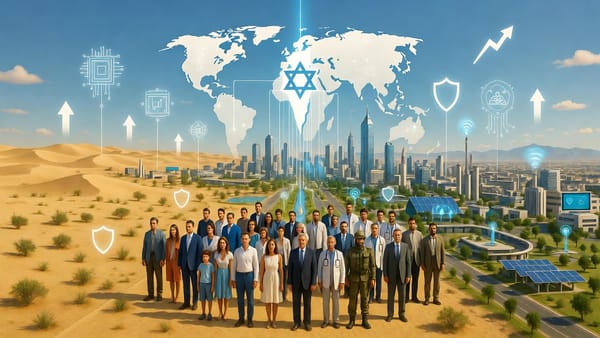
The technological dimension of Israel’s strategic value merits particular attention. Israeli innovations in cyber security, water management, agriculture, and defense technology directly contribute to Western security. Intelligence sharing between Israel and Western allies has prevented numerous terrorist attacks, as confirmed in congressional testimony by senior security officials.
Israel’s democratic institutions provide a crucial model in a region dominated by autocracy. Despite operating under constant security threats, Israel maintains independent courts, press freedom, competitive elections, and rights protections unmatched anywhere in the Middle East. The Freedom House index consistently ranks Israel as the only “free” country in the region a qualification that carries profound implications.
Military history provides perhaps the clearest evidence of Israel’s strategic importance. The defeat of Soviet-backed Arab armies in successive conflicts prevented Moscow from gaining the strategic foothold it sought in the Middle East. Israel’s 1981 strike on Iraq’s Osirak nuclear reactor eliminated Saddam Hussein’s nuclear ambitions, a preemptive action whose strategic wisdom became apparent during subsequent Gulf conflicts. The 2007 destruction of Syria’s clandestine nuclear facility similarly prevented weapons of mass destruction from falling into either Assad regime or ISIS hands a scenario with catastrophic implications for global security.
Contemporary threats further highlight Israel’s critical role. Hamas and Hezbollah, ideologically committed to Israel’s destruction, serve as forward elements in Iran’s proxy network. Their defeat of Israel, however unlikely, would remove the primary obstacle to Iranian regional dominance, threatening energy security, shipping lanes, and moderate Arab regimes.
Israel’s intelligence capabilities provide an essential early warning system for emerging threats. The Mossad’s documented successes from exposing Iran’s nuclear archive to identifying ISIS plots against European targets deliver strategic advantages extending far beyond Israel itself. This intelligence cooperation saves lives across Western nations while providing crucial insights into extremist networks.
The economic dimension of Israel’s strategic value emerges in both energy and technology sectors. Recent natural gas discoveries in the Eastern Mediterranean, developed through Israeli partnerships, offer Europe an alternative to Russian energy dependence. Meanwhile, Israeli technology companies produce innovations from missile defense systems to agricultural solutions addressing global food security challenges.
The ideological aspect of Israel’s role deserves particular emphasis. As the world’s only Jewish state, Israel stands as a living rejection of antisemitism’s core premise that Jews deserve no national existence. This symbolic dimension carries real strategic weight in an era witnessing antisemitism’s resurgence across political extremes.
The religious dimension further illuminates Israel’s strategic significance. As the birthplace of monotheism and home to sites sacred to Judaism, Christianity, and Islam, Israel’s stewardship of religious freedom sets a regional standard. Israel remains the only Middle Eastern nation where religious minorities enjoy full worship rights and growing populations.
The October 7, 2023 Hamas attacks and their aftermath demonstrate the existential nature of the threats Israel faces. The deliberate targeting of civilians, including children and elderly Holocaust survivors, revealed the genocidal intent behind opposition to Israel’s existence. These attacks didn’t target Israeli policies but Jewish existence itself a distinction clarified by the attackers’ explicit statements and documented atrocities.
Israel’s restraint amid provocation demonstrates its adherence to Western military ethics despite operating in an environment where adversaries deliberately exploit civilian casualties for propaganda purposes. The Israel Defense Forces’ efforts to minimize civilian harm, including warning systems, precision munitions, and aborted operations when risks to civilians became too great, stand in stark contrast to Hamas’s documented use of human shields and civilian infrastructure for military purposes.
The security cooperation between Israel and moderate Arab states, formalized through the Abraham Accords, demonstrates the potential for a regional architecture that contains Islamist extremism. These agreements, built on shared concerns about Iranian expansionism and Islamist militancy, represent a potential model for addressing civilizational competition through pragmatic cooperation.
Historical patterns suggest that weakening Israel would not produce regional peace but rather accelerate the elimination of remaining minorities and moderate governance models. Israel’s deterrence thus protects not merely its own citizens but indirectly shields vulnerable communities throughout the region from similar elimination.
Civilizational Strategy for the Coming Decades
The preceding analysis demonstrates interconnected challenges requiring a comprehensive civilizational strategy. Addressing radical Islamism’s global expansion demands coordinated responses across multiple domains from energy independence to educational reform, Israel’s security to demographic awareness.
Western civilization faces unprecedented demographic, ideological, and strategic pressures from movements explicitly rejecting its foundational values. The phrase that opened this analysis “First the Saturday people, then the Sunday people” encapsulates a worldview that proceeds sequentially but inexorably toward eliminating all who stand outside its theological framework.
The asymmetric nature of this challenge requires particular attention. Western societies operate within normative frameworks prioritizing tolerance, individual rights, and secular governance. These values create structural constraints on responses to movements that explicitly reject these principles while exploiting their protections.
Supporting Israel emerges as a non-negotiable component of any coherent civilizational strategy. As the frontline democracy facing radical Islamism’s most concentrated pressures, Israel’s security directly affects Western interests far beyond the Middle East. Military aid, diplomatic support, intelligence cooperation, and technological partnership with Israel represent strategic investments in Western security rather than foreign assistance.
Energy independence constitutes another essential strategic priority with cascading benefits across multiple domains. Ending dependence on petroleum exports from regimes funding ideological challenges to Western values would simultaneously reduce resources available to adversaries while enhancing Western policy autonomy.
Educational reform represents a long-term but crucial component of effective civilizational strategy. Correcting distorted historical narratives, challenging double standards in academic presentations, and restoring accurate context to discussions of religious history provide essential foundations for sound policy development.
Demographic awareness requires particular sensitivity but remains essential to strategic planning. Understanding population trends, their potential policy implications, and the ideological frameworks driving differential growth rates provides crucial context for long-term strategic decisions.
International institutional reform emerges as another strategic priority. Organizations established to promote human rights, prevent conflict, and foster cooperation have increasingly become venues for ideological warfare against Western interests and values.
Economic strategies that recognize the interconnection between prosperity and security deserve greater emphasis. Trade policies, investment screening, and financial regulations that prevent adversaries from exploiting Western economic openness while building capabilities for ideological competition represent essential reforms.
Media and information strategies addressing deliberate distortions represent another crucial domain for civilizational competition. The systematic misrepresentation of conflicts, application of double standards to democratic societies, and amplification of divisive narratives all serve adversarial interests by weakening Western solidarity and distorting policy decisions.
The integration of security and immigration policies represents a particularly sensitive but essential component of comprehensive strategy. Ensuring that population movements enhance rather than undermine host societies requires balanced approaches that welcome genuine refugees and contributors while maintaining vigilance against exploitation by extremist elements.
Technological leadership provides crucial advantages in civilizational competition across all domains. From artificial intelligence to biotechnology, quantum computing to materials science, maintaining Western technological advantages enhances both security and prosperity.
The fundamental choice facing Western civilization becomes increasingly clear: will societies built on Enlightenment values maintain the conviction and capability to defend these principles against determined opposition? Or will a combination of demographic change, resource dependencies, and internal division gradually transform these societies until they no longer represent the values that defined Western civilization’s development?
The phrase that opened this analysis thus returns at its conclusion with deeper significance. “First the Saturday people, then the Sunday people” represents not merely historical pattern but present reality unfolding in real time across multiple regions. The elimination of ancient Jewish communities from lands they inhabited for millennia has already occurred. Christian communities facing similar pressure now follow the pattern precisely as the saying predicts.
The time for half-measures and illusions has passed. Israel stands as civilization’s first and most critical line of defense against an ideology explicitly committed to our destruction. Its survival is not merely a regional concern but a civilizational imperative. We must act now with clarity, conviction, and coordinated purpose to ensure that the forces of darkness do not extinguish the light of freedom that has guided human progress for centuries. The stakes could not be higher, and the time for action is now.
Bibliography
Primary Sources
Anti-Defamation League. (2023). Audit of Antisemitic Incidents. New York: ADL Press.
Hillel International & Anti-Defamation League. (2021). Campus Antisemitism Survey. Washington, D.C.: Hillel Press.
Lewis, Bernard. (1976). “The Return of Islam.” Commentary, 61(1), 39-49.
Morris, Benny. (2008). 1948: A History of the First Arab-Israeli War. New Haven: Yale University Press.
Pew Research Center. (2015). The Future of World Religions: Population Growth Projections, 2010-2050. Washington, D.C.: Pew Research Center.
Tel Aviv University. (2023). Annual Report on Antisemitism Worldwide. Tel Aviv: Kantor Center for the Study of Contemporary European Jewry.
Secondary Sources
American Jewish Committee. (2023). The State of Antisemitism in America. New York: AJC Publications.
Chilton, Bruce, Neusner, Jacob, & Graham, William. (2002). Three Faiths, One God: The Formative Faith and Practice of Judaism, Christianity, and Islam. Boston: Brill Academic
Jewish Virtual Library. (2024, May). Arab Funding of American Universities: Donors, Recipients, and Impact. Retrieved from https://www.jewishvirtuallibrary.org/arab-funding-of-american-universities-donors-recipients-and-impact-may-2024
Lewis, Bernard. (1967). The Assassins: A Radical Sect in Islam. London: Weidenfeld & Nicolson.
Lewis, Bernard. (2002). What Went Wrong?: The Clash Between Islam and Modernity in the Middle East. Oxford: Oxford University Press.
Lewis, Bernard. (2003). The Crisis of Islam: Holy War and Unholy Terror. New York: Modern Library.
Lewis, Bernard. (2008). Islam: The Religion and the People. Upper Saddle River, NJ: Pearson Prentice Hall.
Peters, F.E. (2003). The Monotheists: Jews, Christians, and Muslims in Conflict and Competition. Princeton: Princeton University Press.
Quigley, Carroll. (1966). Tragedy and Hope: A History of the World in Our Time. New York: Macmillan.
Said, Edward. (1978). Orientalism. New York: Pantheon Books.
Sun Tzu. (5th century BCE/1963). The Art of War. (S. B. Griffith, Trans.). Oxford: Oxford University Press.
Legal and Governmental Documents
United Nations. (1945). Charter of the United Nations, Article 51. San Francisco: United Nations.