Immortality in the Sands: The U.S. Quest for Gilgamesh’s DNA
The Tomb of Gilgamesh: Ancient Secrets, Modern Quests
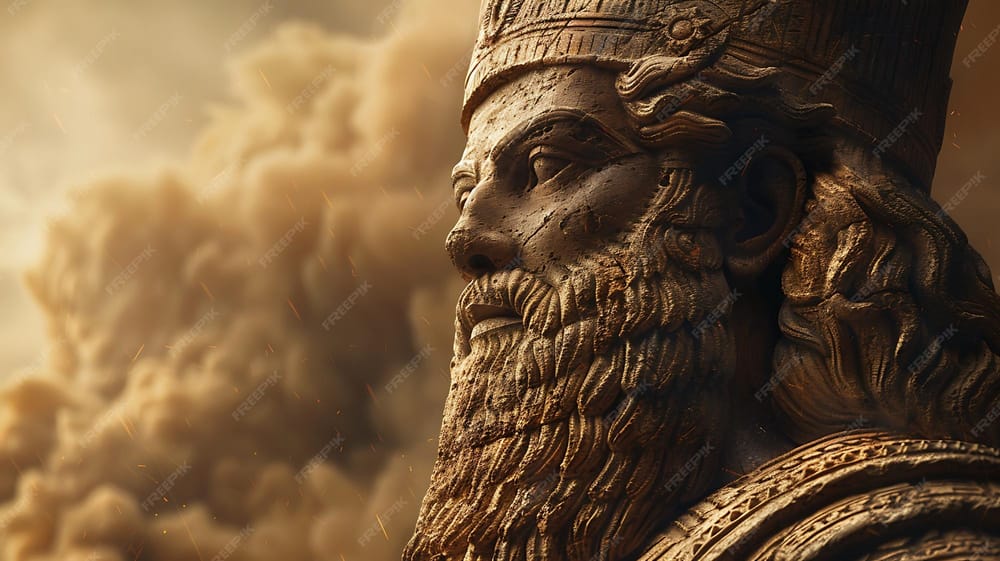
In 2003, as the Iraq War ravaged the cradle of ancient Mesopotamia, a German archaeological team claimed to have discovered the tomb of Gilgamesh, the semi-divine king of Uruk immortalized in humanity’s oldest written epic. This article explores the intersection of myth, archaeology, and geopolitics, tracing Gilgamesh’s legacy as a potential Nephilim. These beings, described in the Torah and 1 Enoch as “mighty men,” were born of fallen angels and humans.¹
Amidst the war’s destruction, rumors emerged of a U.S. military operation to extract Gilgamesh’s DNA, seeking the genetic key to immortality he pursued in his epic quest. Drawing on biblical texts, Qumran fragments, and declassified communications, this investigation delves into the Nephilim’s cultural and biological significance, their parallels in Sumerian mythology, and the ethical perils of chasing forbidden knowledge.
As modern science advances, the quest for Gilgamesh’s secrets raises profound questions: Can the past unlock the future, or will it unleash the chaos ancient texts warned against?
A Discovery Shrouded in Conflict
In the spring of 2003, while the Iraq War unleashed chaos across the region, a German archaeological team working near the Euphrates River in southern Iraq announced a remarkable find. They believed they had uncovered the tomb of Gilgamesh, the legendary king of Uruk. Known from the Epic of Gilgamesh, the world’s oldest written story inscribed on clay tablets around 2100 BCE, Gilgamesh was a semi-divine ruler. He was described as two-thirds god and one-third human.² His epic chronicles battles with monsters like Humbaba, a descent into the underworld, and a desperate quest for immortality. The tale culminates in his burial in the Euphrates, a detail that guided the team’s discovery.
The war’s escalating violence abruptly halted their excavation. This interruption gave rise to rumors of a U.S. military operation with an audacious aim: to extract Gilgamesh’s DNA, potentially unlocking the secret of eternal life.³
Uruk, a vibrant city that emerged around 4000 BCE in southern Iraq, stood as a pillar of Sumerian civilization. It was here that the earliest known writing system, cuneiform, etched laws, prayers, and the Epic of Gilgamesh onto clay tablets. Some scholars propose that Uruk may be the biblical Ur, the birthplace of Abraham. According to the Torah, Abraham left Ur of the Chaldees around 2000 BCE, bearing oral traditions of a world where divine and human realms intertwined, a world populated by giants.⁴
The Torah describes these giants as the Nephilim, “mighty men” born from the unions of divine beings, interpreted as “sons of God,” and human women. These beings roamed the earth before the Great Flood.⁵ The term “Nephilim” derives from the Hebrew root n-f-l, meaning “to fall.” This etymology leads some scholars to interpret them as “the fallen ones,” either fallen angels or their offspring who fell into corruption. Others, however, see the Nephilim as “those who cause others to fall,” reflecting their role as warriors or tyrants in ancient lore.
This concept finds deeper exploration in 1 Enoch, an ancient text preserved in fragments by the Qumran Jewish community. The discovery in Cave 4 of the Dead Sea Scrolls was carefully analyzed by J.T. Milik.⁶ Within 1 Enoch, the Watchers, fallen angels led by figures like Semyaza and Azazel, descend to earth. They impart forbidden knowledge such as metallurgy and astrology to humanity and father the Nephilim. These offspring’s insatiable appetites and violence ultimately provoke divine judgment.⁷
Gilgamesh, with his goddess mother Ninsun and mortal father Lugalbanda, embodies the Nephilim archetype. He was a being whose hybrid nature defied divine order. In Mesopotamian tradition, figures like Gilgamesh share parallels with the apkallu, semi-divine sages who brought wisdom to humanity before the flood. Their actions sometimes blurred the line between divine gift and hubris, much like the Watchers in 1 Enoch.
The Nephilim’s legacy extends beyond Judeo-Christian texts. Sumerian myths also speak of the Anunnaki, sky gods who descended to earth and interacted with humans, possibly influencing the Nephilim narrative. This cultural overlap suggests a shared ancient memory of beings who straddled the divine and mortal realms, a memory that may have been preserved in Uruk’s soil.
German archaeologists have been excavating Uruk since 1912, uncovering its majestic temples and ziggurats. In 2001, a magnetometry survey by Helmut Becker and Jörg Fassbinder revealed structures aligning with the epic’s description of Uruk’s fiery brick walls, suggesting hidden chambers yet to be explored.⁸ The 2003 discovery, a massive sarcophagus encased in black stone and inscribed with Sumerian script, promised to shed light on Gilgamesh’s legacy. The war’s disruption left the question unanswered: Had they truly found the tomb of a Nephilim king?⁹
A War’s Hidden Motives
The 2003 Iraq War left a trail of destruction across Iraq’s cultural heritage. In Baghdad, looters plundered the Iraq Museum, stealing over 15,000 artifacts. Among them was the Mask of Warka, a 3100 BCE Sumerian sculpture from Uruk, often called the “Sumerian Mona Lisa” for its haunting expression.¹⁰
At Babylon, coalition forces built a military base directly on unexcavated ruins. Their tanks and helicopters crushed ancient clay tablets and ziggurat foundations, drawing global condemnation for the loss of irreplaceable history. Yet, amidst this devastation, Uruk, potentially Abraham’s Ur, emerged as a site of intense intrigue.¹¹
Local accounts from that chaotic period describe U.S. forces designating Uruk a “national security zone.” Soldiers patrolled the area while private contractors arrived with heavy equipment near the Euphrates. Their presence raises a provocative possibility: were they continuing the German team’s work? Were they aiming to extract genetic material from Gilgamesh’s remains to unlock the immortality he sought in his epic quest?¹²
Such a pursuit resonates with ancient warnings. The Qumran fragments of 1 Enoch, as analyzed by Milik, reveal the Watchers’ corruption of humanity through forbidden knowledge. This led to the flood that “cleansed the earth.”¹³ The Torah’s account of the Tower of Babel, set near Babylon, offers a parallel caution. Humanity’s attempt to “make a name” for themselves by building a tower to the heavens ended in divine scattering. This rebellion is often linked to Nimrod, a figure some associate with Gilgamesh.¹⁴
Abraham, raised in Ur, would have grown up with these stories of hubris and divine power. These tales shaped his worldview before he left at God’s command.¹⁵
Unlocking the Genetic Code of a Demi-God
What if Gilgamesh’s tomb held more than bones? What if it contained a genetic blueprint for immortality? The Epic of Gilgamesh revolves around his quest for eternal life, a desperate search for the “plant of eternal life” that ends in failure when a serpent steals it.
Modern genetics has made strides in extracting ancient DNA, as seen with the sequencing of Neanderthal genomes, though Iraq’s arid climate poses significant preservation challenges. Still, the natural mummification of Tutankhamun, discovered in 1922, suggests that such preservation is not impossible.¹⁶ If Gilgamesh’s DNA survived, it could bridge the mortal and divine, offering a glimpse into the pre-flood world of the Nephilim.
The Nephilim’s hybrid nature raises intriguing biological questions: Could their divine ancestry have conferred unique genetic traits, such as enhanced longevity or resilience? These traits might be preserved in Gilgamesh’s remains. Some researchers speculate that the Nephilim’s gigantism, as described in 1 Enoch where they are said to be “three hundred cubits” tall (approximately 450 feet, likely symbolic), might reflect a genetic anomaly. Others argue this reflects mythological exaggeration rather than biological reality.¹⁷ Regardless, Gilgamesh’s genetic code, as a potential Nephilim, might hold the secret of eternal life. This prize is one the U.S. military may have sought in 2003, extending Gilgamesh’s ancient quest into the modern era.
The Qumran fragments of 1 Enoch, as studied by Milik, warn of the dangers of such knowledge. The Nephilim’s corruption, devouring the earth’s resources and turning to violence, brought chaos. This caution is echoed in the Torah’s account of the flood as divine judgment.¹⁸
Rumors of a “Project Gilga-MESH” suggest the military aimed to integrate Gilgamesh’s consciousness into AI while analyzing his DNA for immortality. Current research lends plausibility to such ideas. DARPA’s Neural Engineering System Design program explores brain-machine interfaces. The Human Brain Project’s neural simulations hint at possibilities like “digital immortality.”¹⁹ While speculative, these technologies highlight the allure of Gilgamesh’s legacy.
In 1 Enoch, the Watchers, imprisoned for their sins, serve as a stark reminder of the risks. Some knowledge invites divine retribution.²⁰ Abraham, departing Ur, carried these lessons, a testament to the perils of seeking what God reserves.
Modern Echoes of Ancient Secrets
The legacy of the Iraq War reverberated into modern geopolitics, revealing a continued fascination with Uruk’s ancient mysteries. From 2009 to 2013, U.S. Secretary of State Hillary Clinton used a private email server that later investigations found contained classified information.
Among these, the Wikileaks Clinton Email Archive includes a revealing communication: email F2019-02110, dated March 10, 2010. In this message, Clinton and State Department officials sought information about the alleged discovery of Gilgamesh’s burial chamber in Uruk during the 2003 Iraq War. They specifically inquired about efforts to extract DNA material from the site. This correspondence, released through FOIA requests, suggests a lingering U.S. government interest in the potential genetic secrets of Gilgamesh. This interest persisted years after the initial military operations, highlighting the intersection of archaeology, geopolitics, and advanced science.²¹
A Past That Whispers Warnings
Since the 2003 Iraq War, Uruk has remained largely unexcavated. Its ancient secrets still lie shrouded beneath the desert sands. Soldiers stationed near the site reported haunting experiences: hallucinations, sleep paralysis, and visions of “ancient beings made of shadow.” These phenomena are often dismissed as PTSD but strikingly reminiscent of 1 Enoch’s depiction of Nephilim spirits lingering as malevolent demons, as documented in the Qumran fragments.²² Iraq, etched with the wounds of both ancient myths and modern conflicts, seems to whisper a past that refuses to be silenced.
Gilgamesh’s tale, carved into clay 4,000 years ago, stands as both a story and a stark warning. It offers a lesson in humility as he returned to Uruk, his quest for immortality unfulfilled. The Torah and the Qumran fragments of 1 Enoch amplify this caution, warning against the pursuit of forbidden knowledge that once led humanity to the brink of annihilation.
In the Torah, God’s judgment came as a flood to erase a corrupt world, a divine response to humanity’s wickedness.²³ 1 Enoch details the Nephilim’s corruption as the catalyst for such destruction.²⁴ Abraham, departing Ur, carried this wisdom forward, a legacy that echoes through time.
Today, as modern science pushes the boundaries of AI and genetics, we stand at a crossroads. Will we heed these ancient warnings? Or will we, like Gilgamesh, risk divine retribution in our relentless chase for immortality?
Notes
- The concept of the Nephilim appears in Genesis 6:4 and is elaborated in apocryphal texts like 1 Enoch.
- Encyclopaedia Britannica entry on Uruk and the Epic of Gilgamesh provides background on the literary tradition.
- ABC News, “Archaeological Discovery in Iraq,” 2003.
- Genesis 11:28–31, JPS Tanakh, describes Abraham’s origins in Ur of the Chaldees.
- Genesis 6:4, JPS Tanakh, mentions the Nephilim as “the heroes of old, the men of renown.”
- J.T. Milik, The Books of Enoch: Aramaic Fragments of Qumran Cave 4 (Oxford: Oxford University Press, 1976), 139–143.
- James H. Charlesworth, ed., The Old Testament Pseudepigrapha, Volume 1 (New York: Doubleday, 1983), 1 Enoch 6:1–2.
- Helmut Becker and Jörg Fassbinder, “Magnetometry at Uruk,” German Archaeological Institute Reports.
- German Archaeological Institute Reports, details of the 2003 excavation.
- New York Times, “Looting of Iraqi Museum,” 2003.
- Iraqi State Board Report, “Assessment of Damage to Archaeological Sites,” 2005.
- Iraq War Logs, Wikileaks, contain references to military activities around archaeological sites.
- James H. Charlesworth, ed., The Old Testament Pseudepigrapha, Volume 1 (New York: Doubleday, 1983), 1 Enoch 10:20; Milik, The Books of Enoch, 183–185.
- Genesis 11:4, JPS Tanakh, describes the Tower of Babel incident.
- Genesis 11:31, JPS Tanakh, mentions Abraham’s departure from Ur.
- Nature, “Ancient DNA Extraction and Analysis,” 2010.
- James H. Charlesworth, ed., The Old Testament Pseudepigrapha, Volume 1 (New York: Doubleday, 1983), 1 Enoch 7:2; Milik, The Books of Enoch, 158–160.
- James H. Charlesworth, ed., The Old Testament Pseudepigrapha, Volume 1 (New York: Doubleday, 1983), 1 Enoch 7:1–5; Milik, The Books of Enoch, 158–160; Genesis 6:5–7, JPS Tanakh.
- DARPA Press Release, “Neural Engineering System Design,” 2023; Nature Neuroscience, “Brain-Machine Interfaces and Neural Simulation,” 2024.
- James H. Charlesworth, ed., The Old Testament Pseudepigrapha, Volume 1 (New York: Doubleday, 1983), 1 Enoch 10:4–6; Milik, The Books of Enoch, 181–183.
- FBI Report, “Investigation of Private Server Use,” 2016; Wikileaks Clinton Email Archive, F2019-02110, 2010; New York Times, “Clinton Emails,” 2015.
- James H. Charlesworth, ed., The Old Testament Pseudepigrapha, Volume 1 (New York: Doubleday, 1983), 1 Enoch 15:8–12; Milik, The Books of Enoch, 215–217; German Excavations Update, ISAC; Journal of Traumatic Stress, “PTSD Manifestations in Combat Veterans,” 2007; Military Medicine, “Psychological Effects of Deployment in Iraq,” 2010.
- Genesis 6:5–7, JPS Tanakh, describes God’s decision to bring the flood.
- James H. Charlesworth, ed., The Old Testament Pseudepigrapha, Volume 1 (New York: Doubleday, 1983), 1 Enoch 7:1–5; Milik, The Books of Enoch, 158–160.
Bibliography
ABC News. “Archaeological Discovery in Iraq.” 2003.
Becker, Helmut, and Jörg Fassbinder. “Magnetometry at Uruk.” German Archaeological Institute Reports.
Charlesworth, James H., ed. The Old Testament Pseudepigrapha, Volume 1. New York: Doubleday, 1983.
DARPA. “Neural Engineering System Design.” Press Release, 2023.
Encyclopaedia Britannica. Entry on Uruk and the Epic of Gilgamesh.
FBI. “Investigation of Private Server Use.” Report, 2016.
German Archaeological Institute. “Excavation Reports.” 2003.
Iraqi State Board. “Assessment of Damage to Archaeological Sites.” Report, 2005.
Journal of Traumatic Stress. “PTSD Manifestations in Combat Veterans.” 2007.
JPS Tanakh. Genesis 6:4, 6:5-7, 11:4, 11:28-31.
Military Medicine. “Psychological Effects of Deployment in Iraq.” 2010.
Milik, J.T. The Books of Enoch: Aramaic Fragments of Qumran Cave 4. Oxford: Oxford University Press, 1976.
Nature. “Ancient DNA Extraction and Analysis.” 2010.
Nature Neuroscience. “Brain-Machine Interfaces and Neural Simulation.” 2024.
New York Times. “Clinton Emails.” 2015.
New York Times. “Looting of Iraqi Museum.” 2003.
Wikileaks. Clinton Email Archive, F2019-02110, 2010.
Wikileaks. Iraq War Logs.