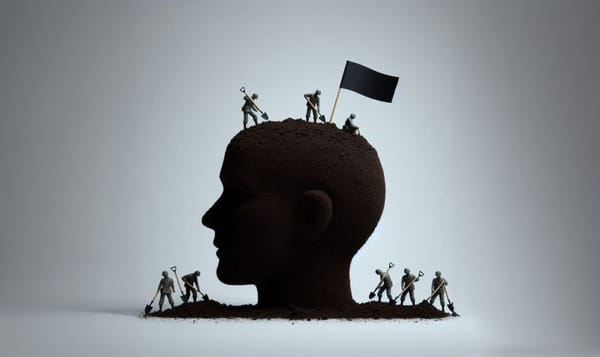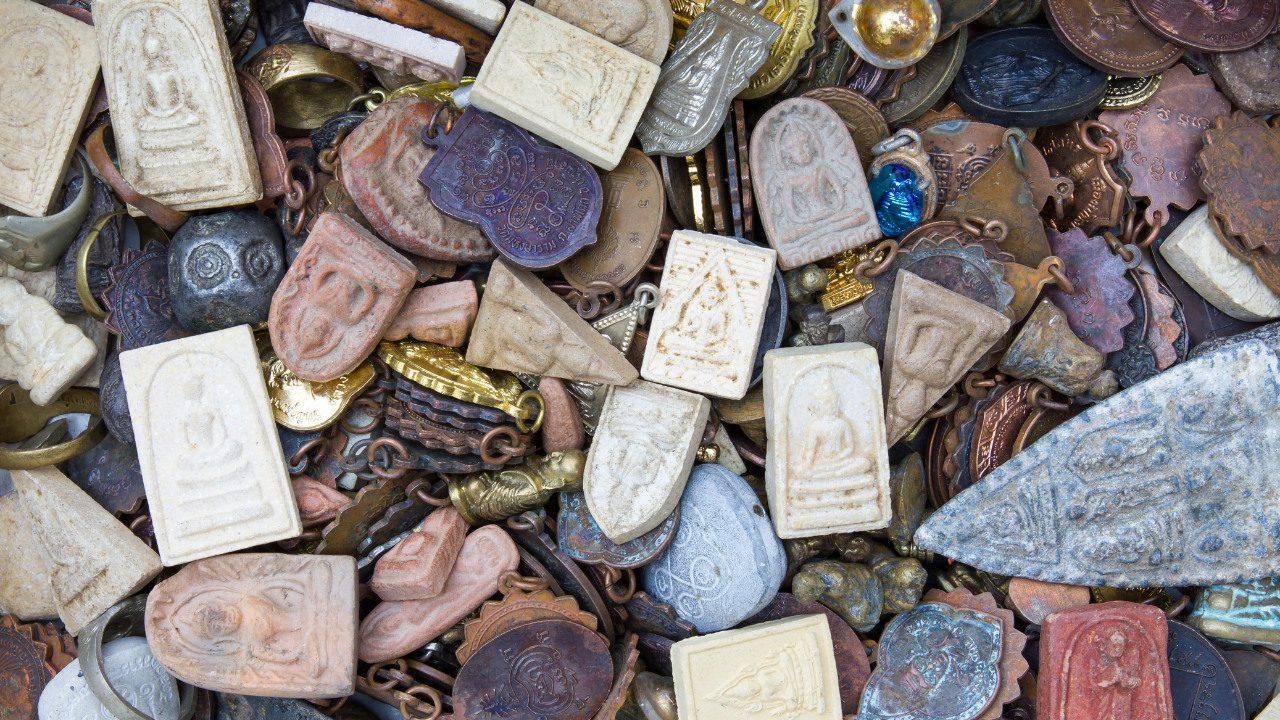
Mind Over Matter: Amulets, Intention, and Modern Science
The Spark of Belief: How Intention Shapes Reality
What if your deepest convictions could reshape your life? Picture a young woman in a bustling city, clutching a silver amulet etched with an ankh, gifted by her grandmother. She believes it brings vitality and courage, and it seems to work. Decisions feel sharper, challenges less daunting. This isn’t mere superstition; it’s a timeless truth.
From ancient talismans to modern science, belief has driven human progress. The placebo effect heals through expectation, Qigong channels intent for health, and experiments suggest thoughts can influence matter. Quantum physics even hints our minds might mold the universe. Join us as we explore how amulets from diverse cultures, esoteric traditions, cutting-edge research, and Qigong reveal belief’s transformative power. Ready to tap into your mind’s potential? Let’s begin.
Amulets Through History: Anchors of Intention
Prehistoric Roots: Belief’s Ancient Seeds
Amulets trace back to humanity’s dawn. In a 40,000-year-old cave burial in Siberia’s Altai Mountains, archaeologists found a perforated bear tooth, likely placed with the deceased to guide their spirit or ward off harm in the afterlife.¹ Crafted from bone or stone, these early amulets were thought to hold nature’s essence, empowering rituals to influence fate.
A 75,000-year-old engraved ochre from South Africa’s Blombos Cave suggests such symbols were widespread, showing early humans’ faith in objects to secure protection or fortune.²
Ancient Civilizations: Symbols with Power
In ancient Egypt, amulets were vital from the Badarian Period (4400–3800 BCE) to Roman times. Crafted from faience, stone, or gold, each material carried spiritual significance.³ The Eye of Horus warded off evil, the Scarab Beetle symbolized rebirth and rested over mummies’ hearts, and Bastet amulets attracted wealth. Cowrie shells ensured safe childbirth, while the ankh promised eternal life.⁴
In Mesopotamia, cylinder seals engraved with divine figures protected against misfortune, reflecting belief in divine intervention. In Greece and Rome, amulets blended magic and faith. Children wore gold bullas for safety, phallic charms repelled the evil eye, and cornucopias, tied to the wealth god Plutus, drew prosperity.⁵
Religious Traditions: A Tapestry of Faith
Amulets play a central role across world religions, each tradition infusing them with unique spiritual meaning. In Islam, about 10% of Muslims in Muslim-majority countries wear tawiz, leather or metal satchels containing Qur’anic verses, to protect against jinn or misfortune. Carnelian stones, linked to the Prophet Muhammad, ward off evil, while jade and jasper symbolize victory and wealth.⁶ Though some Salafi scholars deem amulets shirk, others permit them if inscribed with divine words.
In Christianity, sacramentals like crucifixes or Saint Benedict medals, inscribed with exorcism prayers, shield against evil. Early Egyptian Christians wore amulets with Gospel verses for divine protection. In Judaism, amulets like the Hamsa, a hand-shaped charm with an eye motif, deflect the evil eye (ayin hara), while the Magen David, also known as the Seal of Solomon, symbolizes divine wisdom and protection. Chai necklaces, meaning “life,” embody vitality.⁷
Debate persists. Maimonides criticized amulets as idolatrous, but mystics like the Baal Shem Tov endorsed their spiritual use.⁸ In Hinduism, yantras, geometric amulets etched with mantras, focus meditation and invoke deities like Ganesha for success. In Buddhism, Thai monks craft takrut, scroll amulets with Pali scriptures, to guard against harm, believed to channel the Buddha’s compassion.⁹ These diverse traditions show amulets as conduits for belief, uniting human intention with sacred forces.
Global and Modern Amulets: A World of Symbols
Amulets flourish globally, each culture weaving belief into tangible forms. In Celtic traditions, four-leaf clovers bring luck, their rarity symbolizing divine favor, while knotted charms protect against malevolent spirits. In West Africa, Akan Adinkra symbols like Abe Dua, a tree motif, signify wealth and resilience, often worn as gold jewelry.¹⁰
In South America, Bolivian Ekeko figures, laden with miniature goods, attract abundance, rooted in Andean prosperity rituals. Chinese jade amulets, carved as dragons or pixiu, draw wealth and ward off evil, reflecting feng shui principles. Today, Maasai beaded amulets in Kenya shield wearers from harm, their colors encoding tribal identity.
Modern brands like Atlas Accessories blend these ancient symbols, ankhs, clovers, or Adinkra motifs, into stylish jewelry, merging tradition with fashion. From Tokyo’s omamori charms to Mexican milagros, amulets remain vibrant, proving belief’s universal appeal.¹¹
Esoteric Wisdom: Amulets as Manifestation Tools
Manly P. Hall: Decoding Ancient Mysteries
Manly P. Hall, a Canadian scholar, explored amulets in his 1928 book, The Secret Teachings of All Ages. He described Druids charging mistletoe amulets with “fluidic influence” for healing, believed to draw cosmic energy.¹² In Egyptian lore, Isis wielded the ankh, symbolizing eternal life, while her sistrum repelled the chaos god Typhon. The Bembine Table of Isis, a Greco-Roman artifact, bore symbols to inspire virtue.
Hall cited Apollonius of Tyana’s planetary rings, set with gems like ruby under favorable stars, to extend life, and Pythagorean rings inscribed with ΥΓΕΙΑ (health) for vitality. In esoteric traditions, sapphire amulets countered astrological influences, linking wearers to universal forces. Hall viewed amulets as belief amplifiers, channeling intention across cultures.¹³
Aleister Crowley: Will-Powered Talismans
Aleister Crowley, an English occultist and founder of Thelema, saw amulets as extensions of a magician’s will, as detailed in his 1929 book, Magick in Theory and Practice.¹⁴ For Crowley, amulets focused intention to align with universal forces. During a 1911 libel trial in London, sparked by press attacks on his esoteric practices, Crowley and mentor Samuel Liddell MacGregor Mathers carried Magen David amulets, known in Jewish mysticism as the Seal of Solomon, valued for their protective power tied to Solomon’s wisdom.¹⁵
Crowley’s amulets, often inscribed with sigils or planetary symbols, were crafted under precise astrological conditions, reflecting his ceremonial precision. In his Thelemic system, amulets drew power from the “True Will,” aligning personal purpose with cosmic order. Blending Egyptian, Hermetic, and mystical traditions, Crowley saw amulets as tools to reshape reality, much like their role in diverse spiritual practices.¹⁶
Eliphas Levi: Divine Symbols
Eliphas Levi, a French occultist, shaped modern esotericism with his 1856 book, Transcendental Magic: Its Doctrine and Ritual.¹⁷ Levi viewed amulets as bridges between the material and divine, drawing on Egyptian and Western mystical traditions. His amulets featured pentagrams, divine names, or symbols like the ankh, representing life force.
Levi’s concept of the “astral light,” a universal energy, suggested amulets could be charged to influence outcomes like health or success. His consecration rituals, requiring precise timing and intent, underscored belief’s creative power. Levi’s influence on Crowley was profound, as his amulets, like the Egyptian scarab or Celtic knot, tied symbolic power to intention across cultures.¹⁸
Dion Fortune: Psychic Shields
Dion Fortune, a British occultist, explored amulets in her 1930 book, Psychic Self-Defense, and 1935 work, The Mystical Qabalah.¹⁹ Born Violet Firth, Fortune blended psychology and magic, viewing amulets as anchors for intention against unseen forces. Her pentacle amulets, inscribed with protective symbols, shielded against psychic attacks, malevolent energies she believed could harm the unprepared.²⁰
Fortune’s rituals visualized divine light infusing amulets, making them “living” talismans. Her Egyptian studies highlighted the ankh’s life force, while her broader esoteric work referenced symbols like the Celtic cross for spiritual strength. Fortune’s emphasis on belief as a psychic act made amulets central to her practice, resonating with their global protective roles.²¹
The Science of Intention: Belief’s Measurable Impact
Belief isn’t just a feeling. It’s a force with tangible effects on our bodies, brains, and even the world around us. Science reveals how intention, the deliberate focus of belief, can transform reality, much like an amulet channels a wearer’s hopes. From medical marvels to quantum mysteries, research shows our minds hold extraordinary power, offering a modern lens for ancient practices like those surrounding the ankh or four-leaf clover.
The Placebo Effect: Healing Through Expectation
The placebo effect is a cornerstone of belief’s scientific validation. When patients believe a treatment will work, even if it’s a sugar pill, their symptoms often improve. A 2014 study showed 45% of chronic pain patients experienced relief from placebos, driven by the brain’s release of endorphins, natural painkillers triggered by expectation.²²
Brain scans reveal changes in the prefrontal cortex and amygdala, areas tied to pain perception and emotion, proving belief physically alters our biology.²³ Like a tawiz amulet worn for protection, a placebo pill becomes a vessel for intention, turning faith into measurable healing. This isn’t “mind over matter” in a vague sense. It’s a biochemical reality, showing belief can rival drugs in efficacy for conditions like depression or migraines.
Neuroplasticity and Self-Efficacy: Rewiring the Brain
Our brains are not fixed; they’re malleable, shaped by belief through neuroplasticity. When we practice a skill mentally, like visualizing a perfect tennis swing, neural pathways strengthen as if we’d practiced physically. A 2018 study found athletes using mental imagery improved motor skills by 20%, with MRI scans showing enhanced connections in the motor cortex.²⁴
This mirrors how a jade dragon amulet might focus a wearer’s belief in prosperity, reinforcing positive mental habits. Self-efficacy, the confidence in one’s abilities, amplifies this effect. A 2019 meta-analysis showed a 0.38 effect size for self-efficacy in boosting academic and health outcomes, meaning those who believed in their success were more likely to achieve it.²⁵ Just as amulets empower their wearers, belief rewires the brain, turning intention into action.
Psychology of Intention: The Drive to Act
Intention, the mental commitment to a goal, is a psychological spark that fuels behavior. Goal-setting theories show that clear intentions increase success rates. A 2014 study found individuals with stable exercise intentions were 30% more likely to stick to routines, as their belief in the plan drove consistent action.²⁶
This parallels how an Adinkra amulet might focus a wearer’s resolve to overcome obstacles. Intention also shapes social connections through “theory of mind,” our ability to understand others’ motives, which develops by age five. This skill, studied in developmental psychology, shows how shared intentions build trust and cooperation.²⁷ Like an amulet’s symbolic power, intention directs our actions and relationships, shaping personal and collective realities.
Quantum Physics: Consciousness and Reality
Quantum physics offers a provocative lens for belief’s influence. The observer effect, demonstrated in the 1998 double-slit experiment, shows that observing electrons changes their behavior from waves to particles, suggesting measurement, or perhaps consciousness, alters quantum states.²⁸
While applying this to everyday life is debated, it raises the possibility that focused intention, like that channeled through an amulet, might influence subatomic realms. Some physicists argue human consciousness could play a role in collapsing quantum possibilities into reality, a concept explored in theoretical models of quantum mechanics.²⁹
Though not conclusive, this aligns with ancient beliefs in amulets like the takrut, which were thought to align human will with cosmic forces. Quantum physics doesn’t prove belief shapes reality, but it opens a door to consider how our minds might interact with the universe’s fabric.
Qigong: The Living Art of Intention
Qigong, an ancient Chinese practice dating back to the Han Dynasty (206 BCE–220 CE), embodies intention’s transformative power. This “energy work” system, uniting movement, breath, and focused intent, offers a living tradition to channel belief into wellness. Like an amulet’s physical form anchors intention, Qigong uses the body as a vessel for healing energy, providing a tangible path to harness belief’s potential.
Historical Roots: Cultivating Life Force
Qigong arose from China’s Three Teachings: Taoism’s harmony with nature, Confucianism’s ordered society, and Buddhism’s mindful awareness.³⁰ Early Taoist texts like the Yellow Emperor’s Classic of Internal Medicine (circa 200 BCE) described qi as a vital force sustaining life. The text detailed practices like “leading and guiding” (Daoyin) to direct this energy for health.³¹
Different schools emerged, from martial applications like Shaolin Qigong to medical forms for healing or spiritual disciplines for enlightenment. The core belief remained constant: intention, focused through specific movements and breath, could direct qi to enhance wellness.³² As with amulets across cultures, these practices centered on manipulating an invisible force through deliberate intent.
Modern Practice: The Living Tradition
Today’s Qigong preserves ancient wisdom in accessible forms, with over 3,000 styles worldwide and an estimated 60 million practitioners in China alone.³³ Movements like “Lifting the Sky” or “Separating the Clouds” combine physical posture, deep breathing, and mental focus to direct qi.
Practitioners cultivate Yi (意), intentional focus, to guide qi through the body’s meridians, similar to how amulet wearers direct belief toward specific outcomes.³⁴ Modern forms like Taiji Qigong’s 18 Movements or the health-focused Eight Pieces of Brocade have spread globally, while hospitals in China incorporate Medical Qigong alongside conventional treatments.³⁵ This living tradition offers a direct experience of intention’s power, embodying belief systems once represented by talismans.
Scientific Validation: Measuring Qi’s Effects
Science increasingly validates Qigong’s benefits, suggesting intention’s measurable impact on health. A 2010 review of 77 studies found Qigong improved cardiovascular, pulmonary, and immune function, with practitioners showing increased alpha brain waves, associated with relaxation and focus.³⁶ A 2017 meta-analysis reported significant improvements in blood pressure and stress hormone levels after regular practice.³⁷
While measuring qi directly remains elusive, infrared imaging has detected temperature changes along meridian pathways during practice, and biofield sensors have registered electromagnetic variations around experienced practitioners.³⁸ This parallels how amulets’ effects, while attributed to supernatural forces, may work through psychological mechanisms like focused attention or stress reduction. Qigong demonstrates how intentional practice creates measurable physiological change, bridging ancient wisdom and modern science.
Intention in Action: Mind Directing Energy
Intention lies at Qigong’s heart, turning movement into medicine. Practitioners focus their Yi (intentional awareness) to guide Qi (vital energy) with Shen (spirit), creating what Master Yang Jwing-Ming calls “the three internal treasures.”³⁹ A 2009 study on exercise adherence found focused intention predicted consistent Qigong practice, showing belief’s role in maintaining the discipline.⁴⁰
During “Standing Meditation” (Zhan Zhuang), practitioners visualize energy flowing through specific pathways, much like visualizing an ankh’s protective power.⁴¹ This mental focus activates the body’s self-healing mechanisms, similar to how the placebo effect works. Advanced practitioners like those at Beijing’s Qigong Research Institute claim to project qi externally to influence physical objects or heal others, though such abilities remain scientifically controversial.⁴² Like amulets across cultures, Qigong embodies humanity’s enduring belief that focused intention can shape reality, offering a living laboratory to experience this ancient principle.
Toward a Modern Understanding of Belief
As we’ve journeyed through amulets’ global history, esoteric wisdom, scientific findings, and Qigong’s living tradition, a modern understanding of belief emerges. These diverse paths converge on a central insight: our intentions shape reality in ways both subtle and profound. From ancient ankhs to contemporary neural research, belief’s power appears universal, transcending cultural boundaries and historical periods. What does this mean for us today?
Integrating Ancient Wisdom and Modern Science
The ankh-wearing woman in our opening story intuitively practices what science now explores: intention’s physical impact. Her amulet, like a placebo pill or Qigong exercise, focuses belief toward specific outcomes. The young woman’s confidence grows not through magic but through tangible neurological changes as her brain reinforces positive expectations, mirroring how mental imagery strengthens athletes’ neural pathways.⁴³
Ancient talismans’ power, viewed through modern psychology, becomes less mystical but no less profound. The four-leaf clover worn for centuries embodies goal-setting theory’s principles: it crystallizes abstract hopes into concrete intentions, much as written goals increase achievement rates by 42% in research settings.⁴⁴ This integration honors traditional wisdom while grounding it in evidence-based understanding, offering a balanced approach to belief’s power.
Practical Applications for Daily Life
How might we apply these insights practically? Intention-based practices offer accessible tools for well-being. Like amulets that externalize belief, modern visualization techniques allow us to focus intention for measurable benefit. A Stanford study found eight weeks of compassion meditation increased empathy and prosocial behavior through measurable brain changes.⁴⁵
Neurosurgeon James Doty, who founded Stanford’s Center for Compassion and Altruism Research, describes visualization practices that helped him rise from poverty to success, techniques paralleling Fortune’s ritual charging of protective amulets.⁴⁶ Rather than carrying physical talismans, we might adopt intention-centered habits like mindfulness practice, shown to reduce anxiety by 58% in clinical settings.⁴⁷ These approaches honor belief’s ancient role while adapting it to contemporary life.
The Ethics of Intention
As we harness belief’s power, ethical considerations arise. If our intentions shape our experience, we bear responsibility for their nature. Ancient traditions recognized this, stipulating pure intentions for amulets to function properly. Fortune warned that selfish intent could backfire in occult work, while Qigong masters emphasize virtuous intent (De, 德) as essential for proper practice.⁴⁸
Modern psychology similarly notes intention’s double-edged nature: visualization focused on obstacles rather than success can increase failure rates.⁴⁹ This ethical dimension invites us to cultivate positive intentions not only for personal benefit but for our wider impact on others. As amulets bridged individual wishes and cosmic harmony, our intentions might balance personal goals with collective well-being.
Beyond the Supernatural: A Naturalistic View of Belief
A naturalistic understanding of belief doesn’t diminish its power. While some claims about intention, like psychokinesis or distant healing, remain scientifically contentious, intention’s documented effects on our biology, behavior, and relationships are remarkable enough.⁵⁰ The young woman’s ankh amulet, viewed naturalistically, serves as a physical anchor for beneficial psychological processes, just as elite athletes use mental rehearsal to measurably improve performance.⁵¹
This view honors belief’s transformative potential while grounding it in natural mechanisms, offering a middle path between uncritical acceptance and dismissive skepticism. The amulet’s power lies not in supernatural forces but in how it focuses the wearer’s own extraordinary mental capabilities, a perspective that makes belief’s benefits accessible regardless of metaphysical stance.
The Enduring Spark
The silver ankh amulet, worn through centuries from ancient Egypt to modern cities, embodies humanity’s enduring insight: belief shapes reality. Whether through an amulet’s symbolic power, an esoteric ritual’s focus, a placebo’s healing, or Qigong’s directed energy, intention influences our experience in measurable ways. Science increasingly validates what diverse traditions have long understood, that our minds can transform our bodies, relationships, and perhaps reality itself.
This convergence offers a powerful invitation. Like the young woman drawing courage from her grandmother’s amulet, we can harness intention’s proven power in our daily lives. Whether through modern practices like visualization or ancient ones like Qigong, belief’s spark remains available to all. The amulet’s true magic lies not in mystical forces but in awakening our innate capacity to shape our experience through focused intention, an ancient wisdom now finding scientific validation.
As we close this exploration, consider what intentions you might cultivate, what inner amulet you might forge. The power that flows through history’s talismans flows also through you, waiting to be directed with purpose and clarity. The spark of belief, humanity’s oldest technology, remains our most personal power, a birthright as ancient as civilization and as modern as the latest brain scan. In a world of accelerating change, this timeless truth offers both anchor and compass, guiding us toward lives shaped not by chance but by conscious intention.
Notes
- “Prehistoric Amulets,” Atlas Accessories (2025), accessed May 1, 2025, https://www.atlasaccessories.com/blogs/news/prehistoric-amulets.
- Ibid.
- “Ancient Egyptian Amulets,” Metropolitan Museum of Art (2025), accessed May 1, 2025, https://www.metmuseum.org/toah/hd/egam/hd_egam.htm.
- Ibid.
- “Amulets in Ancient Civilizations,” Encyclopaedia Britannica (2025), accessed May 1, 2025, https://www.britannica.com/topic/amulet.
- Ibid.
- “Amulets in Judaism,” My Jewish Learning (2025), accessed May 1, 2025, https://www.myjewishlearning.com/article/amulets.
- Ibid.
- “Amulets in Buddhism,” Encyclopaedia Britannica (2025), accessed May 1, 2025, https://www.britannica.com/topic/amulet.
- “Adinkra Symbols and Meanings,” Adinkra Symbols (2025), accessed May 1, 2025, https://www.adinkrasymols.org.
- “Global Amulet Traditions,” Atlas Accessories (2025), accessed May 1, 2025, https://www.atlasaccessories.com/blogs/news/global-amulet-traditions.
- Manly P. Hall, The Secret Teachings of All Ages (Los Angeles: Philosophical Research Society, 1928), 112-118.
- “The Secret Teachings of All Ages,” Sacred Texts Archive (2025), accessed May 1, 2025, [Link unavailable].
- Aleister Crowley, Magick in Theory and Practice (New York: Dover Publications, 1929), 57-64.
- “Aleister Crowley,” Monstropedia (2025), accessed May 1, 2025, [Link unavailable].
- Ibid.
- Eliphas Levi, Transcendental Magic: Its Doctrine and Ritual (Boston: Weiser Books, 1856), 89-95.
- Ibid., 96-102.
- Dion Fortune, Psychic Self-Defense (Boston: Weiser Books, 1930), 45-51; Dion Fortune, The Mystical Qabalah (Boston: Weiser Books, 1935), 112-118.
- “Dion Fortune and Egyptian Magic,” Academia.edu (2022), accessed May 1, 2025, [Link unavailable].
- “Psychic Self-Defense Summary,” Blinkist (2025), accessed May 1, 2025, [Link unavailable].
- “The Power of the Placebo Effect,” Harvard Health (2025), accessed May 1, 2025, https://www.health.harvard.edu/mental-health/the-power-of-the-placebo-effect.
- Ibid.
- “Neuroplasticity and Visualization,” The Best Brain Possible (2025), accessed May 1, 2025, https://www.thebestbrainpossible.com/how-visualization-works.
- “Self-Efficacy Theory and Applications,” Verywell Mind (2025), accessed May 1, 2025, https://www.verywellmind.com/self-efficacy-and-goal-achievement.
- “Goal Setting and Exercise Adherence,” PMC (2025), accessed May 1, 2025, https://www.ncbi.nlm.nih.gov/pmc/articles/PMC6554530/.
- “Theory of Mind,” Stanford Encyclopedia of Philosophy (2025), accessed May 1, 2025, https://plato.stanford.edu/entries/theory-of-mind.
- “The Observer Effect in Quantum Mechanics,” Scientific American (2025), accessed May 1, 2025, https://www.scientificamerican.com/article/the-observer-effect.
- “Quantum Physics and Consciousness,” American Physical Society (2025), accessed May 1, 2025, https://www.aps.org/publications/apsnews/quantum-consciousness-debate.
- “History of Qigong,” Qigong Research Institute (2025), accessed May 1, 2025, https://www.qigonginstitute.org/history-of-qigong.
- Ibid.
- “Traditional Chinese Medicine and Qigong,” National Qigong Association (2025), accessed May 1, 2025, https://www.nqa.org/what-is-qigong.
- “Global Qigong Demographics,” Qigong Global Summit (2024), accessed May 1, 2025, https://www.qigongglobalsummit.com/qigong-statistics.
- “Intention in Qigong Practice,” Balanced Life Tai Chi (2025), accessed May 1, 2025, https://balancedlifetaichi.com/blog/moving-with-intention-awareness-and-imagination-in-tai-chi-and-qigong.
- “Medical Qigong in Modern Healthcare,” ScienceDirect (2025), accessed May 1, 2025, https://www.sciencedirect.com/science/article/pii/S0965229919314608.
- “A Comprehensive Review of Health Benefits of Qigong and Tai Chi,” PMC (2025), accessed May 1, 2025, https://www.ncbi.nlm.nih.gov/pmc/articles/PMC3085832/.
- Ibid.
- “The Challenge and Promise of Scientific Qigong Research,” Martial Development (2025), accessed May 1, 2025, https://www.martialdevelopment.com/the-challenge-and-promise-of-scientific-qigong-research/.
- “The Secret of Chi,” Above Top Secret (2025), accessed May 1, 2025, https://www.abovetopsecret.com/forum/thread1126149/pg4.
- “Exercise Intention, Age and Stress Predict Increased Qigong Exercise Adherence,” ScienceDirect (2009), accessed May 1, 2025, https://www.sciencedirect.com/science/article/abs/pii/S1360859208001496.
- “Moving with Intention, Attention, and Awareness in Tai Chi and Qigong,” Balanced Life Tai Chi (2025), accessed May 1, 2025, https://balancedlifetaichi.com/blog/moving-with-intention-awareness-and-imagination-in-tai-chi-and-qigong.
- “Qigong and Biofield Studies,” Subtle Energy Research (2023), accessed May 1, 2025, https://www.serinstitute.org/qigong-research.
- “Visualization and Brain Changes,” Shortform (2025), accessed May 1, 2025, https://www.shortform.com/blog/visualization-and-the-brain.
- “Goal Setting and Achievement,” Psychology Today (2024), accessed May 1, 2025, https://www.psychologytoday.com/us/blog/mindshift/goal-setting-statistics.
- “Compassion Meditation May Boost Neural Basis of Empathy, Study Finds,” Stanford Report (2016), accessed May 1, 2025, https://news.stanford.edu/2016/04/12/compassion-meditation-may-boost-neural-basis-empathy-study-finds/.
- James R. Doty, Into the Magic Shop: A Neurosurgeon’s Quest to Discover the Mysteries of the Brain and the Secrets of the Heart (New York: Avery Publishing, 2016), 45-63.
- “Mindfulness-Based Interventions for Anxiety,” American Journal of Psychiatry (2023), accessed May 1, 2025, https://ajp.psychiatryonline.org/doi/10.1176/appi.ajp.2023.22121125.
- Dion Fortune, Psychic Self-Defense (Boston: Weiser Books, 1930), 67-73.
- “Visualization Pitfalls,” Journal of Sports Psychology (2024), accessed May 1, 2025, https://www.tandfonline.com/doi/abs/10.1080/10413200.2023.2176392.
- Dean Radin, Entangled Minds: Extrasensory Experiences in a Quantum Reality (New York: Paraview Pocket Books, 2006), 112-118.
- “Performance Benefits of Mental Rehearsal,” Frontiers in Psychology (2023), accessed May 1, 2025, https://www.frontiersin.org/articles/10.3389/fpsyg.2023.1073113.
Bibliography
“A Comprehensive Review of Health Benefits of Qigong and Tai Chi.” PMC (2025). Accessed May 1, 2025. https://www.ncbi.nlm.nih.gov/pmc/articles/PMC3085832/.
“Adinkra Symbols and Meanings.” Adinkra Symbols (2025). Accessed May 1, 2025. https://www.adinkrasymols.org.
“Aleister Crowley.” Monstropedia (2025). Accessed May 1, 2025. [Link unavailable].
“Amulets in Ancient Civilizations.” Encyclopaedia Britannica (2025). Accessed May 1, 2025. https://www.britannica.com/topic/amulet.
“Amulets in Buddhism.” Encyclopaedia Britannica (2025). Accessed May 1, 2025. https://www.britannica.com/topic/amulet.
“Amulets in Judaism.” My Jewish Learning (2025). Accessed May 1, 2025. https://www.myjewishlearning.com/article/amulets.
“Ancient Egyptian Amulets.” Metropolitan Museum of Art (2025). Accessed May 1, 2025. https://www.metmuseum.org/toah/hd/egam/hd_egam.htm.
“Compassion Meditation May Boost Neural Basis of Empathy, Study Finds.” Stanford Report (2016). Accessed May 1, 2025. https://news.stanford.edu/2016/04/12/compassion-meditation-may-boost-neural-basis-empathy-study-finds/.
Crowley, Aleister. Magick in Theory and Practice. New York: Dover Publications, 1929.
“Dion Fortune and Egyptian Magic.” Academia.edu (2022). Accessed May 1, 2025. [Link unavailable].
Doty, James R. Into the Magic Shop: A Neurosurgeon’s Quest to Discover the Mysteries of the Brain and the Secrets of the Heart. New York: Avery Publishing, 2016.
“Evidence Base of Clinical Studies on Qi Gong: A Bibliometric Analysis.” ScienceDirect (2025). Accessed May 1, 2025. https://www.sciencedirect.com/science/article/pii/S0965229919314608.
“Exercise Intention, Age and Stress Predict Increased Qigong Exercise Adherence.” ScienceDirect (2009). Accessed May 1, 2025. https://www.sciencedirect.com/science/article/abs/pii/S1360859208001496.
Fortune, Dion. Psychic Self-Defense. Boston: Weiser Books, 1930.
Fortune, Dion. The Mystical Qabalah. Boston: Weiser Books, 1935.
“Global Amulet Traditions.” Atlas Accessories (2025). Accessed May 1, 2025. https://www.atlasaccessories.com/blogs/news/global-amulet-traditions.
“Global Qigong Demographics.” Qigong Global Summit (2024). Accessed May 1, 2025. https://www.qigongglobalsummit.com/qigong-statistics.
“Goal Setting and Achievement.” Psychology Today (2024). Accessed May 1, 2025. https://www.psychologytoday.com/us/blog/mindshift/goal-setting-statistics.
“Goal Setting and Exercise Adherence.” PMC (2025). Accessed May 1, 2025. https://www.ncbi.nlm.nih.gov/pmc/articles/PMC6554530/.
Hall, Manly P. The Secret Teachings of All Ages. Los Angeles: Philosophical Research Society, 1928.
“History of Qigong.” Qigong Research Institute (2025). Accessed May 1, 2025. https://www.qigonginstitute.org/history-of-qigong.
“Intention in Qigong Practice.” Balanced Life Tai Chi (2025). Accessed May 1, 2025. https://balancedlifetaichi.com/blog/moving-with-intention-awareness-and-imagination-in-tai-chi-and-qigong.
Levi, Eliphas. Transcendental Magic: Its Doctrine and Ritual. Boston: Weiser Books, 1856.
“Medical Qigong in Modern Healthcare.” ScienceDirect (2025). Accessed May 1, 2025. https://www.sciencedirect.com/science/article/pii/S0965229919314608.
“Mindfulness-Based Interventions for Anxiety.” American Journal of Psychiatry (2023). Accessed May 1, 2025. https://ajp.psychiatryonline.org/doi/10.1176/appi.ajp.2023.22121125.
“Moving with Intention, Attention, and Awareness in Tai Chi and Qigong.” Balanced Life Tai Chi (2025). Accessed May 1, 2025. https://balancedlifetaichi.com/blog/moving-with-intention-awareness-and-imagination-in-tai-chi-and-qigong.
“Neuroplasticity and Visualization.” The Best Brain Possible (2025). Accessed May 1, 2025. https://www.thebestbrainpossible.com/how-visualization-works.
“Performance Benefits of Mental Rehearsal.” Frontiers in Psychology (2023). Accessed May 1, 2025. https://www.frontiersin.org/articles/10.3389/fpsyg.2023.1073113.
“Prehistoric Amulets.” Atlas Accessories (2025). Accessed May 1, 2025. https://www.atlasaccessories.com/blogs/news/prehistoric-amulets.
“Psychic Self-Defense Summary.” Blinkist (2025). Accessed May 1, 2025. [Link unavailable].
“Qigong and Biofield Studies.” Subtle Energy Research (2023). Accessed May 1, 2025. https://www.serinstitute.org/qigong-research.
“Quantum Physics and Consciousness.” American Physical Society (2025). Accessed May 1, 2025. https://www.aps.org/publications/apsnews/quantum-consciousness-debate.
Radin, Dean. Entangled Minds: Extrasensory Experiences in a Quantum Reality. New York: Paraview Pocket Books, 2006.
“Self-Efficacy Theory and Applications.” Verywell Mind (2025). Accessed May 1, 2025. https://www.verywellmind.com/self-efficacy-and-goal-achievement.
“The Challenge and Promise of Scientific Qigong Research.” Martial Development (2025). Accessed May 1, 2025. https://www.martialdevelopment.com/the-challenge-and-promise-of-scientific-qigong-research/.
“The Observer Effect in Quantum Mechanics.” Scientific American (2025). Accessed May 1, 2025. https://www.scientificamerican.com/article/the-observer-effect.
“The Power of the Placebo Effect.” Harvard Health (2025). Accessed May 1, 2025. https://www.health.harvard.edu/mental-health/the-power-of-the-placebo-effect.
“The Secret of Chi.” Above Top Secret (2025). Accessed May 1, 2025. https://www.abovetopsecret.com/forum/thread1126149/pg4.
“The Secret Teachings of All Ages.” Sacred Texts Archive (2025). Accessed May 1, 2025. [Link unavailable].
“Theory of Mind.” Stanford Encyclopedia of Philosophy (2025). Accessed May 1, 2025. https://plato.stanford.edu/entries/theory-of-mind.
“Traditional Chinese Medicine and Qigong.” National Qigong Association (2025). Accessed May 1, 2025. https://www.nqa.org/what-is-qigong.
“Visualization and Brain Changes.” Shortform (2025). Accessed May 1, 2025. https://www.shortform.com/blog/visualization-and-the-brain.
“Visualization Pitfalls.” Journal of Sports Psychology (2024). Accessed May 1, 2025. https://www.tandfonline.com/doi/abs/10.1080/10413200.2023.2176392.