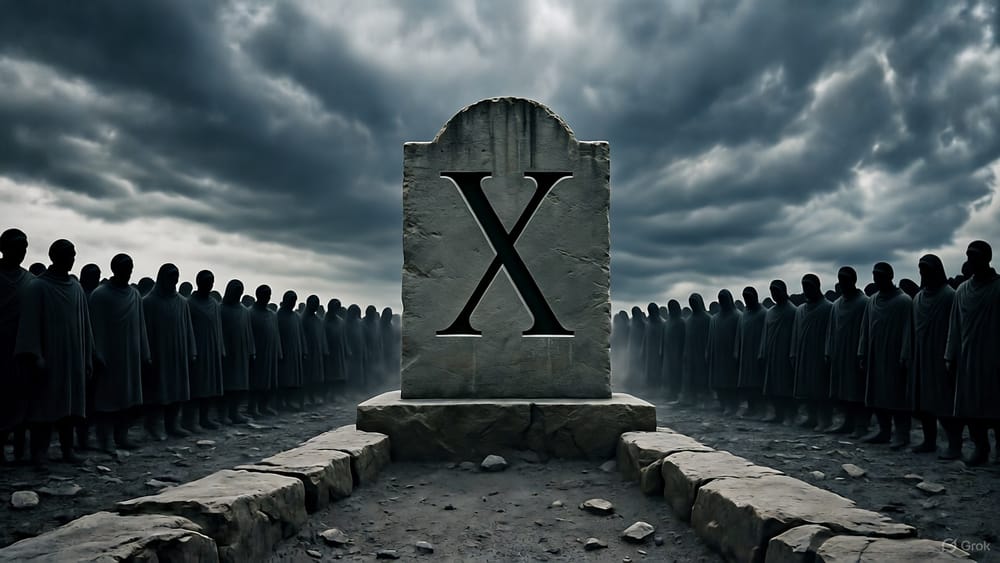
The Collapse of X: How Bots, Broken Algorithms, and Bad Incentives Killed a News Platform
X used to be extraordinary. Breaking news hit with electric speed. Threads unfolded in real time. The world’s pulse was visible in 280 characters.
Now something has fundamentally broken.
Scroll through the platform and you’re drowning in crypto scams, propaganda bots, and influencers gaming the system. Legitimate journalism surfaces for a moment, then vanishes beneath the noise. This isn’t evolution. It’s structural collapse.
The Numbers Don’t Lie
When Elon Musk bought Twitter for $44 billion in October 2022, he promised free speech and disruption. What we got was an algorithm that prioritizes engagement over everything else and it’s killing the platform.
According to RivalIQ’s 2025 benchmark report, median engagement rates on X dropped from 0.029 percent in 2024 to just 0.015 percent in 2025. That’s nearly half, gone in one year. Brands are posting 33 percent less than they did before. As the report notes, Twitter posting “took the sharpest dive” of any platform, “suggesting people aren’t as invested in X as they once were.”
People are leaving. Over 115,000 US users deactivated their accounts the day after the 2024 election the highest exit numbers since Musk’s takeover. The platform’s value has reportedly dropped 80 percent from the purchase price.
Bots Everywhere
The bot problem is staggering. Estimates vary wildly, but they all point to crisis. Twitter’s internal reviews claimed less than 5 percent of accounts were fake. Independent researchers tell a different story.
A 2024 analysis by 5th Column AI examined 1.269 million accounts and found that approximately 64 percent showed signs of being bots. A 2025 Fortune report noted that bots now make up more than half of all internet traffic. One analysis found 75.85 percent of Super Bowl LVIII traffic on X was fake.
Even conservative estimates from Scientific Reports suggest 20 percent of social media chatter about global events comes from bots. These accounts use predictable patterns excessive hashtags, generic positive language, automated posting schedules.
The impact? Comment sections die. Bots post, then immediately block the original poster, killing any chance of response. AI-generated content floods feeds, making it impossible to tell real reporting from manufactured narratives. Users who remember when human voices dominated the platform now watch it slip away.
The Monetization Problem
X’s revenue-sharing model broke the incentive structure. Users can now earn money based on engagement, which sounds good until you realize what it actually rewards.
High-profile accounts discovered they could farm payouts by reposting viral content over and over. Networks of similar accounts amplified each other. The algorithm learned to reward whatever triggered the strongest reaction, regardless of accuracy or value.
The feed shows the damage. “What’s your favorite pizza topping?” generates thousands of replies and real money. Substantive analysis? It dies in obscurity. The platform became a slot machine where the jackpot goes to whoever provokes the biggest reaction.
News Organizations Give Up
Even legitimate news accounts have stopped trying. Most major publishers now treat X as a broadcast channel. They post links every few minutes, ignore all replies, and never engage with comments.
This turns them into spam machines. When users see automated posts with zero human response, it looks exactly like bot activity. The line between real news and algorithmic noise has disappeared.
The platform actively works against publishers anyway. X’s algorithm now deprioritizes posts with external links, choking off referral traffic. On Election Day 2024, X traffic to Newspack publishers jumped 50 percent but still represented less than 1 percent of total site traffic.
So publishers are leaving. The Guardian quit in November 2024, citing “far-right conspiracy theories and racism.” NPR left in April 2023 after Musk labeled them “state-affiliated media.” (NPR said traffic dropped just 1 percent.) The European Federation of Journalists representing three hundred thousand journalists stopped posting in January 2025. Sweden’s Dagens Nyheter, Germany’s St. Pauli football club, Spain’s La Vanguardia, and others followed.
The outlets staying the New York Times, Reuters, Vox told Digiday they’re constantly reevaluating whether it’s worth it.
What Actually Works: Substack
Substack proves the alternative exists. While X’s engagement rate sits at 0.015 percent, Substack newsletters consistently hit 40 to 50 percent open rates. Some experienced writers see 56 percent or higher far beyond the 21 percent industry average for email.
The difference is structural. Substack rewards depth, not virality. Conversation, not broadcast. Top publications report 107 percent subscriber growth through genuine engagement. About 3 percent of free subscribers convert to paid and they stay because of real interaction.
Creators actually talk to readers. They respond to comments, host discussions, build communities. This isn’t revolutionary. It’s what X used to be.
Reform Efforts Fall Short
X has tried. The company claims it reduced bot activity by 90 percent and purged 1.7 million accounts. They tweaked the algorithm and gave premium subscribers better visibility and bot protection.
But these are band-aids. The core problem an algorithm that rewards manipulation over conversation remains untouched.
What’s at Stake
X still has 611 million monthly users. That’s massive reach. The platform still dominates real-time news 59 percent of users rely on it as a news source.
But none of that matters if the platform can’t tell human conversation from bot noise. If it buries journalism under engagement bait. If it rewards manipulation over substance.
The fix isn’t complicated. The algorithm needs to prioritize truth over virality. Amplify quality journalism, not suppress it. Hunt bots aggressively, not reactively. Restructure revenue to reward originality and depth, not just raw engagement.
Most important: remember what made Twitter valuable. Real people having real conversations about real events in real time. That’s the standard. Every decision should serve that goal.
X stands at a fork. One path leads to MySpace status a cautionary tale of squandered potential. The other requires hard choices that might hurt short-term metrics but could restore real value.
For those who remember what Twitter was, the stakes are clear. This isn’t about one social media platform. It’s about whether public digital spaces can stay useful for news and conversation, or whether they’ll collapse under algorithmic manipulation and broken incentives.
The question isn’t whether X can survive. It’s whether or not it should in it current form.