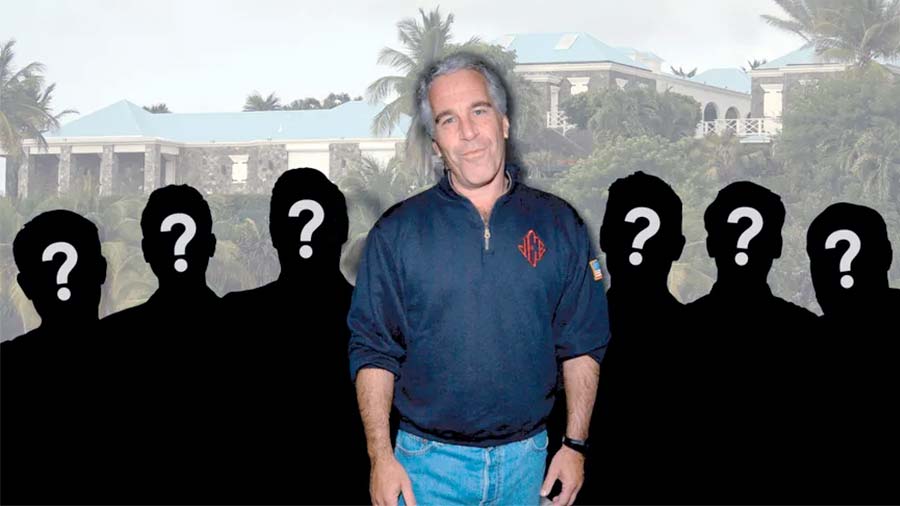
The Epstein Network: Blackmail, Intelligence, and Transnational Elite Control
In the shadowy corridors of power, figures like Jeffrey Epstein do not emerge by accident. They are cultivated, protected, and deployed as tools in a system far older than any single scandal. To truly understand Epstein’s role, we must look beyond individual misconduct to the larger architecture of elite control that has operated throughout history.
The Epstein Network
Epstein was convicted in 2008 for soliciting underage prostitution and arrested again in 2019 on federal sex trafficking charges. But his criminal record only scratches the surface. He operated what amounted to a high society honey-trap. His private island, Little St. James, and lavish properties in New York and New Mexico hosted an elite guest list of politicians, scientists, billionaires, and royals. Court documents from Giuffre v. Maxwell reveal that hidden cameras captured compromising activities, turning social gatherings into leverage machines.
The architecture of his operation raises uncomfortable questions. Epstein’s wealth came from a single major client: retail mogul Leslie Wexner, who granted him power of attorney over vast financial assets. His connections extended to Ghislaine Maxwell, whose father, Robert Maxwell, maintained documented ties to MI6, Mossad, and KGB intelligence networks. The elder Maxwell was a multifaceted asset who used espionage, fund laundering, and publishing covers to serve multiple intelligence agencies. He died mysteriously in 1991 amid £440 million in embezzlement charges, leaving behind a web of connections that his daughter appears to have inherited.
Evidence suggests Epstein inherited and expanded these networks. He brokered covert deals involving security pacts and surveillance technology sales. He hosted officials connected to various intelligence services and maintained relationships that transcended national boundaries. His activities potentially involved Mossad, CIA, MI6, and FSB/KGB intertwined with organized crime. These agencies operated not with clear national loyalties but as part of what might be understood as a transnational power structure with no allegiance to any single country.
The circumstances surrounding Epstein’s 2008 plea deal fuel these suspicions. Alexander Acosta, then U.S. Attorney for the Southern District of Florida, approved a controversial non-prosecution agreement that granted Epstein and his co-conspirators immunity from federal charges. According to a 2019 report, Acosta allegedly told Trump transition officials that he cut the deal because he was told Epstein “belonged to intelligence” and to “back off.” Acosta has repeatedly denied making this statement, calling it “categorically false,” and a Department of Justice investigation found no evidence that Epstein was an intelligence asset. However, the claim persists and the lenient treatment Epstein received remains unexplained. Notably, during Pam Bondi’s tenure as Florida Attorney General from 2011 to 2019, when Epstein’s plane records became public and victims filed lawsuits, no formal state investigation was opened despite her office’s authority to do so.
Historical UK-Israel intelligence alliances provide context for these blurred lines. From Suez collaborations to modern Gaza surveillance operations involving RAF and Five Eyes, institutional partnerships have long transcended simple national interests. This echoes patterns established during the British Mandate era.
The question persists: was Epstein an independent operator or an intelligence asset? His 2019 jail cell death, ruled a suicide despite malfunctioning cameras and injuries inconsistent with hanging, only deepens the mystery. What remains clear is that after his 2008 conviction, he continued normalized interactions with global elites including Larry Summers, Peter Thiel, Noam Chomsky, Prince Andrew, and Russian diplomats. This suggests his role in a borderless network that leveraged blackmail, influence, and self-preservation continued unabated.
Historical Patterns of Compromise
Epstein’s operation fits within millennia-old patterns of elite control through sexual compromise. Ancient Egyptian courtesans extracted secrets from rivals, as documented in the Amarna letters. Soviet KGB “swallows” seduced Western diplomats during the Cold War. Roman patricians used patronage and scandal to bind rivals. These tactics persist because they work. Blackmail ensures loyalty in a borderless web of influence.
This is not an isolated phenomenon. Similar schemes surface globally with disturbing regularity. Belgium’s Dutroux Affair in the 1990s implicated officials in child trafficking, with investigations halted by interference and witness deaths. Italy’s Propaganda Due (P2) Masonic lodge, exposed in 1981, connected 962 elites in corruption and blackmail rings. Even recent cases like Sean “Diddy” Combs’ 2024 conviction for running “Freak Off” parties with hidden recordings mirror the tactic: compromise the powerful to control them.
The Modern Surveillance Ecosystem
These operations thrive in a surveillance ecosystem that amplifies elite leverage. The Five Eyes alliance monitors global communications, as exposed by Edward Snowden’s 2013 leaks and WikiLeaks’ 2010 diplomatic cables. Tools like the FBI’s Carnivore program evolved into AI-driven systems like XKEYSCORE and Palantir, which analyze metadata to profile anyone from diplomats to CEOs. Data from these feeds can become kompromat, ensuring silence or cooperation.
China’s social credit system takes this to dystopian heights. 600 million cameras and AI track 1.4 billion people, tying scores to financial access via digital yuan. Low scores mean travel bans or job losses. This represents blackmail baked into daily life. India’s Aadhaar biometrics link 1.4 billion to services, enabling similar control. These are not anomalies but the future, converging with Western surveillance under efficiency pretenses.
Why It Persists
Blackmail serves as the glue of elite networks because it transcends borders and loyalties. Epstein’s web connected finance through Wexner, technology through figures like Bill Gates (who visited 37 times according to flight logs), and politics through Prince Andrew and Bill Clinton. His “philanthropy” funded neuroscience and AI research, blurring lines between science and control in ways that mirror ancient patterns of elite knowledge monopolization.
This system operates through what might be called a Hidden Hand, an independent power structure with no borders or loyalties to any single nation. It represents a transnational elite using blurred intelligence operations, organized crime, and technology to orchestrate power. Distinctions between agencies like Mossad, CIA, MI6, and FSB fade in this borderless game, much like Robert Maxwell’s espionage web that served multiple masters.
Understanding the Pattern
To understand Epstein is to grasp this bigger picture. He functioned as a useful tool without exclusive national, ethnic, or ideological loyalties. He served a transnational power elite orchestrating blurred intelligence operations where traditional agency distinctions become meaningless. This concept is explored in depth in Eric Daniel Buesing’s groundbreaking book, The Hidden Hand: Wealth, Power, and Control from Pharaohs to Corporations, which unravels the unseen elite networks shaping history and modern society.
The book traces these patterns from ancient Sumerian priests to today’s global finance giants like the Bank for International Settlements, providing tools to resist manipulation through critical analysis, decentralized solutions, and ethical technology advocacy. In our increasingly manipulated world, understanding these structures becomes essential for anyone seeking to challenge institutional control and reclaim autonomy.
Pre-order The Hidden Hand today at Barnes & Noble ( https://barnesandnoble.com/w/the-hidden-hand-eric-daniel-buesing/1148336792 ), releasing June 22, 2026, and join the growing movement challenging institutional distrust.