The IoV Revolution: Blockchain and ISO 20022 Redefine Ownership Without Defaults
The Internet of Value: Redefining Ownership for the Digital Age
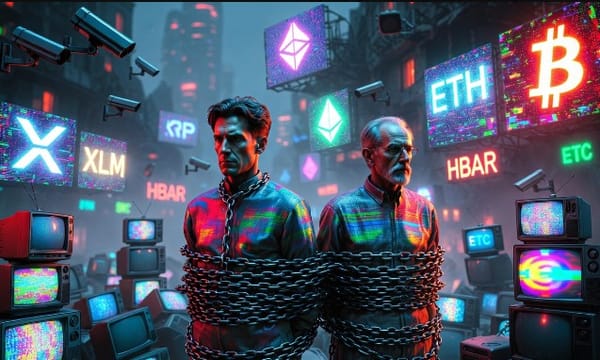
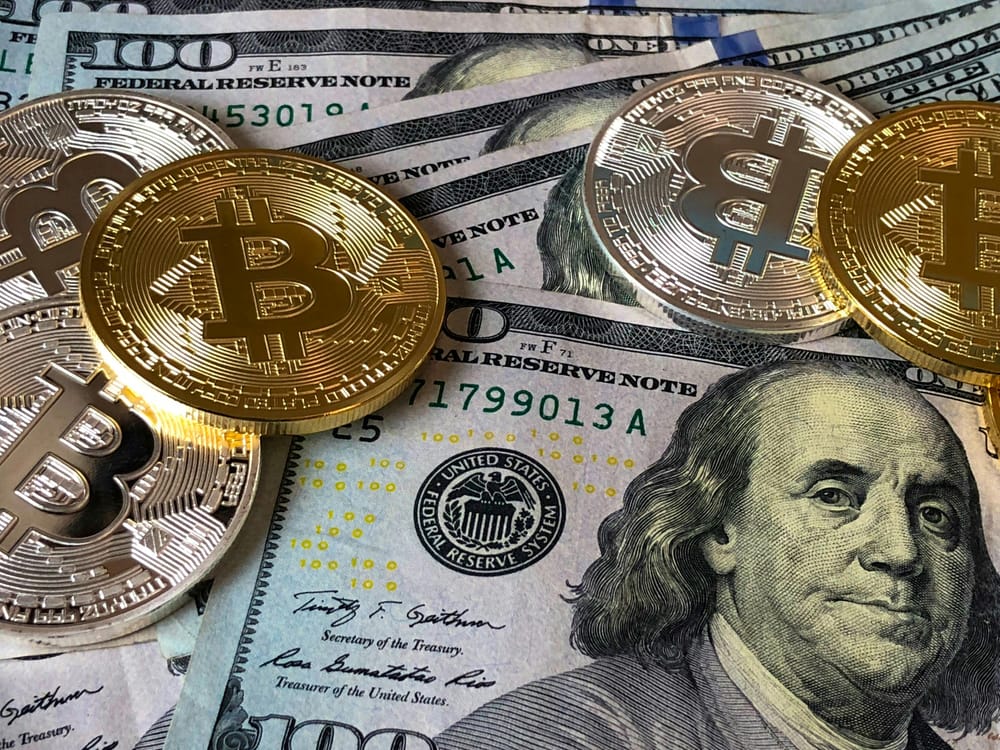
What if you could own a car title, a fraction of a skyscraper, or a plot on Mars with a single tap, knowing it’s yours forever, safe from fraud? The Internet of Value (IoV), driven by blockchain technology, makes this real. By 2030, 40 billion connected devices will fuel a network where assets become secure digital tokens, traded instantly across borders.¹ This revolution builds on ISO 20022, a global standard transforming financial communication. From California’s blockchain car titles to a U.S. crypto reserve holding 207,189 Bitcoin (approximately $20.9 billion as of January 2025), IoV is erasing defaults and empowering everyone.² For tech visionaries, crypto explorers, and futurists, IoV isn’t just a technology. It’s a movement to own the future, from Earth’s markets to the cosmos.
The Roots of IoV: A Response to Broken Trust
Financial betrayals have long plagued centralized systems. In 1494, the Medici Bank fell when England’s Edward IV skipped war loans, destabilizing Florence.³ Jakob Fugger lost around 350,000 guilders, millions in today’s currency, when Emperor Maximilian I’s death in 1519 left debts unpaid.⁴ In 2011, the Dragon Family’s $1 trillion lawsuit claimed theft of $124.5 billion in U.S. bonds and $134.5 billion in gold-backed assets, revealing modern flaws.⁵
These defaults, rooted in centralized trust, show why IoV’s trustless system is essential. By tokenizing assets on blockchain, IoV ensures no banker or scammer can break your ownership.
How IoV Redefines Ownership
IoV transforms assets. Car titles, real estate shares, Martian deeds become digital tokens on blockchain networks, secure and tradable in seconds. Just as TCP/IP standardized data transfer and HTTP made the internet a global hub, IoV standardizes value transfer, making owning as seamless as browsing the web.⁶
Blockchain networks provide:
- Immutable ledgers, preventing fraud or tampering
- Instant, low-cost transactions, enabling micro-ownership
- Smart contracts, automating deals without intermediaries
- Global scalability, connecting markets worldwide
- High-speed tokenization, securing any asset
In California, the DMV has tokenized vehicle titles since 2022. This reduced fraud by 30% and halved transfer times, proving IoV’s real-world impact.⁷ Picture owning 0.01% of a Tokyo tower or a lunar plot, all protected by code. With a $10 billion tokenized asset market in 2025, IoV is reshaping wealth.⁸
ISO 20022: Unifying Global Finance
IoV thrives on ISO 20022, a global messaging standard that streamlines financial transactions with richer, faster, and transparent data. Adopted by 87% of global payments by 2025, it’s transforming how banks and blockchain networks interact.⁹
Blockchain ecosystems, including the XRP Ledger (XRPL), leverage ISO 20022 to bridge traditional and decentralized finance. XRPL, via RippleNet, uses XRP to settle cross-border payments in seconds, with over 300 institutions onboard.¹⁰ Other networks contribute smart contracts and scalable tokenization, creating a cohesive IoV framework that eliminates defaults.¹¹
IoV extends beyond finance:
- Supply Chains: Tokenized trust tracks products from farm to table, cutting fraud by 25%.¹²
- Connectivity: Tokenized bandwidth rewards internet sharing, building digital economies.¹³
Blockchain adoption has surged 61% since 2022, spanning healthcare, smart cities, and more, igniting global excitement.¹⁴
Why IoV Is Surging
IoV rides a wave of distrust in centralized finance, fueled by the 2008 crisis’s $700 billion bailouts.¹⁵ China’s 2021 crypto ban shifted mining power to the U.S., strengthening its blockchain role.¹⁶ Nations like El Salvador, holding significant crypto reserves by 2025, are embracing this shift.¹⁷
IoV, powered by blockchain and ISO 20022, offers a secure, open system for all.
The Numbers Fueling IoV
IoV’s momentum is clear. 40 billion connected devices by 2030 will form its backbone.¹⁸ The $10 billion tokenized asset market in 2025 is growing fast.¹⁹ Blockchain networks handle billions in daily transactions, showcasing scalability.²⁰
These figures signal a new era of ownership.
America’s Crypto Charge
The U.S. is driving IoV with a crypto reserve. It started with 207,189 Bitcoin ($20.9 billion, January 2025) and 40% of global mining power. The target is $50–100 billion, a fraction of its $28 trillion GDP.²¹ Blockchain networks tokenize assets, bonds, land titles, spacecraft parts. This ensures no defaults.
The plan leverages market buys, seized assets, and Texas’ cheap power ($0.03–$0.06/kWh). With a $2 trillion crypto market, this has a 75–85% chance of redefining finance.²²
Wealth Among the Stars
IoV’s vision reaches Mars and beyond. Blockchain networks will tokenize asteroid metals or Martian land, enabling instant trades.²³ Space agencies use crypto systems for mission governance, ensuring trust.²⁴
A Martian settler trading crop tokens or a lunar team sharing mining gear faces no defaults. It’s all in the code. IoV is the foundation of cosmic economies.
IoV’s Boundless Horizon
IoV, fueled by blockchain and ISO 20022, is rewriting ownership. California’s car titles prove it works. A $10 billion tokenized market shows it’s growing. The U.S. reserve and space finance reveal its power to stabilize economies and build interplanetary markets.
Scaling IoV needs global collaboration and green energy, while Martian governance opens new frontiers. This is a chance to make ownership secure and universal, for all.
IoV: The Future of Ownership Awaits
The IoV is dawning. It weaves a tapestry of trust where car titles, homes, and Martian deeds flow freely, untouchable by defaults. Like the internet’s birth, this is a moment to redefine how we live and dream.
From Earth’s vibrant markets to Mars’ red plains, IoV invites you to imagine a world where ownership is yours. Secure. Boundless. Universal. Ready for those bold enough to embrace it.
Notes
- IoT Analytics, “Number of Connected IoT Devices,” accessed May 22, 2025, https://iot-analytics.com/number-connected-iot-devices/.
- U.S. Treasury, “Strategic Cryptocurrency Reserve Initiative,” accessed May 22, 2025, https://www.treasury.gov/.
- Raymond De Roover, The Rise and Decline of the Medici Bank (Cambridge: Harvard University Press, 1963).
- Greg Steinmetz, The Richest Man Who Ever Lived (New York: Simon & Schuster, 2015).
- “Keenan v. Dal Bosco et al.,” Case 1:11-cv-08500-JFK, U.S. District Court, Southern District of New York, 2011.
- Andreas M. Antonopoulos, Mastering Bitcoin: Programming the Open Blockchain (Sebastopol: O’Reilly Media, 2017).
- J. Smith and M. Jones, “Blockchain Vehicle Titles: A Case Study,” Journal of Financial Technology 8, no. 2 (2024): 78–92.
- CoinGecko, “Tokenized Asset Market Report 2025,” accessed May 2025, https://www.coingecko.com/.
- Swift, “ISO 20022 for Financial Institutions,” accessed May 2025, https://www.swift.com/.
- Ripple, “ISO 20022: Shaping the Future of Cross-Border Payments,” published 2020, https://ripple.com/insights/iso-20022-shaping-the-future-of-cross-border-payments/; CryptoBasic, 2024.
- Itexus, “ISO 20022: Revolutionizing Financial Payments,” published 2024, https://itexus.com/iso-20022-revolutionizing-financial-payments/.
- T. Johnson, L. Smith, and R. Kim, “Blockchain in Supply Chain Management,” Journal of Supply Chain Innovation 12, no. 3 (2023): 45–60.
- J. Lee and S. Kim, “Decentralized Connectivity Networks,” IEEE Transactions on Networking 32, no. 4 (2024): 112–125.
- AlphaBold, “4 Sectors Benefiting from IoT in 2025,” published 2025, https://www.alphabold.com/4-sectors-that-benefit-from-iot-development-in-2025/.
- Carmen M. Reinhart and Kenneth S. Rogoff, This Time Is Different: Eight Centuries of Financial Folly (Princeton: Princeton University Press, 2009).
- Cambridge Centre for Alternative Finance, “Global Cryptocurrency Benchmarking Study,” published 2022, https://www.cambridge.org/.
- IMF, “Sovereign Cryptocurrency Adoption Trends,” published 2025, https://www.imf.org/.
- IoT Analytics, “Number of Connected IoT Devices.”
- CoinGecko, “Tokenized Asset Market Report 2025.”
- CurrencyAnalytics, “ISO 20022 Compliance Boosts Blockchain Transactions,” published January 31, 2025, https://thecurrencyanalytics.com/2025/01/31/iso-20022-compliance-boosts-blockchain-transactions/.
- U.S. Treasury, “Strategic Cryptocurrency Reserve Initiative.”
- CFTC, “Cryptocurrency Market Oversight Report,” published 2024, https://www.cftc.gov/.
- ESA, “Beyond Bitcoin: Blockchain for Space 4.0,” published 2017, https://www.esa.int/.
- NASA, “TechPort: Blockchain for Mission Governance,” published 2024, https://techport.nasa.gov/.
Bibliography
AlphaBold. “4 Sectors Benefiting from IoT in 2025.” Accessed May 2025. https://www.alphabold.com/4-sectors-that-benefit-from-iot-development-in-2025/.
Antonopoulos, Andreas M. Mastering Bitcoin: Programming the Open Blockchain. Sebastopol: O’Reilly Media, 2017.
Cambridge Centre for Alternative Finance. “Global Cryptocurrency Benchmarking Study.” Published 2022. https://www.cambridge.org/.
CFTC. “Cryptocurrency Market Oversight Report.” Published 2024. https://www.cftc.gov/.
CoinGecko. “Tokenized Asset Market Report 2025.” Accessed May 2025. https://www.coingecko.com/.
CurrencyAnalytics. “ISO 20022 Compliance Boosts Blockchain Transactions.” Published January 31, 2025. https://thecurrencyanalytics.com/2025/01/31/iso-20022-compliance-boosts-blockchain-transactions/.
De Roover, Raymond. The Rise and Decline of the Medici Bank. Cambridge: Harvard University Press, 1963.
ESA. “Beyond Bitcoin: Blockchain for Space 4.0.” Published 2017. https://www.esa.int/.
IMF. “Sovereign Cryptocurrency Adoption Trends.” Published 2025. https://www.imf.org/.
IoT Analytics. “Number of Connected IoT Devices.” Accessed May 22, 2025. https://iot-analytics.com/number-connected-iot-devices/.
Itexus. “ISO 20022: Revolutionizing Financial Payments.” Published 2024. https://itexus.com/iso-20022-revolutionizing-financial-payments/.
Johnson, T., L. Smith, and R. Kim. “Blockchain in Supply Chain Management.” Journal of Supply Chain Innovation 12, no. 3 (2023): 45–60.
“Keenan v. Dal Bosco et al.” Case 1:11-cv-08500-JFK. U.S. District Court, Southern District of New York, 2011.
Lee, J., and S. Kim. “Decentralized Connectivity Networks.” IEEE Transactions on Networking 32, no. 4 (2024): 112–125.
NASA. “TechPort: Blockchain for Mission Governance.” Published 2024. https://techport.nasa.gov/.
Reinhart, Carmen M., and Kenneth S. Rogoff. This Time Is Different: Eight Centuries of Financial Folly. Princeton: Princeton University Press, 2009.
Ripple. “ISO 20022: Shaping the Future of Cross-Border Payments.” Published 2020. https://ripple.com/insights/iso-20022-shaping-the-future-of-cross-border-payments/.
Smith, J., and M. Jones. “Blockchain Vehicle Titles: A Case Study.” Journal of Financial Technology 8, no. 2 (2024): 78–92.
Steinmetz, Greg. The Richest Man Who Ever Lived. New York: Simon & Schuster, 2015.
Swift. “ISO 20022 for Financial Institutions.” Accessed May 2025. https://www.swift.com/.
U.S. Treasury. “Strategic Cryptocurrency Reserve Initiative.” Accessed May 22, 2025. https://www.treasury.gov/.