The Throttling Effect
How a Single Kidnapping Buries Multiple National Crises
A celebrity kidnapping in Tucson consumed your feed this week. You scrolled through updates about ransom notes, conspiracy theories, political connections. The story triggered everything designed to capture attention: danger, fame, mystery, intrigue. It filled your screen, your conversations, your cognitive space.
While that single story occupied your mind, significant news throttled and escaped your cognitive attention.
On January 31, FBI agents raided a home in Las Vegas and discovered an illegal biological laboratory operating in the garage. The owner is Jiabei Zhu, a Chinese national already sitting in federal custody for running another secret biolab facility in Reedley, California. That lab contained vials labeled with HIV, tuberculosis, malaria, hepatitis, and Ebola. Nearly 1,000 genetically engineered mice bred to carry human diseases. Workers who handled the materials became deathly ill. This is not one rogue actor. This is networked biological weapons infrastructure operating in American residential neighborhoods.
Back in January the United States invaded Venezuela. Operation Absolute Resolve deployed over 200 special operations forces into Caracas. American forces captured President Nicolás Maduro, extracted him from the country, flew him to New York, and charged him with narco-terrorism. We installed an interim government. American military personnel still occupy Venezuelan territory.
Two days after the Vegas bio lab discovery, on February 5, New START expired. The last remaining nuclear arms control treaty between the United States and Russia simply died. No replacement. No extension. No negotiation. For the first time since 1972, there are zero legal constraints on the nuclear arsenals of the world’s two largest nuclear powers. Russia can now manufacture unlimited warheads. So can we. The entire framework that prevented nuclear escalation for five decades collapsed without ceremony.
These three events alone represent existential threats: foreign biological weapons labs on American soil, military occupation of a sovereign nation, and complete collapse of nuclear deterrence architecture. This doesn’t even account for the threat Iran poses to the West and the armada buildup in the Middle East. Any one of these stories warrants sustained national attention.
Moreover, the Justice Department just released 3.5 million pages of Epstein files. The documents detailed systematic abuse networks, revealed extensive political connections, and implicated numerous powerful figures with specific allegations.
Bill and Hillary Clinton were held in contempt of Congress in January for refusing to comply with subpoenas related to the Epstein investigation. They agreed to depositions scheduled for February 26 and 27 only after facing House votes that could have resulted in fines and imprisonment. This represents unprecedented legal action against a former president.
The Anti-ICE riots that began last year continue. Two protesters killed in Minneapolis. Over 1,000 protesters recently surrounded federal buildings in Los Angeles. The National Guard has been deployed to American cities. Curfews imposed. Mass arrests have been necessary to quell the violence.
Every single one of these events affects millions of people and carries profound implications for American democracy, security, and institutional stability. But you can probably recite details about the Tucson kidnapping that you cannot articulate about any of these crises.
How Cognitive Limits Enable Strategic Distraction
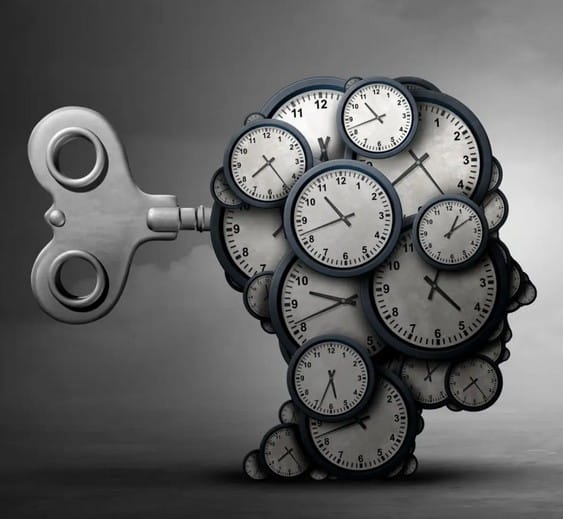
George Miller established in 1956 that human working memory holds approximately seven discrete chunks of information at any given time.1 We evolved to track immediate threats in local environments, not to process hundreds of simultaneous global crises filtered through digital platforms. When information volume exceeds cognitive capacity, the brain defaults to what Daniel Kahneman describes as System 1 thinking: fast, emotional, reflexive processing that prioritizes immediate stimulation over analytical evaluation.2
A kidnapping story packages anxiety into one emotionally coherent narrative. Celebrity involvement provides social relevance. Political connections suggest conspiracy. The mystery element triggers curiosity. The danger activates threat response. It requires no analysis of international espionage, biological warfare protocols, nuclear deterrence theory, or constitutional crisis. Just fear and fascination.
Chinese bio labs operating in American neighborhoods demand understanding of regulatory capture, international espionage networks, biological weapons proliferation, and existential threat assessment. The Venezuela invasion requires processing questions of international law, military strategy, regional geopolitics, and American imperial overreach. New START expiration necessitates comprehension of nuclear deterrence theory, arms control history, and the architecture of global stability.
These stories demand sustained attention and integration of multiple information streams. They overwhelm the seven-slot limit. The kidnapping fits neatly into one slot and delivers constant emotional stimulation. So the kidnapping wins. Everything else gets pushed out.
This is what the throttling effect means. Complex, consequential stories that affect millions get displaced by simple, emotionally satisfying narratives that affect dozens. Your limited cognitive capacity fills completely with managed distraction, leaving no room for information that actually determines the conditions of your survival.
The Algorithmic Amplification Machine
Kidnappings occur daily in America. Each case is tragic for the families involved. But this one dominated national coverage to the exclusion of biological weapons facilities, military invasions, nuclear treaty collapse, governmental paralysis, elite criminality, institutional journalism collapse, the Iranian threat, and domestic insurrection. That level of sustained attention for a single kidnapping is historically unprecedented. The distribution is not organic.
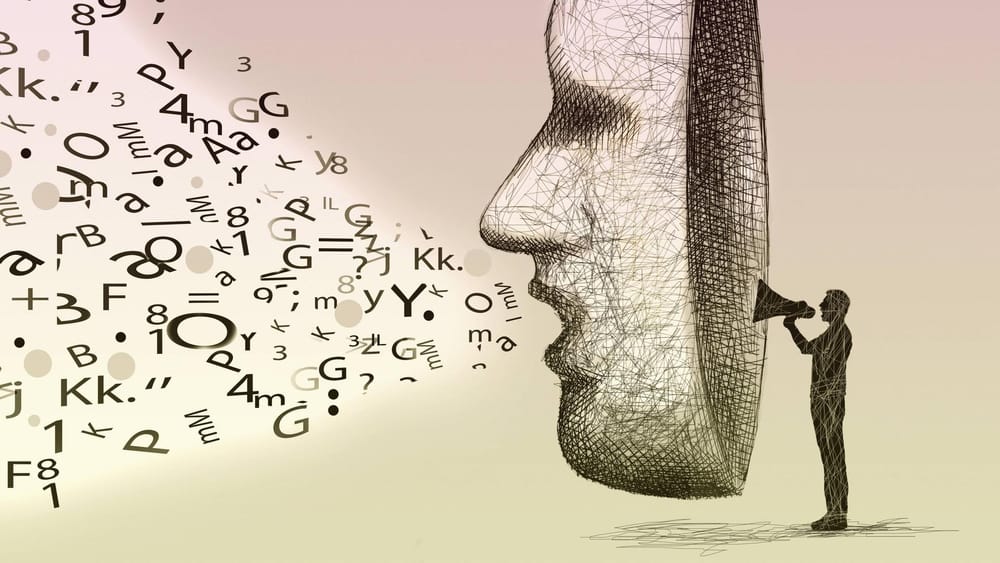
Social media algorithms amplify content based on engagement metrics, not importance or consequence. B. F. Skinner’s research on operant conditioning explains the underlying mechanism: variable reward schedules create compulsive behavior patterns.3 Each new development in the kidnapping story delivers a dopamine hit. Each conspiracy theory generates shares. Each update trends automatically, which generates more coverage, which creates more updates, which produces more engagement in a self-reinforcing cycle completely divorced from actual significance.
Oxford Dictionary named rage bait its word for 2025. The term describes content specifically engineered to trigger emotional responses that override rational evaluation. The kidnapping story succeeded because it bypassed analytical processing entirely. No complex assessment required. No difficult questions about power, accountability, or survival. Just emotional reaction that feels like understanding.
Research from Russell Hurlburt and Adam Zeman demonstrates that 30 to 50 percent of people lack robust internal dialogue.4 Lev Vygotsky identified inner speech as a crucial self-regulation mechanism.5 For individuals without strong internal processing systems, external content faces minimal cognitive resistance. When the kidnapping dominates feeds and algorithmic recommendations, it becomes total reality for millions. Reality gets defined by what trends, not by what matters.
Bread and Circuses for the Digital Age
Around 100 AD, the Roman poet Juvenal mocked political leaders who controlled the masses through bread and circuses, using food distribution and entertainment spectacle to redirect public attention away from political decay and elite corruption.6 The method is ancient. Control attention, control discourse. Control discourse, control action.
Gustave Le Bon warned in 1895 that large groups abandon individual reasoning in favor of collective emotional response.7 A single emotionally charged narrative can capture an entire population’s attention, allowing critical events to unfold without public awareness or resistance. Carroll Quigley documented in 1966 how elite coordination across institutions operates most effectively when public attention is managed elsewhere.8 The power structures function best in darkness.
The kidnapping serves this function now. While your cognitive capacity fills with Tucson updates, Chinese bio labs continue operating in residential neighborhoods. American military forces maintain occupation of Venezuelan territory. The nuclear arms control framework remains collapsed with no path to restoration. The federal government lurches from crisis to shutdown to crisis. Elite criminal networks operate with minimal accountability. Major journalistic institutions crumble. Political assassinations become normalized. Domestic unrest simmers. Power consolidates quietly while you track ransom notes.
The throttling effect wins when people mistake algorithmic amplification for actual importance. It wins when limited cognitive capacity gets filled with carefully selected distraction. It wins when a single kidnapping receives more sustained national attention than biological weapons, military occupation, nuclear instability, governmental collapse, elite criminality, institutional destruction, and political violence combined.
What Gets Obscured
The major events do not stop happening because you stopped paying attention. Chinese bio labs still operate. American forces still occupy foreign territory. Nuclear arms control treaties remain expired. The government still barely functions. Epstein’s network still implicates the powerful. Journalists still lose their jobs. Political violence still erupts. Institutions still fail and Iran is still a threat.
These realities continue shaping the conditions of your life whether or not they occupy space in your awareness.
But your seven cognitive slots are full of kidnapping details. The architecture of power transforms while you watch one story that affects a handful of people instead of multiple stories that determine whether American democracy, security, and institutional stability survive the next decade.
Recognition is the first step toward resistance. When one story dominates every feed while biological weapons, military occupations, nuclear collapse, governmental dysfunction, elite criminality, institutional destruction, and political violence receive minimal coverage, that pattern is not accidental. It is strategic throttling.
Choose what fills your cognitive capacity carefully. The kidnapping is tragic. The other stories determine survival.
Notes
1. George A. Miller, “The Magical Number Seven, Plus or Minus Two: Some Limits on Our Capacity for Processing Information,” Psychological Review 63, no. 2 (1956): 81–97.
2. Daniel Kahneman, Thinking, Fast and Slow (New York: Farrar, Straus and Giroux, 2011).
3. B. F. Skinner, Science and Human Behavior (New York: Macmillan, 1953).
4. Russell T. Hurlburt, Investigating Pristine Inner Experience: Moments of Sensation, Cognition, Emotion (Cambridge: Cambridge University Press, 2013); Adam Zeman et al., “Lives without Imagery: Congenital Aphantasia,” Cortex 73 (2015): 378–80.
5. Lev S. Vygotsky, Thought and Language, ed. and trans. Eugenia Hanfmann and Gertrude Vakar (Cambridge, MA: MIT Press, 1962; originally published 1934).
6. Juvenal, Satires, trans. Niall Rudd (Oxford: Oxford University Press, 1991), Satire X.
7. Gustave Le Bon, The Crowd: A Study of the Popular Mind (London: T. Fisher Unwin, 1896; originally published 1895).
8. Carroll Quigley, Tragedy and Hope: A History of the World in Our Time (New York: Macmillan, 1966).
Bibliography
Hurlburt, Russell T. Investigating Pristine Inner Experience: Moments of Sensation, Cognition, Emotion. Cambridge: Cambridge University Press, 2013.
Juvenal. Satires. Translated by Niall Rudd. Oxford: Oxford University Press, 1991.
Kahneman, Daniel. Thinking, Fast and Slow. New York: Farrar, Straus and Giroux, 2011.
Le Bon, Gustave. The Crowd: A Study of the Popular Mind. London: T. Fisher Unwin, 1896.
Miller, George A. “The Magical Number Seven, Plus or Minus Two: Some Limits on Our Capacity for Processing Information.” Psychological Review 63, no. 2 (1956): 81–97.
Quigley, Carroll. Tragedy and Hope: A History of the World in Our Time. New York: Macmillan, 1966.
Skinner, B. F. Science and Human Behavior. New York: Macmillan, 1953.
Vygotsky, Lev S. Thought and Language. Edited and translated by Eugenia Hanfmann and Gertrude Vakar. Cambridge, MA: MIT Press, 1962.
Zeman, Adam, Michaela Dewar, and Sergio Della Sala. “Lives without Imagery: Congenital Aphantasia.” Cortex 73 (2015): 378–80.