Veil of Power: Ancient Myths, Modern Elites, and Networks of Influence
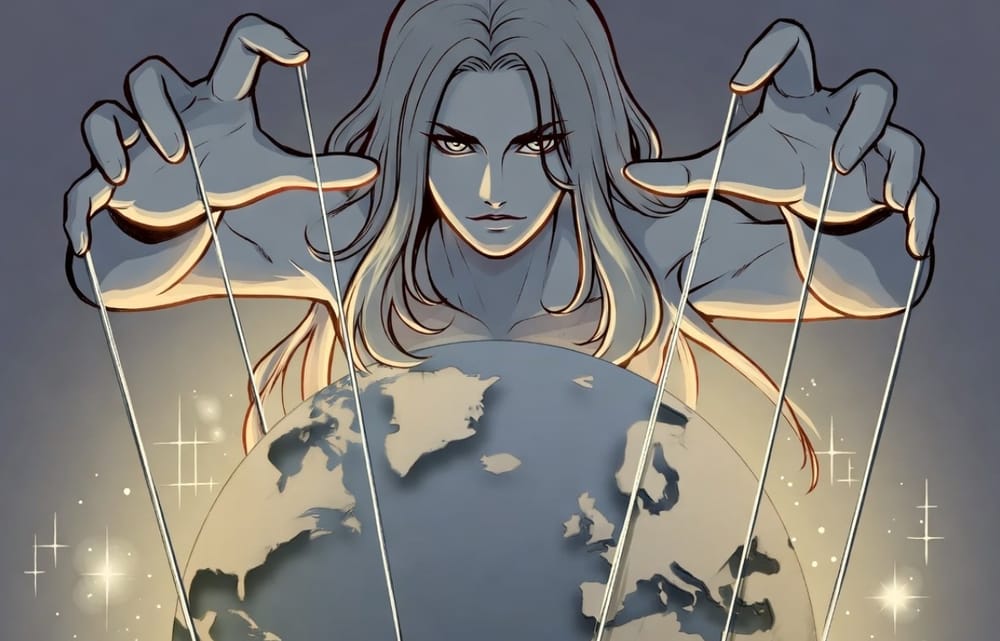
Who Is the “Hidden Hand” That Influences the World and Its Human Inhabitants?
Throughout human history, a concentrated force has guided civilization’s development through mechanisms that transcend individual lifetimes and political systems. Whether this influence originated with otherworldly beings described in ancient texts, survivors of pre-deluge advanced civilizations, or simply networks of human elites recognizing the advantages of coordinated power, the pattern remains consistent: knowledge and control concentrated in few hands, operating through institutions designed to outlast individuals, shaping events from positions of deliberate obscurity. From the Watchers of Enoch and the Anunnaki of Sumerian records to modern corporate networks where 147 entities control 40 percent of global wealth.¹ From secret fraternities like Skull & Bones and think tanks Rockefeller and Ford Foundations to groups like Chatham House and CFR to centuries-old dynasties and multinationals, the evidence drawn from ancient texts, peer-reviewed studies, and documented history reveals a persistent hidden hand that has steered human affairs across millennia, adapting its methods while maintaining its essential function: the coordination of power by those who recognize that influence wielded from the shadows proves more durable than authority claimed in the light.
Ancient Roots: Divine and Extraterrestrial Influences in Early Texts
Stories from long ago often blur lines between heaven and earth. The Book of Enoch is a prime example. This ancient Jewish apocryphal text, composed between the third and the first century BCE, details the fall of the Watchers, angels who descended to Earth.² They taught humans forbidden arts: sword-making, enchantments, astrology, and even cosmetics. But the real scandal? They mated with human women, producing the Nephilim, giant hybrids who wreaked havoc. God flooded the world to cleanse this corruption, but the knowledge lingered, altering humanity’s course. Enoch’s visions portray these beings as a divine hidden hand, intervening in mortal affairs and sparking moral decay. It’s a narrative of celestial oversight gone wrong, echoing in later myths of gods meddling with men.
Zecharia Sitchin built on such ideas, but with a twist. In his Earth Chronicles series, starting with The 12th Planet (1976), he reinterprets Sumerian clay tablets as evidence of extraterrestrial visitors.³ The Anunnaki, advanced beings from the planet Nibiru, arrived on Earth around 450,000 years ago. They needed gold to repair their atmosphere, so they mined it here. Humans? Genetically engineered as laborers by mixing Anunnaki DNA with hominids. Sitchin’s books, like The Wars of Gods and Men (1985) and The Lost Realms (1990), argue this explains sudden leaps in civilization, writing, agriculture, kingship.⁴ The Anunnaki ruled as gods, influencing early societies before departing. Critics dismiss it as misreading ancient texts, but Sitchin connects cosmic origins to human history, suggesting an alien elite as the primal hidden hand. His work ties into broader ancient astronaut theories, where visitors seeded progress and power structures.
Erich von Däniken amplified this in Chariots of the Gods? (1968).⁵ He questions how ancient peoples built marvels like the pyramids or Nazca lines without help. His answer: extraterrestrials. Gods in myths were astronauts, sharing technology for construction, medicine, and more. Books like The Eyes of the Sphinx (1996) and Odyssey of the Gods (2000) explore global sites, arguing for alien influence on cultures from Egypt to the Americas.⁶ Von Däniken’s ideas, though debated, suggest a hidden extraterrestrial force accelerating human development, leaving clues in architecture and lore. It’s a bridge from divine myths to sci-fi explanations.
Mesoamerican lore adds vibrant threads. The feathered serpent brothers revolve around Quetzalcoatl, a deity symbolizing wisdom and creation. Carl Johan Calleman, in works like The Mayan Calendar and the Transformation of Consciousness (2004) and The Nine Waves of Creation (2016), interprets Quetzalcoatl as a cosmic force driving evolutionary cycles.⁷ Not just a god, but a plumed serpent embodying duality, light and shadow, sky and earth. Calleman links this to the Mayan Long Count calendar, where waves of consciousness align with global transformations. The brothers represent harmonious energies influencing Mayan society through spiritual and temporal guidance, fostering advanced knowledge in astronomy and timekeeping. This duality mirrors hidden influences balancing creation and destruction.
Then come the tall white brothers in Mayan tales. Described as pale, towering figures, they allegedly guided Mesoamericans with superior wisdom. Fringe theories portray them as extraterrestrials, influencing pyramid building, calendars, and rituals. Artifacts depict elongated skulls and flying devices, hinting at non-human origins. These beings, per some accounts, shared knowledge that propelled Mayan achievements, blending into von Däniken’s narrative of alien mentors. It’s speculative, yet it reinforces patterns of external guidance.
Sumerians provide concrete records. The King List, inscribed on a cuneiform prism around 2100 BCE, catalogs rulers from divine descent. Pre-flood kings that boast absurd reigns: Alulim at 28,800 years, Alalngar at 36,000, totaling 241,200 years for eight monarchs. These were demigods, hybrids of gods and humans, wielding superhuman power. Post-flood, lifespans normalize, suggesting a shift from divine rule to mortal kingship. The list implies a hidden lineage of semi-divine leaders, possibly Anunnaki descendants, bridging myth to recorded history. Such longevity hints at extraterrestrial or advanced influences persisting through time.
These ancient narratives converge on a theme: otherworldly entities as the inaugural hidden hand, imparting knowledge that echoes in modern power dynamics.
Modern Studies: Networks of Economic and Political Control
Influence didn’t vanish with the ancients. It morphed into human hands—or so it seems. Stefania Vitali, James B. Glattfelder, and Stefano Battiston’s 2011 ETH Zurich study, “The Network of Global Corporate Control,” dissected 43,060 transnational corporations from a 2007 database.⁸ They uncovered a web of ownership ties. A core group of 1,318 companies controlled 20 percent of global operating revenues yet owned stakes in 60 percent of all firms through interlocking shares. Deeper still: 147 super-entities, predominantly financial institutions, held 40 percent of the network’s total value. These interlocks create concentrated power, where a few dictate market flows and stability. The study warns of systemic risks from this bow-tie structure, broad inputs funneling to a tight core. It’s a blueprint for elite dominance.
Martin Gilens and Benjamin I. Page’s 2014 study, “Testing Theories of American Politics: Elites, Interest Groups, and Average Citizens,” crunched data from 1,779 policy issues between 1981 and 2002.⁹ Their findings? When average citizens’ preferences diverged from our elites’, policy followed the wealthy elites 18 percent of the time, versus near-zero for the masses. Business interest groups wielded substantial sway, while the masses had minimal impact. This points to “economic-elite domination” and “biased pluralism,” where policy bends to affluent networks, not democracy. A hidden hand in plain sight: money talks loudest.
Karen Hudes, former World Bank senior counsel from 1986 to 2007, blew the whistle on internal corruption.¹⁰ Fired after exposing fraud, she revealed a “network of global corporate control” manipulating currencies and suppressing technologies. Hudes tied this to the 147 entities from Vitali’s study, with interlocking ownerships rolling up to a cabal including Jesuits and ancient bloodlines. She spoke of gold reserves hidden from audits and elite agendas stifling development. Her insights portray finance as a tool for domination, echoing ancient overseers in modern suits.
Updates confirm persistence. By 2025, studies show concentration intensifying. Asset managers like BlackRock and Vanguard dominate, with AI and geopolitical risks amplifying elite governance. OECD’s 2025 Corporate Governance Factbook notes frameworks favoring large holders, while global trends highlight cybersecurity and ESG as new control levers. The network evolves, but the grip tightens.
Historians’ Perspectives: Respected Views on Elite Networks
Respected scholars offer grounded insights, free from fringe labels. Carroll Quigley, a renowned Georgetown historian, detailed elite orchestration in his works. Tragedy and Hope (1966), a 1,300-page tome, traces world history from 1895 to 1965 as a transition from European dominance.¹¹ He exposes an “Anglo-American establishment” bankers and statesmen in secret groups like the Round Table and CFR shaping events for a world federation. Quigley’s The Evolution of Civilizations (1961) analyzes societal rise and fall, emphasizing institutional instruments.¹² His Anglo-American Establishment (1981, posthumous) reveals how Cecil Rhodes’ network influenced British imperialism and U.S. policy.¹³ Quigley saw this as factual history, not conspiracy, highlighting how elites manipulated wars and economies for control.
Another renowned scholar and historian, Antony Sutton, at Stanford’s Hoover Institution, uncovered finance’s role in revolutions. Wall Street and the Bolshevik Revolution (1974) documents how U.S. bankers like J.P. Morgan funded Lenin and Trotsky, providing loans and technology for profit.¹⁴ His trilogy Wall Street and the Rise of Hitler (1976), Wall Street and FDR (1975) shows similar backing for Nazis and New Deal policies.¹⁵ America’s Secret Establishment (1983) exposes Skull and Bones at Yale as an elite incubator.¹⁶ Sutton’s National Suicide (1973) details U.S. aid to Soviet military tech.¹⁷ He argued finance transcends ideology, using chaos for gain.
René Wormser served as the general counsel for the U.S. Congress Reece Committee probe into foundations. Foundations: Their Power and Influence (1958) exposes how NGO’s like the Rockefeller and Carnegie entities shaped education and policy under philanthropy guise.¹⁸ They funded leftist agendas, evaded taxes, and influenced globalism. Wormser’s work, based on congressional hearings, highlights foundations as elite tools for social engineering. These historians reveal structured, documented elite mechanics.
Deeper Connections: Illuminati, Secret Societies, and Global Agendas
Fringe voices weave bolder links. Dr. John Coleman’s Conspirators’ Hierarchy: The Story of the Committee of 300 (1992) names a 300-member cabal above nations, controlling drugs, wars, media.¹⁹ This concept echoes the elite networks mentioned in Tragedy and Hope by Quigley. Roots in BEIC opium trade. His One World Order: Socialist Dictatorship (1998) and What You Should Know About the United States Constitution (1993) warn of globalism eroding sovereignty.²⁰
Jim Marrs explored similar shadows. Rule by Secrecy (2000) links Freemasons, Trilateral Commission, and Illuminati to ancient mysteries.²¹ Alien Agenda (1997) posits ETs influencing elites.²² Crossfire (1989) on JFK, Our Occulted History (2013) on suppressed truths, Population Control (2015) on depopulation all tie modern events to hidden forces.²³
Fritz Springmeier’s Bloodlines of the Illuminati (1995) profiles 13 families: Astors, Bundys, Collins, DuPonts, Freemans, Kennedys, Lis, Onassis, Rockefellers, Rothschilds, Russells, Van Duyns, Merovingians as Illuminati core.²⁴ They control via occult rituals, tracing to ancient bloodlines like Egyptian pharaohs. His Be Wise as Serpents (1991) and The Top 13 Illuminati Bloodlines (1995) detail media, banking dominance.²⁵
Modern Levers of Control: Think Tanks and Historic Corporations
These agendas don’t operate in vacuums. Think tanks and centuries-old corporations serve as enduring mechanisms, still active today, channeling elite influence into policy and economy.
The Think Tank Network
Chatham House, officially the Royal Institute of International Affairs (RIIA), was founded in 1920 as a sister organization to the Council on Foreign Relations. It emerged from the Paris Peace Conference, where British and American elites realized they needed permanent institutions to shape foreign policy. The famous “Chatham House Rule” lets participants use information shared but never reveal who said what, perfect cover for coordination without scrutiny. It shapes foreign policy through off-the-record discussions among global leaders, maintaining its role in international affairs with ongoing research on climate, security, and trade. Its membership includes politicians, diplomats, business leaders, and academics. Ties to CFR amplify its reach, influencing decisions from Brexit to global health crises.
The Council on Foreign Relations, established in 1921 in New York, stands as perhaps the most influential private organization in American foreign policy. Since 1921, it guides U.S. foreign policy with elite membership drawn from government, finance, media, and academia. Publishing Foreign Affairs quarterly since 1922, it sets the intellectual framework for policy, debates. CFR members have filled cabinet positions in every administration since World War II, secretaries of state, defense, treasury, CIA directors, national security advisors. The organization hosts summits that shape responses to conflicts like Ukraine and trade wars with China. Its study groups draft policy recommendations that often become official government positions. The revolving door between CFR membership and government positions ensures continuity of elite perspectives regardless of which party holds power.
The Rhodes Scholarship program, established in 1902 through Cecil Rhodes’ will, operates as an elite recruiting mechanism. Rhodes, the diamond magnate who founded De Beers, designed the scholarships to train future leaders in his imperial vision. Scholars attend Oxford University, forming lifelong networks with other future elites. Notable Rhodes Scholars include Bill Clinton, numerous senators and congressmen, Supreme Court justices, and corporate executives. Quigley documented how Rhodes’ secret society, formed in 1891, evolved into the Round Table groups that spawned both Chatham House and the CFR.
Tavistock Institute, established in 1947 in London, pioneered behavioral science and social engineering on a mass scale. It conducted psychological research during World War II on soldier morale, interrogation, and propaganda. Post-war, it shifted to civilian applications studying group dynamics, organizational behavior, and methods of social control. The institute advised governments and corporations on psychology, organizational change, and public opinion manipulation. It influenced education systems, workplace structures, and media strategies. Today it continues through modern projects in mental health and AI ethics. Critics link Tavistock to cultural manipulation through music and media, and the engineering of social movements.
The Fabian Society, founded in 1884 in London, pursues gradual socialist transformation rather than revolution. Named after Roman general Fabius Maximus, their logo, a wolf in sheep’s clothing, reveals the strategy: infiltrate institutions, influence policy quietly, achieve goals incrementally. Early members included George Bernard Shaw and H.G. Wells. They founded the London School of Economics in 1895 as an intellectual base. Fabians placed members in government, education, media, and civil service, influencing the creation of Britain’s Labour Party and welfare state. The society still operates today, and many CFR and Chatham House members have Fabian connections.
The Trilateral Commission, founded in 1973 by David Rockefeller and Zbigniew Brzezinski, coordinates policy among North America, Europe, and Japan. It brings together about 400 leaders from business, politics, media, and academia. Members have included presidents, prime ministers, central bankers, and corporate CEOs. Jimmy Carter’s cabinet was stacked with Trilateral members after Rockefeller recruited him in 1973. Decisions made in Trilateral meetings often become national policies months later.
The Bilderberg Group, started in 1954, might be the most secretive. Named after the Dutch hotel hosting its first meeting, Bilderberg convenes annually with about 130 participants, politicians, financiers, media owners, tech executives. No minutes are published. No statements are issued. Yet major policy shifts often follow Bilderberg meetings. The Euro currency was discussed there years before implementation. The secrecy fuels speculation, but the basic facts are undeniable: the most powerful people in the West meet privately every year to discuss the world’s direction.
The World Economic Forum (WEF), founded by Klaus Schwab in 1971, brings together political leaders, business executives, and selected intellectuals for annual meetings in Davos, Switzerland. What started as a management symposium has evolved into a hub for global governance coordination. The WEF’s Young Global Leaders program has trained thousands of future leaders, including politicians like Emmanuel Macron, Jacinda Ardern, and multiple cabinet ministers worldwide. Schwab openly promotes “stakeholder capitalism” and the “Great Reset”, a restructuring of global systems in response to crises. The WEF’s influence extends through partnerships with governments, corporations, and international organizations. Critics see it as unelected elites planning the future without public consent. Defenders frame it as necessary coordination for complex global challenges. Either way, WEF proposals often become policy, from digital identity systems to public-private partnerships that blur lines between government and corporate power.
Historic Corporations: The Original Multinationals
These think tanks built on models established by earlier institutions, the great trading companies that functioned as proto-governments.
The Dutch East India Company (VOC), chartered in 1602, was the world’s first true multinational corporation. The Dutch government granted it a monopoly on Asian trade, but the VOC went beyond commerce. It operated as a proto-corporation with its own armies and navies, signed treaties as a sovereign power, coined currency, and colonized vast territories. At its peak, it employed 70,000 people and paid an 18% annual dividend for nearly 200 years. It established the Dutch colonial empire in Indonesia, Ceylon, and South Africa. The VOC pioneered corporate structures still used today, publicly traded shares, limited liability, professional management. Its model influences modern entities like Shell, which traces roots to Dutch colonial trade.
The British East India Company (BEIC), chartered in 1600, eventually surpassed even the VOC. Starting as a trading company, it grew into a conquering force. By the 1750s, it governed India with its own army of 260,000 soldiers, twice the size of Britain’s standing army. It collected taxes, administered justice, and waged wars. The BEIC dominated opium trade, growing poppies in India and forcing the drug into China, destabilizing an entire civilization for profit. When China resisted, the company lobbied Britain to fight the Opium Wars (1839-1842, 1856-1860). Its legacy lives in firms like HSBC, Hong Kong and Shanghai Banking Corporation founded in 1865 to handle opium trade profits and still wielding global financial power. Jardine Matheson, another opium trade giant from 1832, remains a major Hong Kong conglomerate.
Standard Oil, founded by John D. Rockefeller in 1870, pioneered modern monopoly capitalism. By 1904, it controlled 91% of U.S. oil. When the Supreme Court broke it up in 1911, it split into 34 companies including Exxon, Mobil, Chevron, and Conoco. These remain energy giants today as ExxonMobil and Chevron. The Rockefeller family used oil wealth to create foundations that influence education, medicine, and policy. Their funding of the CFR, Trilateral Commission, and countless other organizations shows how corporate power converts to political influence.
The Pattern of Institutional Control
What connects ancient trading companies to modern think tanks? The mechanism of channeling power through institutions that outlive individuals. The VOC and BEIC showed that corporate charters grant power exceeding most governments. Standard Oil and J.P. Morgan proved concentrated economic control translates to political control. The CFR and Chatham House demonstrated that private organizations can set government policy. The Rhodes scholarships and Fabian Society revealed that patient infiltration beats frontal assault.
These institutions share characteristics: opaque decision-making, elite membership, interlocking leadership, long-term planning, and influence disproportionate to formal authority. They shape consensus among elites, who then implement it through official channels. The revolving door spins constantly, a CFR member becomes Secretary of State, returns to a think tank, joins corporate boards, advises the next administration. The same small group circulates through institutions, maintaining continuity of interests.
Threads from ancient myths to modern cabals suggest this continuity runs deeper than most imagine. The VOC and BEIC operated like the Anunnaki claiming authority to extract resources and control populations. Modern corporations wield similar power with better PR. Think tanks function like priesthoods, interpreting reality for the masses, setting permitted boundaries of debate. The mechanisms change, but the pattern persists: concentrated power, institutional continuity, elite coordination, and masses who never consented to being ruled by self-appointed guardians.
Potential Bases of Operation
Power needs sanctuaries. Switzerland’s banking secrecy, codified in 1934, shields elites. Neutrality hosts discreet meetings, linking to global finance.
Antarctica stirs up the wildest theories. It kicks off with Nazi Germany’s 1938-1939 expedition on the MS Schwabenland, led by Captain Alfred Ritscher, claiming Queen Maud Land as New Swabia over 600,000 square kilometers through aerial surveys and swastika drops. They spotted ice-free oases with warm lakes and vegetation. Officially for whaling and science, but Grand Admiral Karl Dönitz boasted in 1943 of an “impregnable fortress” and “Shangri-La” for Hitler. Rumors swirled around Base 211, a subterranean stronghold with geothermal power, housing elites and advanced weapons like disc-shaped craft. Historical records confirm no permanent bases, yet U-boats surrendering in Argentina post-war fueled ideas of secret evacuations. In response, Admiral Richard E. Byrd helmed Operation Highjump in 1946-1947: 4,700 men, 13 ships, 33 aircraft, officially for training and mapping, but cut short amid reported losses. Byrd, in a 1947 El Mercurio interview, warned of polar-crossing aerial threats from the south. Speculations claim clashes with Nazi saucers or discoveries of inner Earth. A purported Byrd diary details a 1947 flight into a verdant valley, encountering the “Arianni” a Germanic advanced race with flying discs—who issued nuclear warnings; he was muzzled by superiors. His supporter, Secretary James Forrestal, died in 1949 from a hospital fall, officially suicide but declassified notes called it “necessary.” Fast forward to 2025: ANITA detected radio pulses from beneath the ice, defying physics, possibly subsurface beacons. Add Lake Vostok’s magnetic anomaly hinting at metallic structures, pyramid-like forms in the Ellsworth Mountains, Wilkes Land’s massive crater, subglacial anomalies, frozen fossils of sudden cataclysms, and Blood Falls’ eerie flow. Whistleblower Brian Daniels claimed non-human etched metals and radar hits on structures. Elite visits like Buzz Aldrin’s 2016 evacuation after tweeting about a pyramid and “evil,” or John Kerry’s amid seismic events suggest guarded secrets. These elements connect to hidden hand theories: Nazi remnants, ancient civs like Atlantis, or ETs preserving forbidden tech under the ice.
Remnants from Atlantis or Pre-Deluge Epochs
Theories abound that today’s hidden hand could stem from survivors of ancient cataclysms, remnants of lost civilizations like Atlantis or other pre-deluge epochs wiped out by global disasters. Graham Hancock, in Fingerprints of the Gods (1995), argues for an advanced society destroyed around 12,000 years ago by a comet impact or rapid climate shift, with survivors dispersing knowledge to emerging cultures.²⁶ He points to shared architectural and astronomical motifs in Egypt, Mesoamerica, and Göbekli Tepe as evidence of this legacy. Rand Flem-Ath’s When the Sky Fell (1995, later republished after initial suppression) builds on this, proposing that a crustal displacement around 9600 BCE caused by Earth’s wobbling axis and uneven ice distribution shifted Antarctica from a temperate zone to its frozen state, burying Atlantis beneath the ice.²⁷ Flem-Ath draws from Charles Hapgood’s earlier work, endorsed by Einstein, suggesting such pole shifts occur every 5,000 to 10,000 years, relocating continents and triggering floods that echo biblical deluges.
Adding depth is the story of Chan Thomas, an aerospace engineer whose 1965 book The Adam and Eve Story was partially declassified by the CIA in 2013, only 57 of 284 pages released, sparking questions about suppressed truths.²⁸ Thomas theorized that Earth’s crust undergoes sudden displacements every 6,500 years due to melting ice caps, cosmic forces, or magnetic instabilities, causing massive earthquakes, floods, and winds that reshape the planet and reset civilizations. He linked these cycles to ancient myths: Noah’s flood, Egypt’s three days of darkness, the Epic of Gilgamesh, and Atlantis’s submersion as memories of real cataclysms. Supporting evidence includes paleomagnetic data from sites like Steens Mountain in Oregon, showing rapid pole flips millions of years ago, and a 14,700-year-old flood that raised sea levels dramatically. Thomas’s CIA connections dedicating his book to figures like General Curtis LeMay and Admiral Rufus Taylor suggest he accessed classified geophysical data, positioning his work as a “hidden warning” about impending upheaval. Allies like Hapgood, Hancock, Randall Carlson (who attributes floods to asteroid impacts), and Robert Schoch (invoking solar flares as triggers) reinforce this narrative of recurring disasters. Modern signs, such as Earth’s weakening magnetic field (down 5% per decade) and shifting poles (55 km/year), align with Thomas’s predictions, hinting at cycles nearing completion in our Holocene era. Elite preparations, like seed vaults, bunkers, and Mars colonization efforts by figures like Elon Musk imply awareness of these threats, with survivors potentially guarding ancient knowledge passed down through bloodlines or secret societies. These ideas weave pre-flood epochs into the hidden hand’s fabric: demigods reborn as modern elites, preserving forbidden wisdom from Atlantis-like ruins to influence humanity’s fate.
Conclusion: Unveiling the Threads of the Hidden Hand
The evidence is laid out. From Enoch’s Watchers teaching forbidden arts to the Anunnaki’s alleged genetic engineering, from Sumerian king lists recording divine rulers to Mayan tales of tall white brothers, the ancient world speaks of otherworldly guidance. These aren’t just myths. They’re consistent across cultures separated by oceans and millennia. Something shaped early civilization, whether gods, aliens, or survivors of a lost advanced age.
Fast forward to today. Vitali’s research shows 147 entities controlling 40 percent of global corporate wealth. Gilens and Page prove policy follows elite preferences, not voters. Quigley documents the Anglo-American establishment coordinating world events through secret networks. Sutton reveals Wall Street funding both sides of conflicts for profit. These aren’t theories. They’re peer-reviewed studies and documented history. The hidden hand operates in plain sight, wrapped in corporate structures and think tank respectability.
Between ancient and modern lies continuity. The Dutch and British East India Companies wielded power greater than most nations, armies, currencies, territories. Standard Oil and J.P. Morgan showed how concentrated wealth translates to political control. The CFR, Chatham House, Rhodes scholarships, Tavistock, the Fabians, Trilateral Commission, Bilderberg, and WEF coordinate elite consensus that becomes public policy. Century-old corporations persist. Bloodlines endure. The same names circle through institutions decade after decade.
What ties it together? The pattern repeats. Knowledge concentrated in few hands. Masses guided by unseen forces. Power operating through institutions that outlive individuals. Whether the original hidden hand was divine intervention, extraterrestrial contact, or pre-flood survivors preserving forbidden wisdom, the mechanism persists. Today’s elites use the same playbook control through institutions, influence through networks, power through information asymmetry.
The evidence splits into two camps. Academic research confirms elite dominance—corporate interlocks, policy capture, wealth concentration. This is documented fact. Then there’s the speculative side, Antarctica bases, cataclysmic cycles, suppressed technologies, ancient astronauts. The mainstream dismisses this as fringe, but the questions persist. Why did the CIA classify Thomas’s work on crustal displacement? Why do elites build seed vaults and bunkers? Why the secretive visits to Antarctica? The official explanations don’t satisfy.
Here’s the uncomfortable truth: it doesn’t matter if the hidden hand started with fallen angels or just ambitious humans. It exists now. It shapes your world. Policy isn’t made by elected officials, it’s drafted in think tanks and rubber-stamped by governments. Markets aren’t free—they’re managed by interlocking corporate boards. History isn’t objective it’s written by those who control information. Democracy is theater. The real decisions happen in rooms you’ll never enter, made by people you’ll never elect.
But knowing changes things. The hidden hand relies on invisibility. Once you see the patterns, you can’t unsee them. You notice when the same people rotate through administrations regardless of party. You spot when media pushes identical talking points across outlets. You recognize when “crises” conveniently justify pre-planned agendas. Awareness doesn’t grant power, but it prevents manipulation. You stop being a passive subject and become an active observer.
So what now? First, question everything. The official story is rarely the whole story. Second, follow the money and power. They reveal motives that public statements conceal. Third, study history, real history, not sanitized textbooks. The patterns emerge when you look at who funded what, who benefited from which wars, which families persist through centuries. Fourth, build parallel structures. If mainstream institutions serve elite interests, create alternatives. Fifth, spread knowledge. The hidden hand fears exposure more than opposition.
We might be approaching another turning point. Chan Thomas predicted cataclysmic cycles. Hancock sees evidence of recurring resets. Elite preparations, bunkers, seed vaults, Mars plans suggest they know something the public doesn’t. Whether it’s environmental collapse, solar events, or engineered crises, change is coming. The question is whether the masses will be herded through it or understand what’s happening.
The hidden hand has shaped every major transition in human history. From the alleged fall of Atlantis to the rise of Sumerian civilization, from the creation of empires to their calculated collapse, from world wars to the emerging global system, the same force operates. It adapts. It survives. It plans in generations while most people think in years. But it’s not invincible. It requires secrecy. It needs compliance. It depends on ignorance.
You’ve traveled through millennia of evidence. Ancient texts and modern studies. Mythical beings and corporate networks. Antarctica mysteries and think tank coordination. The threads connect. The pattern is clear. A hidden hand guides human affairs, whether from beyond this world or simply from the shadows of power. It’s not omnipotent, but it’s real. It’s not unchangeable, but it’s persistent.
The choice is yours. Accept the official narrative and remain comfortable in managed reality. Or chase the evidence wherever it leads, knowing you’ll find uncomfortable truths. Either way, the hidden hand operates. The difference is whether you’re aware of it. Awareness won’t save you, but ignorance guarantees you’ll never understand what’s really happening.
The patterns are there in ancient kings who lived impossibly long, in myths that mirror across continents, in corporate structures that concentrate all power, in policy that ignores public will, in secret meetings of unelected elites, in Antarctica’s guarded mysteries, in technologies suppressed and released according to hidden timelines. The evidence accumulates. The questions multiply. The official story cracks.
We stand at a threshold. Information spreads faster than ever, yet control mechanisms tighten. More people question official narratives, yet censorship intensifies. The hidden hand faces its greatest challenge, maintaining secrecy in the information age, while wielding its most powerful tools AI surveillance and digital control. The outcome isn’t predetermined. History isn’t over. The game continues.
This isn’t a call to arms. It’s a call to awareness. See the patterns. Understand the mechanisms. Recognize the players. Then decide for yourself what it means and what you’ll do with the knowledge. The hidden hand shaped our past. It manipulates our present. But the future remains unwritten. Whether that hand continues guiding or gets finally exposed depends on how many people choose to see what’s really there.
The evidence is before you. The choice is yours.
Notes
¹ Stefania Vitali, James B. Glattfelder, and Stefano Battiston, “The Network of Global Corporate Control,” PLoS ONE 6, no. 10 (2011): e25995.
² R. H. Charles, trans., The Book of Enoch (Oxford: Clarendon Press, 1912).
³ Zecharia Sitchin, The 12th Planet (New York: Stein and Day, 1976).
⁴ Zecharia Sitchin, The Wars of Gods and Men: Book III of the Earth Chronicles (New York: Avon Books, 1985); Zecharia Sitchin, The Lost Realms: Book IV of the Earth Chronicles (New York: Avon Books, 1990).
⁵ Erich von Däniken, Chariots of the Gods? Unsolved Mysteries of the Past (New York: Putnam, 1968).
⁶ Erich von Däniken, The Eyes of the Sphinx: The Newest Evidence of Extraterrestrial Contact in Ancient Egypt (New York: Berkley Books, 1996); Erich von Däniken, Odyssey of the Gods: The Alien History of Ancient Greece (Pompton Plains, NJ: New Page Books, 2000).
⁷ Carl Johan Calleman, The Mayan Calendar and the Transformation of Consciousness (Rochester, VT: Bear & Company, 2004); Carl Johan Calleman, The Nine Waves of Creation: Quantum Physics, Holographic Evolution, and the Destiny of Humanity (Rochester, VT: Bear & Company, 2016).
⁸ Vitali, Glattfelder, and Battiston, “The Network of Global Corporate Control.”
⁹ Martin Gilens and Benjamin I. Page, “Testing Theories of American Politics: Elites, Interest Groups, and Average Citizens,” Perspectives on Politics 12, no. 3 (2014): 564–81.
¹⁰ Karen Hudes, Interviews and statements as former Senior Counsel, World Bank, 2007–present. Various sources including whistleblower reports and public disclosures.
¹¹ Carroll Quigley, Tragedy and Hope: A History of the World in Our Time (New York: Macmillan, 1966).
¹² Carroll Quigley, The Evolution of Civilizations: An Introduction to Historical Analysis (New York: Macmillan, 1961).
¹³ Carroll Quigley, The Anglo-American Establishment: From Rhodes to Cliveden (New York: Books in Focus, 1981).
¹⁴ Antony C. Sutton, Wall Street and the Bolshevik Revolution (New Rochelle, NY: Arlington House, 1974).
¹⁵ Antony C. Sutton, Wall Street and the Rise of Hitler (Seal Beach, CA: ‘76 Press, 1976); Antony C. Sutton, Wall Street and FDR (New Rochelle, NY: Arlington House, 1975).
¹⁶ Antony C. Sutton, America’s Secret Establishment: An Introduction to the Order of Skull & Bones (Billings, MT: Liberty House Press, 1983).
¹⁷ Antony C. Sutton, National Suicide: Military Aid to the Soviet Union (New Rochelle, NY: Arlington House, 1973).
¹⁸ René A. Wormser, Foundations: Their Power and Influence (New York: Devin-Adair, 1958).
¹⁹ John Coleman, Conspirators’ Hierarchy: The Story of the Committee of 300, 4th ed. (Carson City, NV: America West Publishers, 1997).
²⁰ John Coleman, One World Order: Socialist Dictatorship (Carson City, NV: Bridger House Publishers, 1998); John Coleman, What You Should Know About the United States Constitution and the Bill of Rights (Carson City, NV: Bridger House Publishers, 1998).
²¹ Jim Marrs, Rule by Secrecy: The Hidden History That Connects the Trilateral Commission, the Freemasons, and the Great Pyramids (New York: HarperCollins, 2000).
²² Jim Marrs, Alien Agenda: Investigating the Extraterrestrial Presence Among Us (New York: HarperCollins, 1997).
²³ Jim Marrs, Crossfire: The Plot That Killed Kennedy (New York: Basic Books, 1989); Jim Marrs, Our Occulted History: Do the Global Elite Conceal Ancient Aliens? (New York: William Morrow, 2013); Jim Marrs, Population Control: How Corporate Owners Are Killing Us (New York: William Morrow, 2015).
²⁴ Fritz Springmeier, Bloodlines of the Illuminati (Pentracks Publications, 1995).
²⁵ Fritz Springmeier, Be Wise as Serpents (Self-published, 1991); Fritz Springmeier, The Top 13 Illuminati Bloodlines (Pentracks Publications, 1995).
²⁶ Graham Hancock, Fingerprints of the Gods: The Evidence of Earth’s Lost Civilization (New York: Crown, 1995).
²⁷ Rand Flem-Ath and Rose Flem-Ath, When the Sky Fell: In Search of Atlantis (New York: St. Martin’s Press, 1995).
²⁸ Chan Thomas, The Adam and Eve Story: The History of Cataclysms (Emerson, NJ: Bengal Tiger Press, 1993 [original 1965; partial CIA declassification 2013]).
Bibliography
Calleman, Carl Johan. The Mayan Calendar and the Transformation of Consciousness. Rochester, VT: Bear & Company, 2004.
———. The Nine Waves of Creation: Quantum Physics, Holographic Evolution, and the Destiny of Humanity. Rochester, VT: Bear & Company, 2016.
Charles, R. H., trans. The Book of Enoch. Oxford: Clarendon Press, 1912.
Coleman, John. Conspirators’ Hierarchy: The Story of the Committee of 300. 4th ed. Carson City, NV: America West Publishers, 1997.
———. One World Order: Socialist Dictatorship. Carson City, NV: Bridger House Publishers, 1998.
———. What You Should Know About the United States Constitution and the Bill of Rights. Carson City, NV: Bridger House Publishers, 1998.
Flem-Ath, Rand, and Rose Flem-Ath. When the Sky Fell: In Search of Atlantis. New York: St. Martin’s Press, 1995.
Gilens, Martin, and Benjamin I. Page. “Testing Theories of American Politics: Elites, Interest Groups, and Average Citizens.” Perspectives on Politics 12, no. 3 (2014): 564–81.
Hancock, Graham. Fingerprints of the Gods: The Evidence of Earth’s Lost Civilization. New York: Crown, 1995.
Hudes, Karen. Interviews and statements as former Senior Counsel, World Bank, 2007–present. Various sources including whistleblower reports and public disclosures.
Marrs, Jim. Alien Agenda: Investigating the Extraterrestrial Presence Among Us. New York: HarperCollins, 1997.
———. Crossfire: The Plot That Killed Kennedy. New York: Basic Books, 1989.
———. Our Occulted History: Do the Global Elite Conceal Ancient Aliens? New York: William Morrow, 2013.
———. Population Control: How Corporate Owners Are Killing Us. New York: William Morrow, 2015.
———. Rule by Secrecy: The Hidden History That Connects the Trilateral Commission, the Freemasons, and the Great Pyramids. New York: HarperCollins, 2000.
Quigley, Carroll. The Anglo-American Establishment: From Rhodes to Cliveden. New York: Books in Focus, 1981.
———. The Evolution of Civilizations: An Introduction to Historical Analysis. New York: Macmillan, 1961.
———. Tragedy and Hope: A History of the World in Our Time. New York: Macmillan, 1966.
Sitchin, Zecharia. The 12th Planet. New York: Stein and Day, 1976.
———. The Lost Realms: Book IV of the Earth Chronicles. New York: Avon Books, 1990.
———. The Wars of Gods and Men: Book III of the Earth Chronicles. New York: Avon Books, 1985.
Springmeier, Fritz. Be Wise as Serpents. Self-published, 1991.
———. Bloodlines of the Illuminati. Pentracks Publications, 1995.
———. The Top 13 Illuminati Bloodlines. Pentracks Publications, 1995.
Sutton, Antony C. America’s Secret Establishment: An Introduction to the Order of Skull & Bones. Billings, MT: Liberty House Press, 1983.
———. National Suicide: Military Aid to the Soviet Union. New Rochelle, NY: Arlington House, 1973.
———. Wall Street and FDR. New Rochelle, NY: Arlington House, 1975.
———. Wall Street and the Bolshevik Revolution. New Rochelle, NY: Arlington House, 1974.
———. Wall Street and the Rise of Hitler. Seal Beach, CA: ‘76 Press, 1976.
Thomas, Chan. The Adam and Eve Story: The History of Cataclysms. Emerson, NJ: Bengal Tiger Press, 1993 (original 1965; partial CIA declassification 2013).
Vitali, Stefania, James B. Glattfelder, and Stefano Battiston. “The Network of Global Corporate Control.” PLoS ONE 6, no. 10 (2011): e25995.
von Däniken, Erich. Chariots of the Gods? Unsolved Mysteries of the Past. New York: Putnam, 1968.
———. The Eyes of the Sphinx: The Newest Evidence of Extraterrestrial Contact in Ancient Egypt. New York: Berkley Books, 1996.
———. Odyssey of the Gods: The Alien History of Ancient Greece. Pompton Plains, NJ: New Page Books, 2000.
Wormser, René A. Foundations: Their Power and Influence. New York: Devin-Adair, 1958.