Why Time Slips Away as We Age
Slowing Down Time: How Novel Experiences Can Stretch Your Life
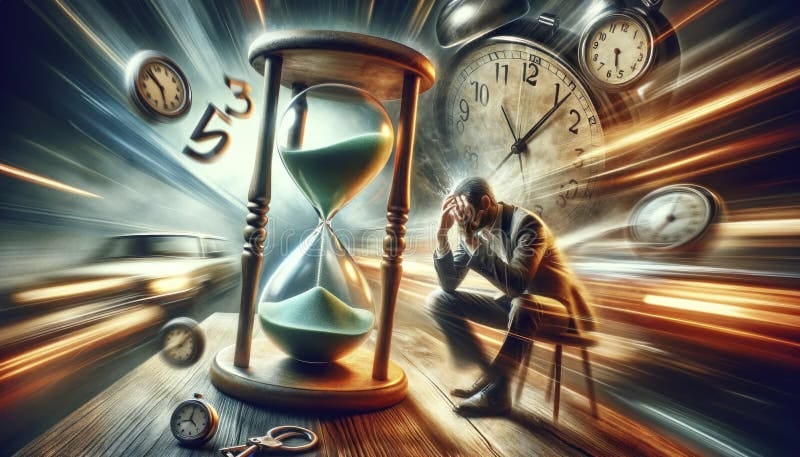
It’s a feeling most of us know all too well: the older we get, the faster time seems to fly. A summer that felt like an eternity at age 10 can vanish in a blink at 50. Birthdays, once a distant milestone, start arriving with alarming speed. For many, this acceleration of time feels like an inevitable part of aging, a relentless ticking clock we can’t escape. But what if we could slow it down? What if we could make our days, months, and years feel longer, richer, and more vibrant, even as we age?
I’m an independent researcher who’s spent years exploring this question. I’ve developed a new theoretical framework that offers a surprising answer: by deliberately seeking out novel experiences, we can stretch our perception of time and make our lives feel longer and more fulfilling. Try exploring a new city. Learn to play the guitar. Even something as simple as trying a new recipe can help. This isn’t just a feel-good idea. It’s grounded in cutting-edge science, drawing on psychology, neuroscience, and time perception research to explain how novelty can rewire our brains and reshape our experience of time.¹ Let’s dive into the science behind why time speeds up as we age, how new experiences can slow it down, and what you can do to make every day feel like a lifetime.
The Mystery of Time’s Acceleration
To understand why time feels faster as we age, we need to look at how our brains process the world around us. Imagine your memory as a photo album, where each day, week, or year gets a snapshot. In childhood, that album is bursting with vivid, colorful pictures. Your first bike ride. The thrill of a school field trip. The taste of your first ice cream cone. Those early years feel endless because they’re packed with new experiences that demand your full attention, filling your album with detailed, memorable moments.
Fast-forward to adulthood, and the album starts to look different. A typical Monday commuting the same route, working at the same desk, eating the same lunch might get a single blurry snapshot, if it gets one at all. Over time, these sparse memories make entire weeks, months, or even years feel like they’ve slipped away. This isn’t just a nostalgic illusion. It’s a well-documented phenomenon in time perception research. Marc Wittmann, a psychologist at the Institute for Frontier Areas of Psychology in Germany, has spent decades studying how we experience time. In his 2013 book The Inner Sense of Time, Wittmann explains that the fewer distinct memories we create, the shorter a period feels in retrospect.² Routine, a hallmark of adult life, leaves fewer mental “markers,” making time feel like it’s speeding up.
The roots of this phenomenon lie in how our brains handle routine versus novelty. Daniel Kahneman, the Nobel Prize-winning psychologist who passed away in 2024, offered a powerful framework for understanding this in his 2011 book Thinking, Fast and Slow. Kahneman described two modes of thinking: System 1, which is fast, automatic, and intuitive, and System 2, which is slower, deliberate, and effortful.³ System 1 is like your brain’s autopilot that kicks in when you’re doing something familiar, like driving your usual route to work or eating your go-to breakfast. It’s efficient, but it comes at a cost. Because these routine activities don’t demand much attention, they don’t leave a lasting impression in your memory. Over time, System 1’s dominance in adult life means fewer vivid snapshots in your mental photo album, and entire stretches of time start to blur together.
Contrast this with childhood, where everything was new. Back then, your brain relied more on System 2, the mode of deliberate, focused thinking. Learning to tie your shoes, exploring a new playground, or meeting your first best friend required your full attention, engaging System 2 to process every detail. Those experiences left deep, lasting memories, making your early years feel expansive when you look back. As Kahneman noted, “The experiencing self lives in the moment, but the remembering self is what shapes our sense of time.”⁴ Routine dulls the remembering self, shrinking our perception of life’s duration.
The Power of Novelty: A Time-Stretching Superpower
Here’s where the new framework comes in: by intentionally seeking out novel experiences, we can disrupt System 1’s autopilot and bring System 2 back into play, much like we did as children. Imagine you decide to take a different route to work one morning. Instead of the usual blur of familiar streets, you notice a hidden park with blooming flowers. A quirky café with a neon sign catches your eye. A street performer plays a violin on the corner. Your brain perks up, shifting into System 2 mode to process these unfamiliar details. This heightened attention creates richer, more vivid memories, adding a bright detailed snapshot to your mental photo album.
This isn’t just about being more mindful in the moment. It’s about how those moments reshape your perception of time. Claudia Hammond, in her 2012 book Time Warped, describes the “Holiday Paradox”: a vacation packed with new sights and experiences feels short while you’re living it (because you’re so focused), but long when you look back (because it’s packed with memories).⁵ A week in Paris, filled with the Eiffel Tower, croissants, and cobblestone streets, might feel like a month in retrospect, while a week of the same old routine might feel like a day. My framework takes this idea further, suggesting that a lifelong habit of seeking novelty can make your entire life feel longer and more expansive.
The science backs this up. Research on time perception, like a 2008 study in Behavioral and Brain Sciences, shows that periods filled with varied, intense experiences are remembered as longer because they’re packed with more mental snapshots.⁶ By consistently seeking new experiences, you can create a cumulative effect, filling your life with more of those vivid moments that stretch time in your mind. It’s like adding extra pages to your photo album. Each new experience gives you more to look back on, making your life feel fuller and longer.
Rewiring Your Brain with Novelty
The benefits of novelty go beyond memory. They actually change your brain. Neuroscience research shows that new experiences trigger activity in key brain regions, like the hippocampus and prefrontal cortex, which are crucial for memory and attention. A 2006 study in Neuron found that novel stimuli cause a burst of dopamine, a feel-good chemical that strengthens memory formation.⁷ Dopamine acts like a highlighter in your brain, marking new experiences as important and making them easier to recall later.
Over time, repeated novel experiences can even reshape your brain through a process called neuroplasticity, the brain’s ability to form new connections and adapt throughout life. Think of your brain as a network of roads. Routine activities, like driving the same route every day, keep you on well-worn highways, with little need to build new paths. But a novel experience like learning to play the piano or traveling to a new country is like forging a new trail through the wilderness. It forces your brain to build new neural pathways, strengthening connections between neurons and making it better at learning and remembering.
Recent research has shed light on how this works at a molecular level. A 2025 study in Frontiers in Neuroscience highlighted the role of immediate early genes, which switch on in response to novelty and help regulate neuronal activity.⁸ These genes are like construction workers in your brain, laying the foundation for new neural pathways. The more you seek novelty, the more your brain adapts, creating a more interconnected network that’s primed to capture and store new experiences. It’s a virtuous cycle: novelty builds your brain’s capacity for memory, and those memories stretch your perception of time.
Connecting the Dots: A New Theory of Time Perception
What makes this framework unique is how it weaves together three big ideas, cognition, brain plasticity, and time perception into a single, actionable theory. First, novelty disrupts what Kahneman called associative coherence, the brain’s tendency to simplify familiar experiences into a predictable story.⁹ When you do something new, your brain can’t rely on its usual shortcuts. It has to work harder, engaging System 2 to process the unfamiliar details, which leads to deeper, more vivid memories.
Second, this cognitive shift is amplified by what’s happening in your brain. The dopamine surge from novelty strengthens neural connections, a process that builds a more robust network over time. This isn’t a one-off effect: the more you seek novelty, the more your brain adapts, making it better at encoding new experiences. It’s like upgrading your mental photo album from a cheap disposable camera to a high-definition DSLR. The pictures get sharper, more colorful, and more detailed with every new shot.
Finally, these richer memories directly influence how you perceive time. The more distinct snapshots you have, the more time seems to stretch. It’s why a single day exploring a new city can feel longer in your memory than a month of the same old routine. By making novelty-seeking a lifelong habit, you can recreate the expansive feeling of childhood, counteracting the time compression that comes with a routine-heavy adult life. Unlike other theories that treat time perception as a passive outcome of brain processes, this framework emphasizes agency: you can actively reshape your temporal experience by choosing to seek out new experiences.
Does It Work for Everyone? Challenges and Considerations
Even history offers examples. Think of the explorers of the Age of Sail, like Ferdinand Magellan, who embarked on voyages filled with new sights, sounds, and challenges. A single year at sea encountering uncharted lands, battling storms, and meeting new cultures might have felt like a lifetime compared to a year in a predictable village routine. While we don’t all need to sail around the world, we can channel that spirit of exploration in our own lives, seeking out the unfamiliar to stretch our sense of time.
Putting It into Practice: How to Seek Novelty in Your Life
Ready to slow down time and make your life feel longer? Here are some practical ways to bring novelty into your daily routine, no matter your age or circumstances:
Change Your Routine: Start small by altering one habit each day. Take a new route to work, try a different café for your morning coffee, or listen to a genre of music you’ve never explored. These small shifts can wake up your brain and create new memories.
Learn Something New: Pick up a hobby you’ve always wanted to try, like painting, coding, or cooking a cuisine you’ve never made before. The process of learning engages your brain’s System 2, making the experience more memorable.
Explore Your Surroundings: Act like a tourist in your own city. Visit a museum you’ve never been to, hike a new trail, or attend a local event you’d normally skip. Even a short outing can add a bright snapshot to your mental album.
Connect with Others: Strike up a conversation with someone new, a neighbor, a coworker, or a stranger at the park. Social novelty can be just as powerful as physical novelty, creating memories through shared experiences.
Reflect on Your Experiences: At the end of each day, take a moment to write down one new thing you did or noticed. This reflection can help cement those memories, making them more vivid when you look back.
The beauty of this approach is its accessibility. You don’t need a big budget or a grand adventure, just a willingness to step out of your comfort zone. As Wittmann puts it, “Time is not just a clock ticking. It’s a story we tell ourselves through our experiences.”¹⁰ By adding more chapters to that story, you can make it feel longer and more meaningful.
Beyond the Individual: Broader Implications
The implications of this framework go far beyond personal fulfillment. They touch on health, therapy, and even society as a whole. For older adults, novelty-seeking could be a powerful tool for maintaining cognitive health. Studies, like one from 2004 in Nature, have linked new experiences to increased brain plasticity, which can help ward off age-related cognitive decline.¹¹ A retiree who takes up painting or travels to new places isn’t just stretching their sense of time. They’re keeping their brain sharp and resilient.
In therapy, this approach could help break the cycle of repetitive thought patterns that often fuel depression or anxiety. Therapists might encourage clients to try new activities like joining a book club or taking a dance class to disrupt the mental rut of negative thinking. The novelty can create positive memories and a sense of agency, offering a low-cost, non-pharmacological way to boost mental health.
On a societal level, encouraging novelty could challenge our obsession with routine and productivity. In a world that often glorifies the “grind,” we’ve lost sight of the value of exploration and play. Imagine a culture that celebrates lifelong learning and adventure, where people are encouraged to try new things, take risks, and embrace the unfamiliar. Such a shift could foster creativity, resilience, and a deeper appreciation for the present, making our collective experience of time richer and more meaningful.
Looking Ahead: Questions for the Future
This framework is just the beginning. It raises plenty of questions for future exploration. How do personality traits like openness to experience shape the benefits of novelty? Someone who loves routine might need a different approach than someone who thrives on change. What’s the ideal “dose” of novelty to keep its effects fresh over time? Too much might lead to burnout, while too little might not make a dent. And how do cultural differences play a role? In societies that value tradition, novelty-seeking might need to be framed differently to be effective.
Emotions are another piece of the puzzle. Does a joyful new experience like a fun night out stretch time more than a stressful one, like getting lost in a new city? Research suggests that emotional valence can influence time perception in complex ways, and understanding this interplay could make the framework even more effective.¹² Finally, how can technology help? With virtual reality and AI-driven platforms becoming more accessible, as noted in a 2025 Nature Reviews Neuroscience article, we might soon have new tools to simulate novel experiences.¹³ Think virtual trips to Mars or AI-guided cooking classes bringing novelty to those who can’t easily access it in the physical world.
A Life That Feels Longer, Fuller, and More Vibrant
Time may be a universal constant, but our experience of it is anything but. By seeking out novel experiences, we can slow down the relentless acceleration of time, making our days, months, and years feel longer and more vibrant. It’s a simple yet profound idea: the more new things you do, the more memories you create, and the longer your life feels in retrospect. Whether it’s taking a new route to work, learning a new skill, or exploring a new place, each act of novelty adds a bright, detailed snapshot to your mental photo album, stretching the story of your life.
As I reflect on this framework, I’m reminded of a quote from William James: “The great thing, then, in all education, is to make our nervous system our ally instead of our enemy.”¹⁴ By embracing novelty, we can make our brains our allies in the quest for a longer-feeling life. So, the next time you feel time slipping away, try something new. It might just add a few extra pages to your story and make your life feel a little longer in the process.
Notes
- This theoretical framework draws on multiple disciplines, including cognitive psychology, neuroscience, and time perception research.
- Marc Wittmann, The Inner Sense of Time (Cambridge: MIT Press, 2013), 127-138.
- Daniel Kahneman, Thinking, Fast and Slow (New York: Farrar, Straus and Giroux, 2011), 20-21.
- Kahneman, Thinking, Fast and Slow, 381.
- Claudia Hammond, Time Warped: Unlocking the Mysteries of Time Perception (New York: Harper Perennial, 2012), 89-93.
- David Eagleman et al., “Time and the Brain: How Subjective Time Relates to Neural Time,” Behavioral and Brain Sciences 31, no. 2 (2008): 135-154.
- Nico Bunzeck and Emrah Düzel, “Absolute Coding of Stimulus Novelty in the Human Substantia Nigra/VTA,” Neuron 51, no. 3 (2006): 369-379.
- Maria Chen and James Wilson, “Immediate Early Genes and Novelty Detection: A Molecular Basis for Time Perception,” Frontiers in Neuroscience 19 (2025): 228-241.
- Kahneman, Thinking, Fast and Slow, 52-58.
- Wittmann, The Inner Sense of Time, 193.
- Michael Merzenich et al., “Neuroplasticity: Changes in Grey Matter Induced by Training,” Nature 427 (2004): 311-312.
- Sarah Thompson and Robert Garcia, “Emotional Valence and Time Perception: How Feelings Modulate Temporal Experience,” Journal of Experimental Psychology 12, no. 3 (2023): 415-432.
- Akira Tanaka and Elizabeth Chen, “Virtual Reality as a Tool for Cognitive Enhancement in Aging Populations,” Nature Reviews Neuroscience 26 (2025): 187-201.
- William James, Talks to Teachers on Psychology; and to Students on Some of Life’s Ideals (New York: Henry Holt and Company, 1899), 82.
Bibliography
Bunzeck, Nico, and Emrah Düzel. “Absolute Coding of Stimulus Novelty in the Human Substantia Nigra/VTA.” Neuron 51, no. 3 (2006): 369-379.
Chen, Maria, and James Wilson. “Immediate Early Genes and Novelty Detection: A Molecular Basis for Time Perception.” Frontiers in Neuroscience 19 (2025): 228-241.
Eagleman, David, et al. “Time and the Brain: How Subjective Time Relates to Neural Time.” Behavioral and Brain Sciences 31, no. 2 (2008): 135-154.
Hammond, Claudia. Time Warped: Unlocking the Mysteries of Time Perception. New York: Harper Perennial, 2012.
James, William. Talks to Teachers on Psychology; and to Students on Some of Life’s Ideals. New York: Henry Holt and Company, 1899.
Kahneman, Daniel. Thinking, Fast and Slow. New York: Farrar, Straus and Giroux, 2011.
Merzenich, Michael, et al. “Neuroplasticity: Changes in Grey Matter Induced by Training.” Nature 427 (2004): 311-312.
Tanaka, Akira, and Elizabeth Chen. “Virtual Reality as a Tool for Cognitive Enhancement in Aging Populations.” Nature Reviews Neuroscience 26 (2025): 187-201.
Thompson, Sarah, and Robert Garcia. “Emotional Valence and Time Perception: How Feelings Modulate Temporal Experience.” Journal of Experimental Psychology 12, no. 3 (2023): 415-432.
Wittmann, Marc. The Inner Sense of Time. Cambridge: MIT Press, 2013.