Why the World Feels Rigged: The Four Mechanisms That Have Controlled Humanity for Five Thousand Years
Watch a bank bailout, a pandemic relief package, and a tech platform's new "safety" policy long enough and you start to notice something strange. The industries change. The language changes. The technology changes completely. But the shape of what's happening doesn't change at all.
Someone controls a vital resource. A crisis arrives. The people who already control the resource step forward as the only ones capable of managing the crisis. And when the dust settles, they control a little more than they did before.
That repetition is what sent me down a twenty-year rabbit hole, and it's the spine of the book I wrote. Not a story about secret rulers twirling mustaches in a back room, but something more interesting and more useful: a pattern. A small set of methods, used over and over, by very different people, in very different eras, who probably never read each other's playbooks because they didn't need to. The methods work. So they keep getting used.
I ended up calling them the four mechanisms. Once you can see them, you start seeing them everywhere, and that's the whole point of this essay. I'm not going to try to convince you of anything here. I'm just going to show you the shape of the thing, the way it first got shown to me, and let you decide if you want to go further.
The Pattern Underneath the Pattern
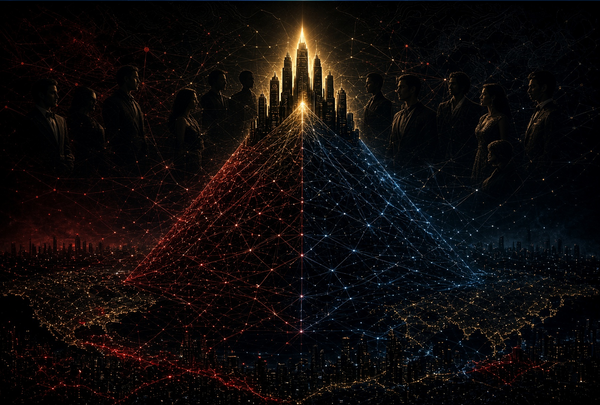
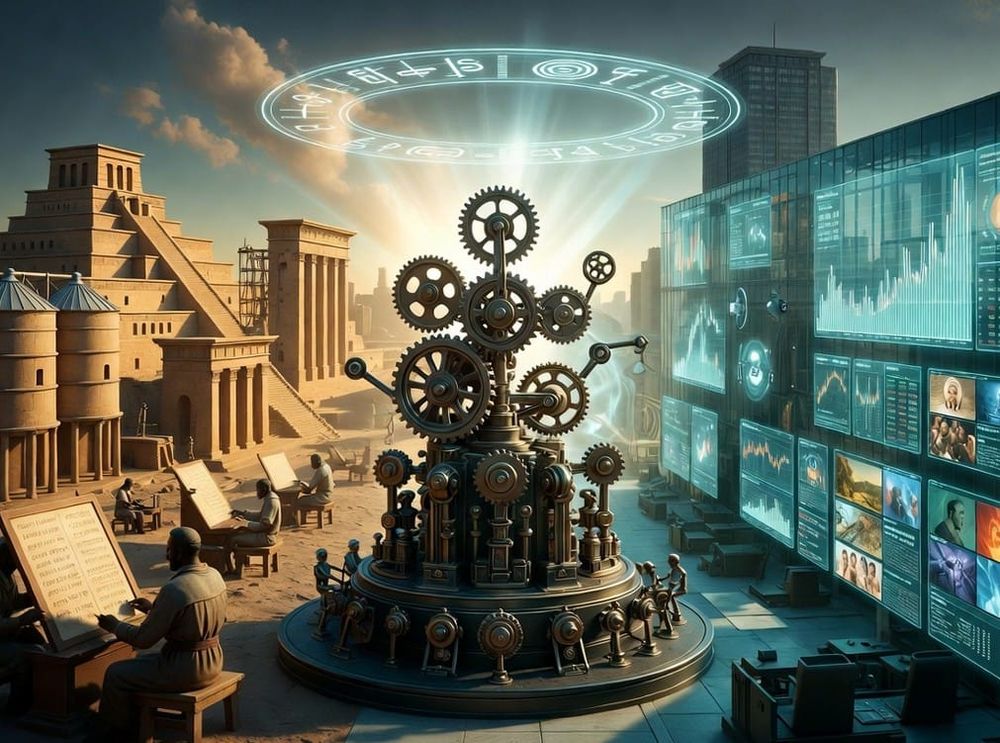
Here's the claim, stated plainly. For roughly five thousand years, a relatively small group of people, wealthy landowners, financiers, institutional heads, has maintained outsized control over the rest of us. Not through one single trick, but through four mechanisms that show up again and again, reinforcing each other like gears in a machine.
They are coercion, alignment, amnesia, and conflict.
None of these words is exotic. You already know what each one means in everyday life. What's not obvious, until you trace it across centuries, is how consistently elites have leaned on all four together, and how each one makes the others work better.
Let's take them one at a time.
Mechanism One: Coercion
Coercion is the oldest and most obvious lever. Control the thing people need to survive, and you control the people.
In the earliest river-valley civilizations, this meant grain. Priests and palace administrators in Mesopotamia kept the surplus harvest under lock and seal, doled it back out during lean seasons, and recorded every debt on clay tablets that outlived the harvests themselves. A farmer who owed grain owed obedience. The temple wasn't just a place of worship. It was the only bank in town, and it never forgave a loan out of kindness.
You can watch the same logic at work today in a much more polished form. A handful of financial institutions sit at the center of the global credit system. When liquidity tightens, when a recession threatens livelihoods, those same institutions are the ones positioned to extend or withhold the credit that keeps businesses and households afloat. The currency has changed from barley to basis points. The leverage hasn't changed at all.
Mechanism Two: Alignment
Coercion is the stick. Alignment is the much subtler art of making people want the same thing their rulers want, so the stick is rarely even necessary.
Ancient kings did this through religion and myth. A pharaoh wasn't just a ruler, he was the living connection between gods and men, and to question his harvest policy was to question the cosmic order itself. Obedience wasn't extracted. It was internalized. People aligned themselves with the system because the system told a story about meaning and order that they badly wanted to believe.
Modern alignment looks like corporate culture, national mythology, and the quiet expectation that a good citizen is a good consumer who trusts the institutions running the economy. Nobody hands you a tablet of laws. You absorb the story from school, from advertising, from the general hum of consensus around you, and you come to want exactly what keeps the system humming. The genius of alignment is that it doesn't feel like control. It feels like your own free choice.
Mechanism Three: Amnesia
If coercion is the stick and alignment is the carrot, amnesia is the fog that keeps you from noticing either one.
Every concentration of power benefits from a population that doesn't remember how things used to be, or how they got this way. Ancient scribes were remarkably selective about what got carved into stone and what got left to rot. Entire systems of debt forgiveness and land redistribution, real events in the ancient world, faded from memory once the people who'd benefited from undoing them controlled what got recorded.
Today amnesia looks like a news cycle that moves faster than memory can hold, a school curriculum that skips the messy parts of financial history, and a culture that treats anything older than a decade as ancient and irrelevant. We are constantly told this moment is unprecedented. It rarely is. We've simply forgotten the last time it happened, who benefited, and how.
Mechanism Four: Conflict
The fourth mechanism is the one that ties the others together at exactly the moment people start to get restless. When pressure builds against those at the top, the most reliable release valve is to point that pressure sideways, at each other.
Roman patricians understood that a plebeian class focused on rivalries with neighboring tribes, or fighting amongst factions inside the city, was a plebeian class with no energy left to question who held the land. Bread and circuses worked because the circus part mattered as much as the bread.
The contemporary version is a media and political environment that thrives on manufactured division. Two camps, endlessly at each other's throats over the issue of the week, rarely notice that ownership of the platforms feeding them their outrage, and the financial structures shaping their daily lives, sit untouched above the argument. Conflict doesn't just distract. It exhausts. People who are busy fighting each other don't audit the people benefiting from the fight.
How the Four Work Together
None of these mechanisms is especially powerful alone. Stacked together, they become something close to a closed loop.
A crisis hits. Coercion narrows people's options. Alignment convinces them the people in charge are the only ones who can fix it. Conflict keeps them fighting each other instead of asking who created the conditions for the crisis in the first place. And amnesia ensures that by the time the next crisis rolls around, nobody remembers this is the fourth or fifth time the same actors have offered the same rescue, on the same terms, with the same modest expansion of their own control as the price.
This is the pattern that, once you see it in one era, you start seeing in every era. That's what the rest of the book is built to walk you through.
There's a name for the larger engine that runs underneath all four mechanisms, and once you see it, the whole loop snaps into focus. It's often called the Hegelian dialectic, and stripped of the philosophy jargon, it's a simple three-step move. First, a tension gets created or allowed to grow. Then the public reacts to that tension and starts demanding relief. Then a "solution" gets introduced, one that happens to have been ready and waiting, and that solution expands the very control structure the tension was supposedly threatening.
Watch how neatly the four mechanisms slot into that single motion. The new solution almost always arrives bundled with coercion, fresh rules, new tracking, new conditions attached to access. It gets sold through alignment, with public figures and institutions framing the approved response as the only responsible one. Amnesia does its quiet work in the background, so that within a year or two almost nobody remembers what the system looked like before the "emergency" fix became permanent. And conflict keeps the public split into camps arguing about the symptoms, too busy with each other to ask who benefits from the cure.
You can watch this play out in real time around digital money. Cultural and political divisions get amplified until distrust in the existing financial system feels widespread and urgent. That urgency builds public appetite for stronger oversight and tighter tracking of transactions, and into that appetite walks a programmable digital currency, framed not as new control but as the obvious, modern answer to a mess everyone is now exhausted by. A similar shape shows up around emerging technology generally. New tools get pushed into the open, opposing camps form around whether they're salvation or disaster, and the resulting tension is resolved not by stepping back but by adding new layers of institutional oversight, presented as the responsible, inevitable next step. Either way, the tension was never really the problem elites were trying to solve. The tension was the doorway the solution needed to walk through.
A Five-Thousand-Year Walk
The book traces this pattern across an enormous stretch of time, and I want to give you the shape of that journey without spoiling the specific cases, because the specifics are genuinely the best part.
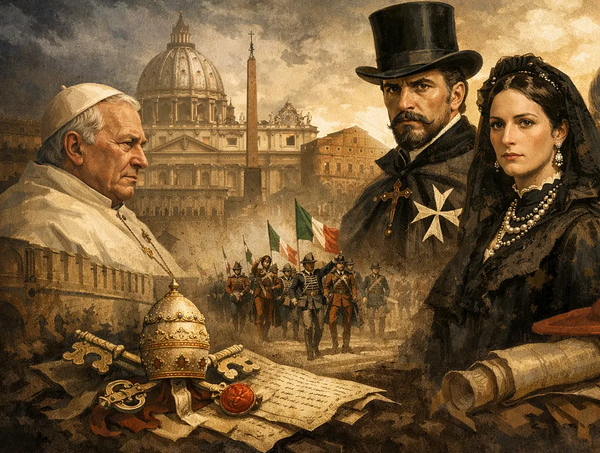
It starts in the ancient world, where the foundations get laid: temple economies, grain monopolies, the first recorded debts. From there it moves into the Greek city-states, where philosophy itself becomes a tool that elites use to define who deserves a voice in public life and who doesn't. Rome carries the pattern into empire, with patrician families consolidating land and law in their own favor, and then the fall of Rome doesn't end elite control, it simply hands the baton to a rising religious institution that learns to wield the same four mechanisms with new vocabulary.
The medieval period shows networks of power knitting themselves across borders through marriage, finance, and shared interest among ruling houses. Then comes the early modern period, where finance and ideology start to merge in genuinely new ways, laying groundwork for systems of credit and belief that still shape markets today. Religious and cultural institutions get their own chapter, because controlling what people believe is true has always been just as valuable as controlling what they own.
Colonial expansion brings the mechanisms to a brutal new scale, with extraction networks spanning oceans and entire economies built around resources taken from people with no say in the matter. The industrial age compounds this further, as monopolies form not just over markets but, disturbingly, over ideas about who counts as fit to thrive at all. From there the book turns to how intellectual life itself, universities, foundations, the production of expert consensus, becomes another arena where a small number of actors shape what the rest of us are allowed to consider reasonable.
The twentieth century brings psychological and policy networks into the picture, the quiet infrastructure of think tanks, advisory boards, and behind-the-scenes coordination among people who never call themselves a conspiracy because they don't need to. Then the story moves into the financial architecture of the modern world, the global networks of capital and digital finance that now move faster and more invisibly than any pharaoh's grain ledger ever could.
There's a chapter on the role blackmail and personal compromise have played in keeping elite networks loyal to each other, a darker but well documented thread running through modern power. And the book closes its historical arc by looking at where these mechanisms seem to be heading next, into technocratic governance and the early edges of transhumanist thinking, places where the old mechanisms of coercion, alignment, amnesia, and conflict are being rebuilt with new tools entirely.
By the time you reach the end of that arc, the question stops being whether the pattern is real. It becomes a much more useful question: now that you can see it, what do you do with that?
The Part That Actually Matters
Here's the thing I want to leave you with, because it's the thing that kept me writing for over two decades instead of just getting depressed about all this.
A pattern that repeats for five thousand years isn't a law of physics. It's a habit. Habits, even very old and very powerful ones, exist because they keep working on people who don't see them coming. The moment you can name a mechanism, you've already taken something away from it.
That doesn't mean the four mechanisms vanish once you notice them. It means you get to stop mistaking them for fate. You start asking different questions when the next crisis arrives and the same voices step forward with the same rescue. You start noticing when a conflict feels suspiciously well timed. You start remembering what happened the last time, instead of being told this time is unlike anything before.
The world doesn't have to feel rigged forever. It only feels that way as long as the mechanism stays invisible.
If this overview has you wanting the full documented history, the specific cases, the network maps, and what the book suggests about breaking the pattern, the complete work is available now.
https://www.amazon.com/Hidden-Hand-Control-Pharaohs-Corporations/dp/1634245458
Declaration of Generative AI Use
I use generative AI solely to research diverse topics, organize thoughts, correct language, improve clarity, and format citations in CMOS style. Every idea, argument, and conclusion in this work is my own. I have reviewed the piece carefully before submitting and take full responsibility for its content. It is also worth noting that the topics I typically write on are ones generative AI would refuse to engage with fully anyway.
A word on AI detection tools: they are not reliable. These tools routinely flag polished, well-structured, or academic writing as machine-generated, regardless of who actually wrote it. A high score on an AI detector is not evidence of AI authorship. It is, just as often, evidence of clarity.